


Salesforce delivered strong Q1 results with $11.1 billion in revenue, driven by accelerating demand for Agentforce, AI-powered Slack, and AI-enhanced applications across its portfolio.
Salesforce delivered strong Q1 results with $11.1 billion in revenue, driven by accelerating demand for Agentforce, AI-powered Slack, and AI-enhanced applications across its portfolio.
Workday’s strong Q1 performance highlights CEO Aneel Bhusri’s push to transform the company into an AI-native enterprise focused on agentic AI innovation, lawful governance, and accelerated product development to compete with SAP, Oracle, and Microsoft.

Amazon Bedrock AgentCore Payments marks a major step toward economically active AI agents capable of discovering, evaluating, and paying for digital resources without human intervention.

Despite strong optimism around AI adoption, Workday found that most enterprise users still act as intermediaries between AI tools, reducing productivity and undermining the promise of automation.

Palantir’s 70% growth highlights how outcome-based AI pricing and rapid enterprise expansion are creating a new playbook for cloud success.

Anthropic’s reported $200 billion Google Cloud commitment highlights the staggering scale of AI infrastructure demand and the increasingly collaborative relationships between traditional hyperscale competitors.
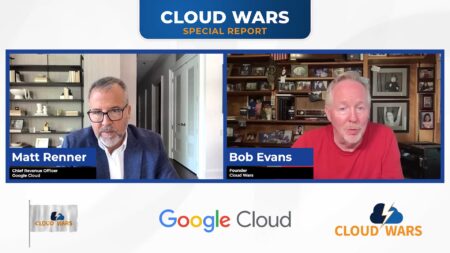
Enterprise AI has shifted from experimentation to urgent execution, forcing cloud providers to deliver measurable business outcomes faster than ever.
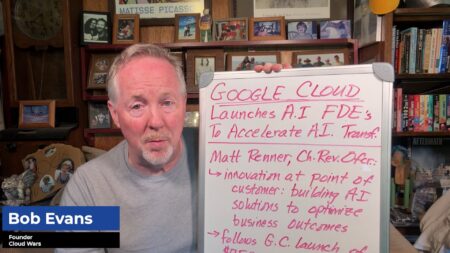
Google Cloud is accelerating enterprise AI adoption with specialized AI engineers and a $750 million ecosystem fund, signaling a more aggressive customer execution strategy.

SAP and Palantir are helping redefine enterprise technology, as Christian Klein and Alex Karp both argue that AI-driven execution has moved their companies beyond the traditional definition of software vendors.
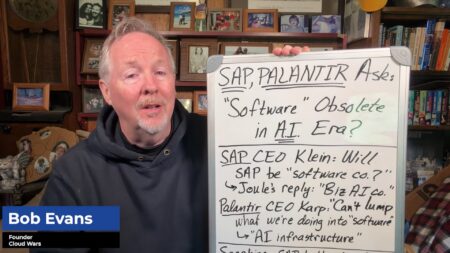
SAP and Palantir argue that agentic AI is transforming their businesses beyond traditional software into something more akin to business AI platforms and AI infrastructure providers.

ServiceNow has joined the fast-growing agentic AI movement with Project Arc, an autonomous desktop agent developed with NVIDIA that can execute enterprise tasks securely across multiple tools, signaling a shift beyond conversational copilots.

CEO Christian Klein has been aggressively forging a new SAP via acquisitions in the data field, a shift to consumption pricing, and AI-centered partnerships.
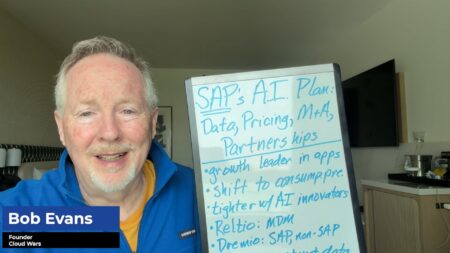
SAP’s AI plan includes strategic partnerships and acquisitions as well as major shifts toward consumption pricing and customer alignment.
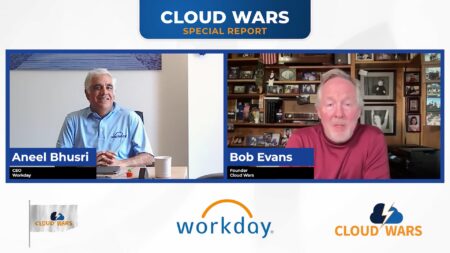
A conversation about enterprise AI readiness, governance challenges, and the next major growth opportunity in intelligent business applications.
Microsoft and OpenAI restructure their landmark partnership, enabling broader competition while maintaining strategic ties, signaling a major shift in how AI alliances will evolve across the global cloud ecosystem.

AWS’s AI business has surged to a $20B run rate in just three years, vastly outpacing its early cloud growth. However, competitors like Google Cloud and Microsoft are growing faster, raising questions about AWS’s long-term dominance.

AWS’s AI business is scaling rapidly, yet rivals are outpacing it in both growth and future revenue pipelines.

Hyperscalers hit a $2 trillion backlog milestone, signaling unprecedented AI demand while exposing capacity constraints that could reshape infrastructure strategies across Microsoft, AWS, Google Cloud, and Oracle.
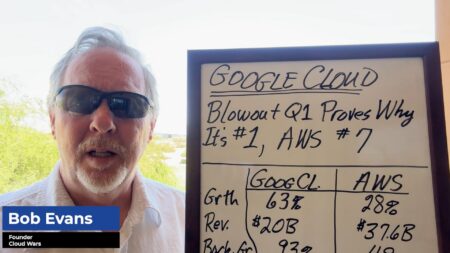
Google Cloud’s explosive Q1 growth and backlog dominance highlight a major shift in cloud leadership, overtaking AWS as AI-driven demand reshapes competitive dynamics among hyperscalers.

Enterprise leaders should focus less on automation savings and more on how agentic AI accelerates growth and customer value.