

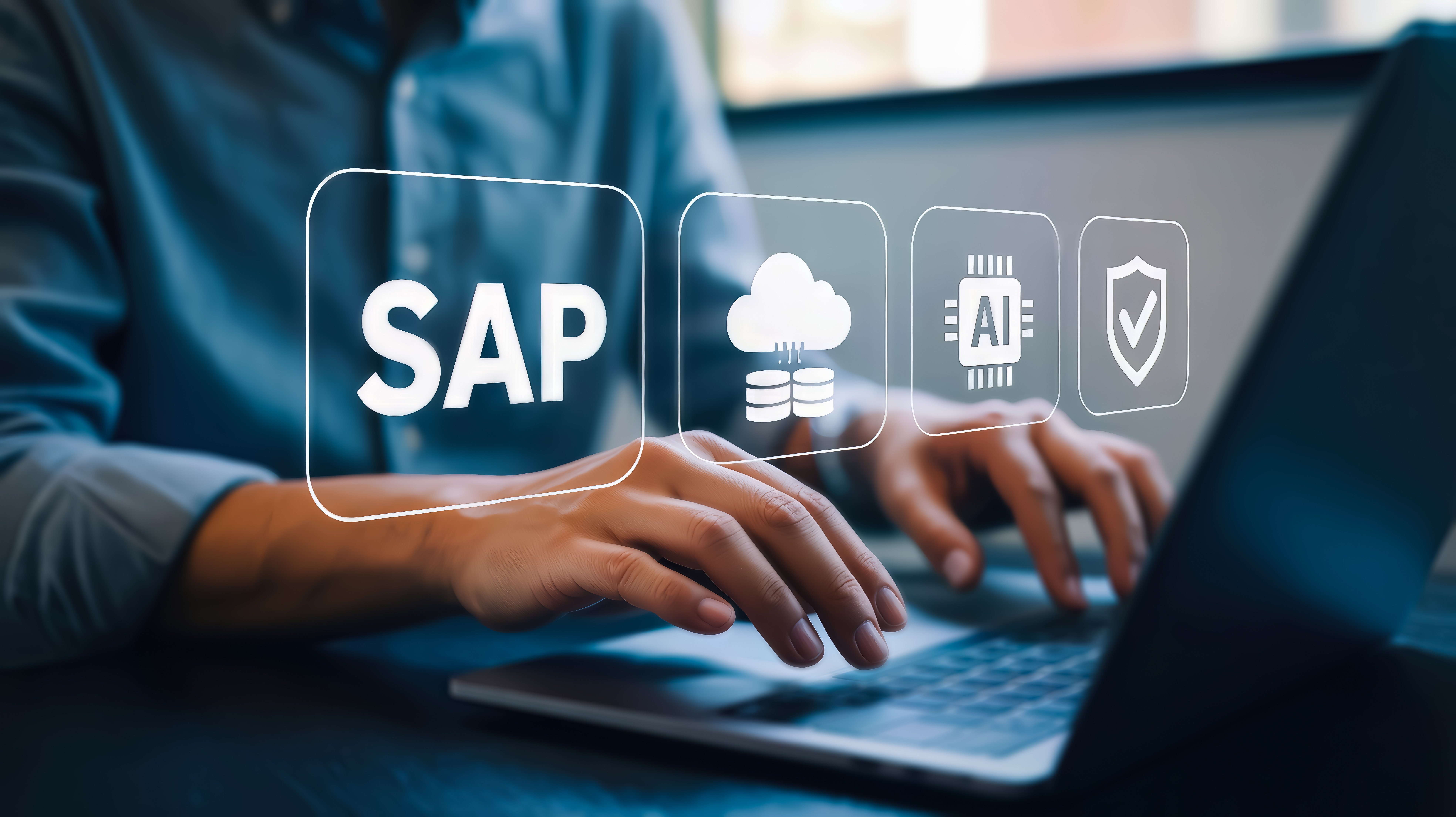
As 25,000 customers and partners convene this week in Orlando for SAP’s annual Sapphire event, they will encounter a very different SAP that CEO Christian Klein has been aggressively forging via acquisitions in the data field, a shift to consumption pricing, and AI-centered partnerships.
In the past year, Klein has dramatically intensified not only the pace of SAP’s transformation but also the intensity of that shift, which is reflected in not only the new types of software it offers but also how that software is made — hello, AI — and consumed by customers, which in turn has triggered Klein’s decision to move away from the decades-old “per seat” model to consumption-driven pricing.
And while Klein, in his first six years as CEO, has certainly not been shy about making ambitious acquisitions, SAP’s three recent additions — Reltio, Dremio, and Prior Labs — significantly boost its ability to nourish its AI solutions with both SAP and non-SAP data as well as structured data. More on those in a moment.
Watching SAP ambitiously enhance its AI-focused future while continuing to dramatically outperform its competitors in the here and now, I continue to be baffled by the “SaaS is dying!” caterwauling from the Doomsday Crowd that either has zero understanding of history, or a deep but limited understanding of technology, or perhaps both.
According to their absurd reasoning, AI will gut and skin SAP, in spite of the fact that SAP has:
- Outgrown its primary enterprise competitors by 50% to 250%
- Deep and long-term relationships with most of the world’s largest corporations, plus a growing roster of mid-sized enterprises
- Built deep industry expertise across all of the world’s key verticals
- Infused AI deeply across major portions of its massive portfolio
- Unmatched data repositories across industries and across the globe, which is the essential fuel for AI
When you add all that up and then toss into the mix the ambitious moves Klein and team are making to meet not only the current but also future AI demands of SAP customers, the gloom-and-doom forecasts about the inevitable downfall of SAP and other major apps vendors becomes at best ridiculous.
In just the past eight weeks, SAP has disclosed plans to acquire three companies that will fortify its data-management capabilities, thereby enhancing the power of its AI solutions. Here’s an overview from each announcement:
- Reltio: Once closed, the acquisition will strengthen SAP Business Data Cloud — integral for SAP’s AI-First and Suite-First strategy — and accelerate the evolution of Business Data Cloud to a fully interoperable enterprise data platform for enterprise-wide agentic AI. It will provide customers with the tools they need to unify, cleanse and harmonize data across sources for superior enterprise-wide agentic AI.
“Reltio is a natural fit with SAP,” said Muhammad Alam, member of the Executive Board of SAP SE, SAP Product & Engineering. “Acquiring them will further improve our position as a leading business AI provider, combining SAP and non-SAP data to deliver data context that business AI requires. AI cannot reach its full potential when data is fragmented across business units, platforms and domains without connection or context.” - Dremio: Most enterprise AI projects fail to deliver value not because of the AI itself, but because the underlying data is fragmented, locked in proprietary formats and stripped of the business context that makes it meaningful. The result is a familiar and costly pattern: pilots that cannot scale, slow integration of new data sources, duplicated engineering work and compliance risk when organizations cannot explain how an AI-driven decision was reached. Dremio helps eliminate that data fragmentation and integration friction. The acquisition will complement the SAP Business Data Cloud and SAP HANA Cloud offerings to ensure seamless data integration across SAP and non-SAP data with high performance and low cost to accelerate AI-ready context and time-to-value for AI.
Community Summit North America
The largest independent innovation, education, and training event for Microsoft business applications delivered by Expert Users, Microsoft Leaders, MVPs, and Partners.
Register
- Prior Labs: Large language models (LLMs) struggle to make accurate predictions on structured business data because they have only a rudimentary understanding of tables, numbers and statistics. Unlike LLMs, TFMs are purpose-built for this type of data and can accurately predict business outcomes based on tabular data such as payment delays, supplier risks, upsell opportunities, customer churn risk and more.
“Early on, SAP recognized that the greatest untapped opportunity in enterprise AI wasn’t large language models; it was AI built for the structured data that runs the world’s businesses,” SAP CTO Philipp Herzig said. “We built SAP-RPT-1 to prove that conviction for enterprise data. Prior Labs has built a leading TFM on public benchmarks and built one of the leading research teams in this category. Combining their frontier model work with enterprise data and customer reach is how we intend to lead this category globally.”
Consumption Pricing to Match Customer Behavior in AI Era
Also, within the past eight weeks, Klein announced a major change in how SAP prices its products by moving away from the subscription model that Klein instituted in his first year as CEO and adopting a consumption model that reflects customers’ actual usage of SAP’s AI services and solutions.
As AI agents automate an increasing number of tasks, the old “per seat” subscription model becomes less relevant and the consumption model gives customers more control over what they spend as well as more transparency.
In line with that shift, Klein said, SAP has begun launching forward-deployed engineers to help customers build AI agents and applications.
Enhanced Partnerships with Palantir and others
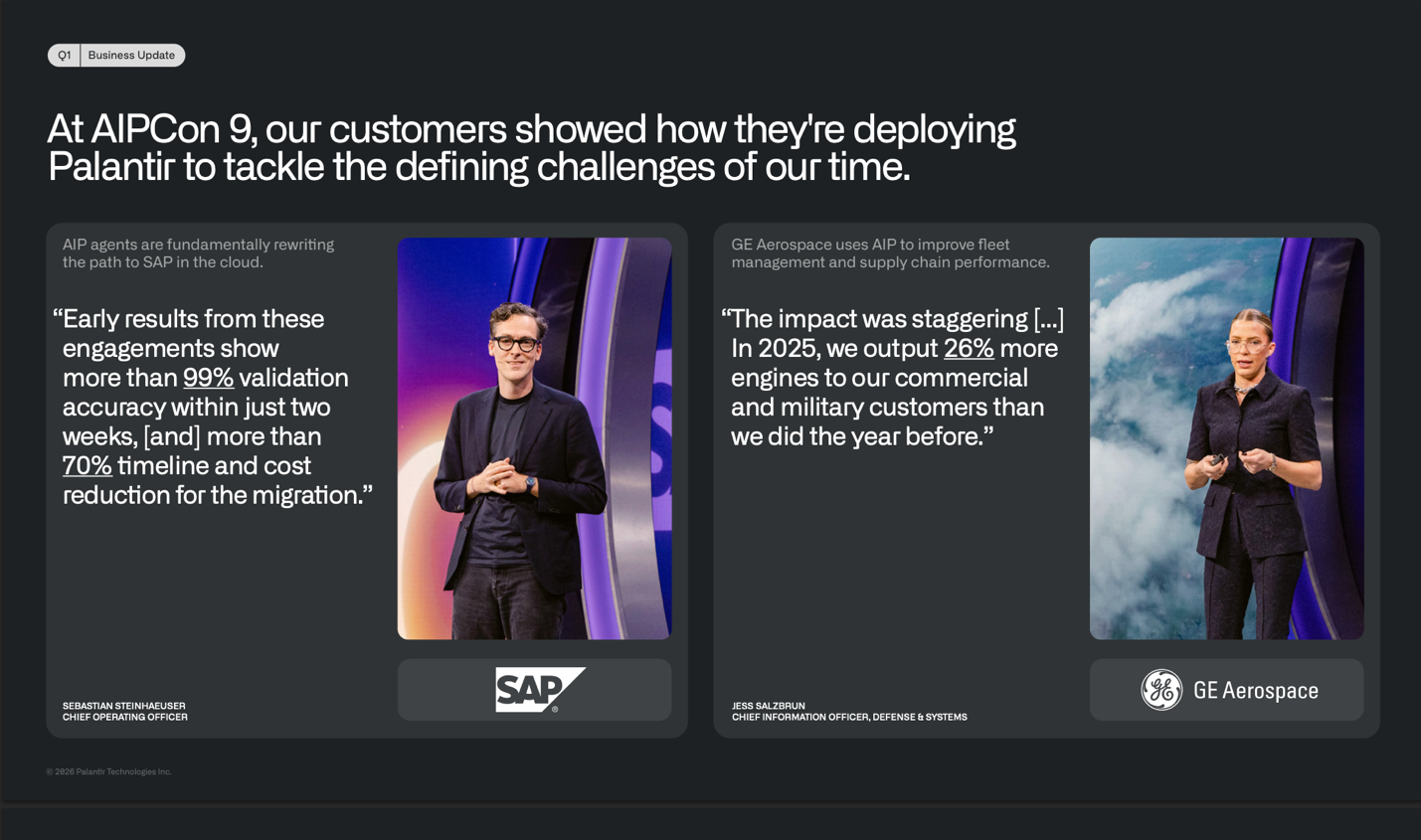
The concept of forward-deployed engineers was created by high-flying AI-infrastructure specialist Palantir, a company SAP has begun to work with more closely. The partnership has become so significant to Palantir that its recent Q1-earnings presentation highlighted the advances SAP has made in its AI business by using Palantir technology, and the slide below from the Palantir Q1 presentation describes that:
Final Thought
In light of SAP’s relentless competition against Oracle, Salesforce, Workday, Microsoft, and others, Klein knows all too well that customers have a wide range of high-quality AI/agents/apps/data vendors from which to choose. As a result, Klein is pushing SAP into the future more aggressively and more intensely than he ever has before because those competitors are also changing and innovating and advancing at a pace this industry has never seen.
So, who’ll be the big winner? I think there’ll be plenty of success to go around for everyone, but the lion’s share of success here in the AI Revolution will go to the customers who are always —always! — the biggest winners in the Cloud Wars.