


Explore how Google Cloud and Thales, alongside SAP and NVIDIA, are embedding security and governance into agentic AI workflows — and why industry collaboration could be key to building a safer, more trustworthy AI ecosystem.
Explore how Google Cloud and Thales, alongside SAP and NVIDIA, are embedding security and governance into agentic AI workflows — and why industry collaboration could be key to building a safer, more trustworthy AI ecosystem.

Five months after unveiling Autonomous Enterprise, SAP is accelerating its agentic AI strategy with Joule solutions spanning finance, supply chain, HR, procurement, and customer experience while increasingly targeting high-value, industry-specific business scenarios.

AWS is expanding its custom-silicon strategy through a $1 billion agreement with Synopsys, potentially enabling enterprise applications from SAP, Salesforce, Workday, and other ISVs to achieve significantly higher performance through chips optimized specifically for application workloads.
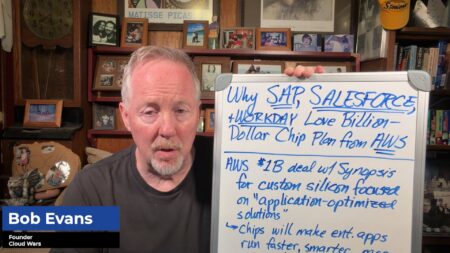
AWS’s billion-dollar Synopsys deal could bring application-optimized chips to enterprise software, strengthening AWS’s relationships with SAP, Salesforce, Workday, and their customers.
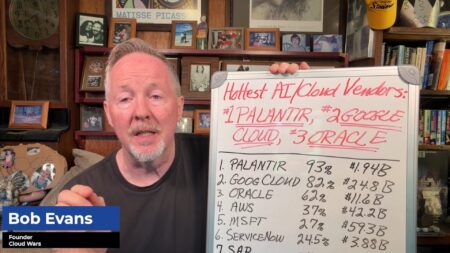
Palantir leads the Cloud Wars Top 10 with 93% growth as Google Cloud, Oracle, and AWS surge and AI platforms drive extraordinary enterprise demand.
Since returning as CEO, Aneel Bhusri has reshaped Workday’s agentic AI strategy, eliminating or combining simpler agents while prioritizing sophisticated AI systems capable of solving complex HR and finance problems and delivering measurable customer ROI.
OpenAI prominently outlined plans for a unified AI superapp in March, but CFO Sarah Friar’s August description of the company’s AI-native stack makes no mention of it, raising questions about whether OpenAI has changed its strategy.
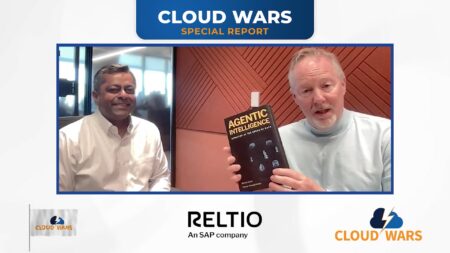
Enterprise AI success increasingly depends on trusted, interoperable data that connects existing technology investments with autonomous processes and next-generation business models.

SAP delivered 24% cloud revenue growth in Q2 while expanding its cloud backlog to $26.3 billion, with CEO Christian Klein crediting the company’s global partner ecosystem and AI strategy for accelerating customer adoption and positioning SAP for $30 billion in cloud revenue next year.
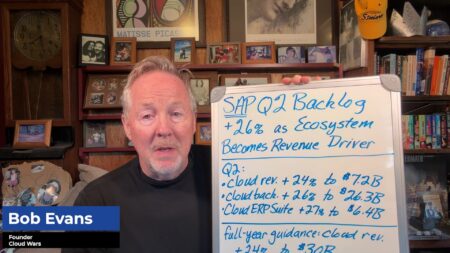
SAP is approaching a potential $30 billion cloud business as its partner-led strategy continues to outpace traditional enterprise software competitors.

SAP is partnering with Giotto.ai to evaluate reasoning-focused AI models that could make Joule agents more reliable, secure, and effective in complex enterprise decision-making.
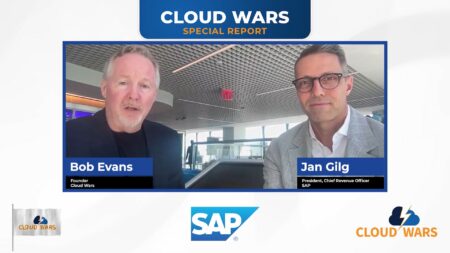
Enterprise AI is entering a new phase where trust, governance, and measurable outcomes matter more than experimentation.
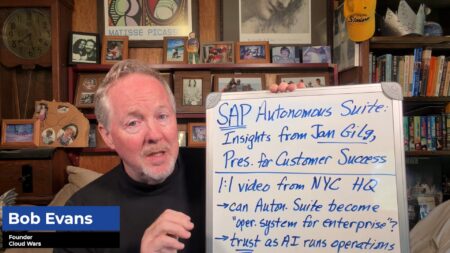
SAP is betting that its new Autonomous Suite will help customers transition from traditional ERP systems to AI-powered enterprises built on trust, automation, and business outcomes.
Workday’s strong Q1 performance highlights CEO Aneel Bhusri’s push to transform the company into an AI-native enterprise focused on agentic AI innovation, lawful governance, and accelerated product development to compete with SAP, Oracle, and Microsoft.

SAP and Palantir are helping redefine enterprise technology, as Christian Klein and Alex Karp both argue that AI-driven execution has moved their companies beyond the traditional definition of software vendors.
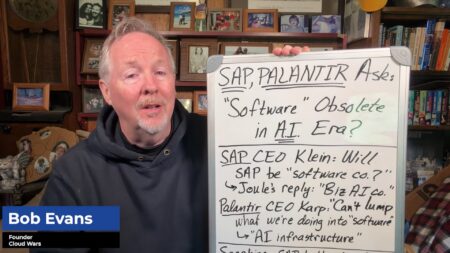
SAP and Palantir argue that agentic AI is transforming their businesses beyond traditional software into something more akin to business AI platforms and AI infrastructure providers.

Enterprise AI success depends not just on innovation speed, but on governance, interoperability, migration readiness, and organizational change.
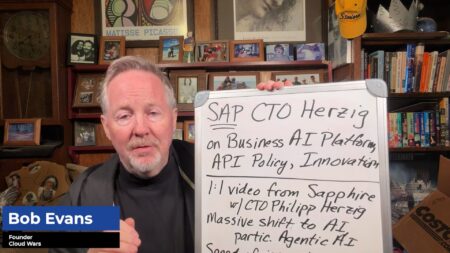
SAP’s Sapphire announcements reveal a company shifting from software provider to business AI powerhouse, with agentic AI, API modernization, and tighter enterprise security at the center.

SAP is positioning industry-specific AI as a stronger differentiator than generic horizontal enterprise AI tools.
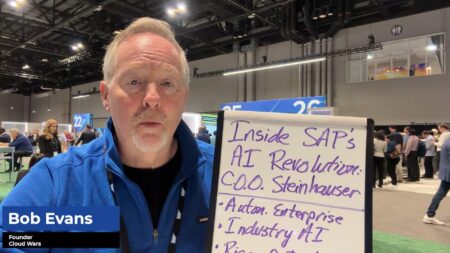
SAP is accelerating its autonomous enterprise strategy with agents, Business Data Cloud, and industry-specific innovation in what could be its most ambitious transformation yet.