


New functions can support apps that combine Dynamics 365 apps with business context from WorkIQ for complete experiences, Microsoft partners say.
New functions can support apps that combine Dynamics 365 apps with business context from WorkIQ for complete experiences, Microsoft partners say.
AI infrastructure spending is reaching unprecedented levels, but rising CapEx is beginning to outpace cash flow, raising questions about how hyperscalers will fund continued AI investment.
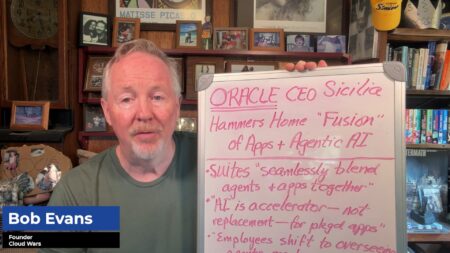
Oracle has been clear in defining where apps end and agents end, with CEO Mike Sicilia driving it home in comments in the Q1 earnings call.

‘Project HydraFusion’ evaluates each request and chooses the least complex workflow required, using additional model calls only when it anticipates a better result.

Oracle has become the second-fastest growing hyperscaler, with Q1 revenue and growth rates making a major jump.

Oracle’s Q1 cloud revenue and OCI growth rate have jumped this quarter. How can its business model innovation propel the company to rise even higher?
In this discussion, John Siefert, CEO, Dynamic Communities & Cloud Wars, is joined by Kelly Holwagner, Executive Vice President, HSO. The two…

Instead of searching across laboratory results, medications, and specialist documentation, clinicians can prompt Epic and receive required information inside ChatGPT using new OpenAI connector.

New tools aimed at enforcing cost discipline include an AI pricing calculator, detection of spending anomalies, and spending caps for individual AI projects.

Law firms that collaborated in platform design highlight industry AI opportunities to eliminate manual work and drive innovation for better client service.

Workday CEO Aneel Bhusri is increasingly bullish as rapid AI adoption, strong revenue growth, trusted enterprise context, and faster innovation strengthen Workday’s competitive advantage.

On the strength of customer design partnerships and an expansive ecosystem, Google Cloud delivers AI platforms that could unlock AI innovation in support of vertical use cases.

New features enhance positioning of Teams as a platform to support humans, agents working together to accelerate GitHub-powered dev projects.

Salesforce’s Q2 growth slowed to 11%, but a major Anthropic partnership and the launch of Claudeforce could boost future growth and validate Marc Benioff’s AI ambitions.

Gmail, Calendar, and Drive users can now access data and perform tasks directly from their Claude conversations, accelerating integration of AI tools and productivity tools.

Consolidated AI chatbots raise order values up to 26% at Albertsons, while WalMart’s in-store AI use requires employees to further train AI models with business context.

Skill Recorder creates a foundation for AI to understand workflows, recommend improvements, and ultimately automate workflows, for on-demand or scheduled use cases.
Palantir’s rapid growth reflects an enterprise AI strategy centered on measurable customer outcomes, operational transformation, sovereignty, and deep long-term partnerships.

Enterprise AI’s next breakthrough will come from evaluating agents against real business workflows and continuously improving their performance with proprietary organizational knowledge.
Enterprise AI success increasingly depends on trusted, interoperable data that connects existing technology investments with autonomous processes and next-generation business models.