


Google Cloud’s agreement with EQT could accelerate AI adoption faster than conventional sales strategies by reaching hundreds of companies through a single partnership.
Google Cloud’s agreement with EQT could accelerate AI adoption faster than conventional sales strategies by reaching hundreds of companies through a single partnership.

DynaTech Systems enabled Solmax to modernize finance and supply chain operations while delivering real-time reporting and greater operational efficiency.
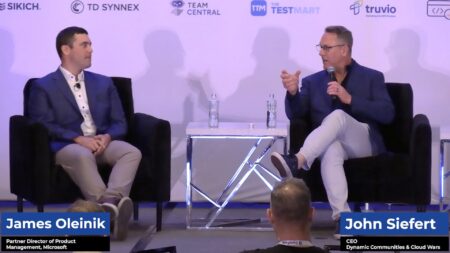
James Oleinik explains how enterprises can scale AI by combining centralized governance with business-led innovation and operational flexibility.

James Oleinik explains how Microsoft Entra and Purview provide identity, observability, and centralized governance for managing enterprise AI agents at scale.
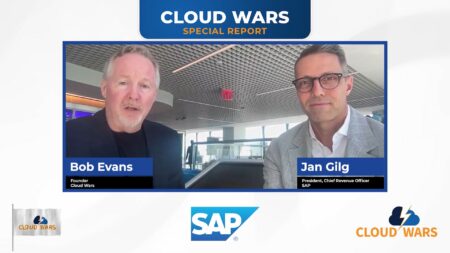
Enterprise AI is entering a new phase where trust, governance, and measurable outcomes matter more than experimentation.

Workday is leveraging its rich employee, finance, and policy data to power AI agents that can act across enterprise workflows.

OpenAI’s enterprise business is emerging as the company’s primary growth engine, already accounting for 40% of revenue and expected to reach 50% by the end of 2026, according to CRO Denise Dresser.

Autopilots increase the level of AI autonomy and automation. Build event also places major focus on agentic AI development — and controls — at the desktop.
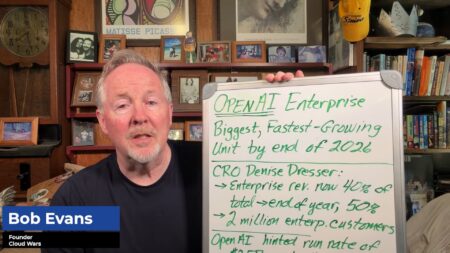
OpenAI’s enterprise business now accounts for 40% of revenue and could reach 50% by year-end, signaling a major shift toward enterprise AI leadership.

Microsoft and EY’s expanded partnership combines AI-native engineering with business consulting to help organizations scale transformative AI initiatives.

The biggest AI opportunity in enterprise software may be reducing implementation friction, not simply adding generative features.

Despite strong optimism around AI adoption, Workday found that most enterprise users still act as intermediaries between AI tools, reducing productivity and undermining the promise of automation.

Enterprise AI has shifted from experimentation to urgent execution, forcing cloud providers to deliver measurable business outcomes faster than ever.
ServiceNow has joined the fast-growing agentic AI movement with Project Arc, an autonomous desktop agent developed with NVIDIA that can execute enterprise tasks securely across multiple tools, signaling a shift beyond conversational copilots.
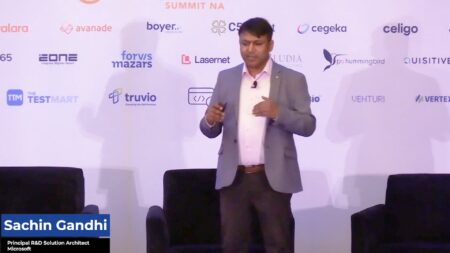
AI agents are driving a shift from product-focused organizations to autonomous, end-to-end process excellence across the enterprise.

Enterprise AI success depends not just on innovation speed, but on governance, interoperability, migration readiness, and organizational change.
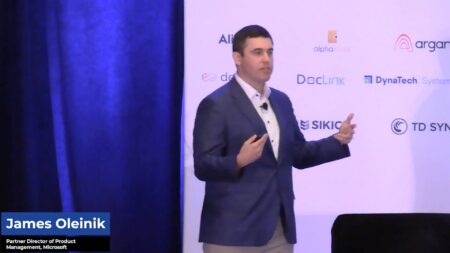
Microsoft’s James Oleinik explains how enterprise software is shifting from app-centric workflows to AI agent-driven systems where intent replaces manual navigation.

SAP is positioning industry-specific AI as a stronger differentiator than generic horizontal enterprise AI tools.

At Paragon Films, MCP enables AI agents to do everything from pinpointing invoice discrepancies to making employee knowledge ‘immortal.’
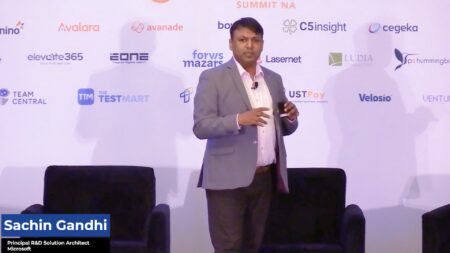
Sachin Gandhi explains how Copilot is evolving into the enterprise interface, enabling agentic workflows that automate processes and turn business data into real-time knowledge.