


Skills codify workflow details that are too often managed as ‘institutional knowledge,’ making those instructions accessible and reusable for agentic AI automation.
Skills codify workflow details that are too often managed as ‘institutional knowledge,’ making those instructions accessible and reusable for agentic AI automation.

At Paragon Films, MCP enables AI agents to do everything from pinpointing invoice discrepancies to making employee knowledge ‘immortal.’

OpenAI’s expanded AWS partnership signals a major shift toward cooperative AI ecosystems where competitors increasingly collaborate to accelerate enterprise adoption.

CEO Christian Klein has been aggressively forging a new SAP via acquisitions in the data field, a shift to consumption pricing, and AI-centered partnerships.
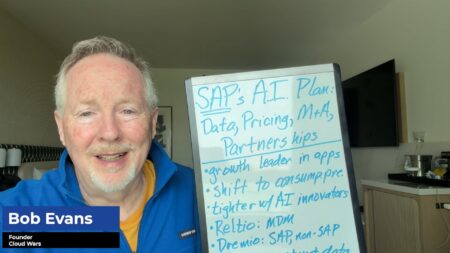
SAP’s AI plan includes strategic partnerships and acquisitions as well as major shifts toward consumption pricing and customer alignment.

New feature rollout includes support for tapping — or building — reusable skills that Cowork can invoke to complete a task or workflow on a user’s behalf.
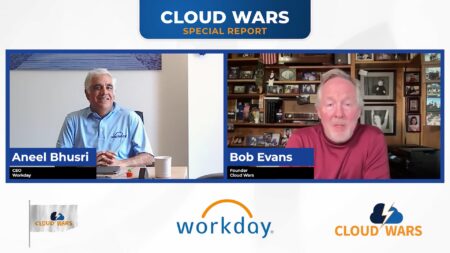
A conversation about enterprise AI readiness, governance challenges, and the next major growth opportunity in intelligent business applications.

OpenAI’s latest Codex upgrades show the company rapidly evolving from standalone AI tools toward a unified “super app” where persistent AI agents can work across apps, retain memory, automate workflows, and increasingly act on behalf of users.

As initial release of ‘control plane’ becomes widely available, Microsoft is expanding agent registry, Shadow AI protections, and threat detection capabilities.

Workday and Achievers are bringing AI-powered behavioral intelligence into HCM, helping enterprises strengthen engagement, productivity, and employee retention through integrated recognition tools.

Alexander Karp says Palantir is fighting “AI slop” by delivering disciplined, measurable, and outcome-focused AI solutions for enterprise customers.

Brent Wodicka, CTO of AIS, explains how ISVs and corporate software developers need to build ‘agent-friendly pathways’ to software platforms to enable autonomous actions.
Palantir delivered extraordinary Q1 results while arguing that enterprise AI must evolve beyond “software” into fully governed AI infrastructure capable of delivering measurable, auditable, and operational business outcomes at scale.

Oracle’s latest AI Database updates deliver faster failover, improved uptime, and zero data loss capabilities. With new security tools and quantum-resistant encryption, enterprises can run mission-critical AI workloads more securely and efficiently.

Microsoft and OpenAI restructure their landmark partnership, enabling broader competition while maintaining strategic ties, signaling a major shift in how AI alliances will evolve across the global cloud ecosystem.

AWS’s AI business has surged to a $20B run rate in just three years, vastly outpacing its early cloud growth. However, competitors like Google Cloud and Microsoft are growing faster, raising questions about AWS’s long-term dominance.
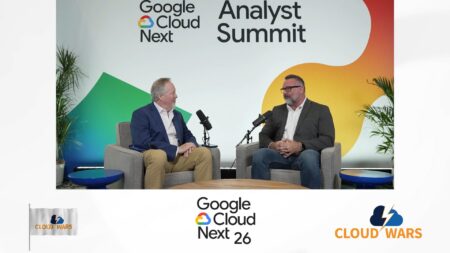
Enterprise AI success depends on balancing fast innovation with strong governance, and integrated platforms make that easier to achieve.

AWS’s AI business is scaling rapidly, yet rivals are outpacing it in both growth and future revenue pipelines.

Google Cloud, Oracle, Microsoft, and AWS now hold more than $2 trillion in combined backlog and RPO, revealing massive contracted demand for AI and cloud services that will convert into future revenue.

The rise of OpenClaw has pushed Microsoft to evolve Copilot beyond chat-based AI into a fully agentic platform, blending automation, coordination, and enterprise-grade governance within Microsoft 365.