


Hyperscalers hit a $2 trillion backlog milestone, signaling unprecedented AI demand while exposing capacity constraints that could reshape infrastructure strategies across Microsoft, AWS, Google Cloud, and Oracle.
Hyperscalers hit a $2 trillion backlog milestone, signaling unprecedented AI demand while exposing capacity constraints that could reshape infrastructure strategies across Microsoft, AWS, Google Cloud, and Oracle.

Google Cloud’s explosive AI-driven growth is reshaping cloud momentum, challenging AWS’s long-held leadership despite its larger market scale.
Deloitte partner says most organizations are still in the transition phase of tapping AI in their ERP environments, but the technology can improve data consistency and improve financial compliance.
A major barrier to AI adoption isn’t willingness but governance, as leaders seek secure, observable, and controllable systems to confidently deploy AI across enterprise environments.
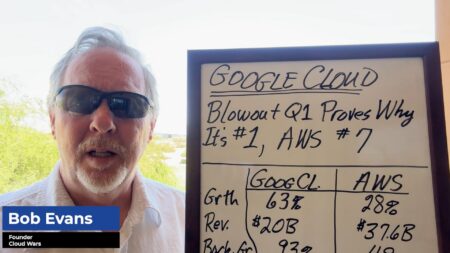
Google Cloud’s explosive Q1 growth and backlog dominance highlight a major shift in cloud leadership, overtaking AWS as AI-driven demand reshapes competitive dynamics among hyperscalers.
Open cloud strategies and agentic AI are helping public sector organizations modernize faster without costly vendor lock-in.
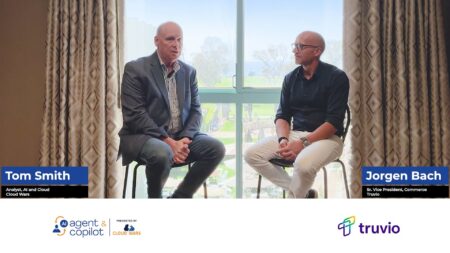
At the AI Agent & Copilot Summit, Truvio’s Jorgen Bach explains how unified platforms and AI agents are helping enterprises close the ERP value gap and operationalize AI adoption.

Enterprise leaders should focus less on automation savings and more on how agentic AI accelerates growth and customer value.
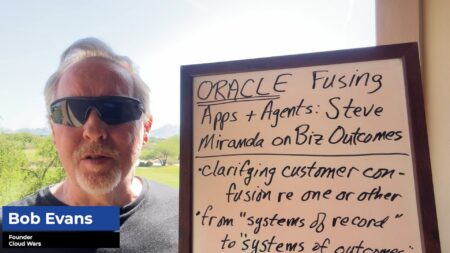
Oracle argues the future is not apps versus agents, but applications and agents working together as one.

Google Cloud doubles down on the agentic AI race with a $750M ecosystem investment designed to accelerate partner innovation, enterprise adoption, and competitive momentum against Microsoft and AWS.

Addition to Microsoft 365 Copilot helps users sort through large amounts of data and conversations to determine required near-term actions and build comprehensive plans.

HSO explains how embedding AI agents into ERP and business workflows is accelerating implementations, improving data transformation, and driving real user adoption through industry-specific automation.

Dona Sarkar explains why AI should be viewed as a tool for empowerment rather than job replacement, urging professionals to become “AI power users” who learn how to harness AI within their own roles and industries.
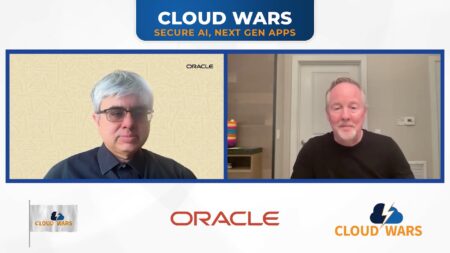
Agentic AI is shifting enterprise systems from answering questions to taking secure, autonomous action at scale.
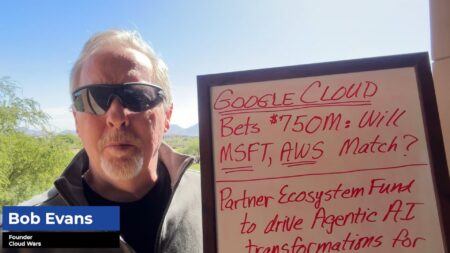
Google Cloud’s $750M ecosystem investment and major AI push signal an aggressive move to lead the agentic AI transformation race among hyperscalers.

SAP’s surging cloud growth and backlog expose the widening gap between AI-doom narratives and the strong reality of enterprise applications in the agentic AI era.

While many predict AI will destroy enterprise software vendors, SAP’s Q1 2026 results tell a different story: cloud revenue rose 27%, Cloud ERP Suite grew 30%, and backlog climbed 25%, proving strong momentum.
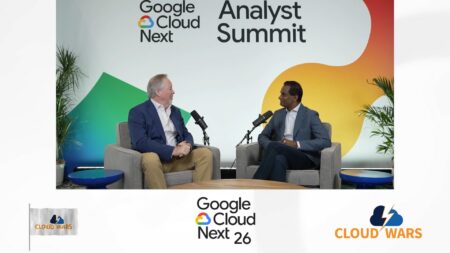
Enterprise AI success is shifting from software consumption metrics to measurable business outcomes and shared accountability between providers and customers.

Oracle EVP Steve Miranda shares the company’s agentic AI vision, introducing its first Agentic Applications and explaining how AI agents are reshaping enterprise workflows.
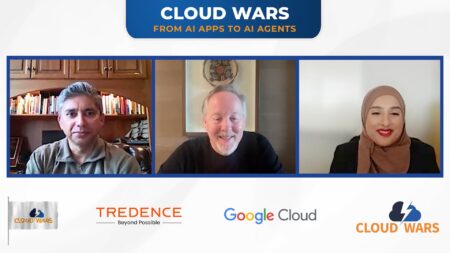
Enterprises must move beyond AI apps and build agentic systems that reason, coordinate, and execute across multiple business workflows.