


Amazon Bedrock AgentCore Payments marks a major step toward economically active AI agents capable of discovering, evaluating, and paying for digital resources without human intervention.
Amazon Bedrock AgentCore Payments marks a major step toward economically active AI agents capable of discovering, evaluating, and paying for digital resources without human intervention.

Salesforce is targeting one of enterprise AI’s biggest barriers: outdated manual workflows that prevent agentic AI from operating efficiently at scale.
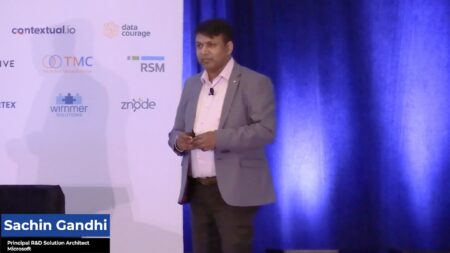
Sachin Gandhi explains how AI agents are transforming supply chains by autonomously planning and executing logistics operations.
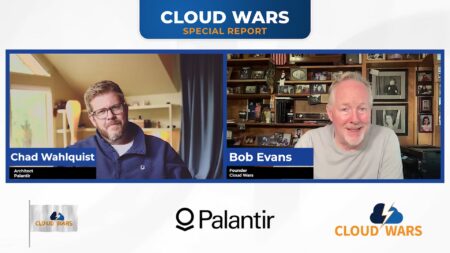
The enterprise AI battleground is shifting from model access to operational context, governance, and differentiated execution infrastructure.

SAP and Palantir are helping redefine enterprise technology, as Christian Klein and Alex Karp both argue that AI-driven execution has moved their companies beyond the traditional definition of software vendors.
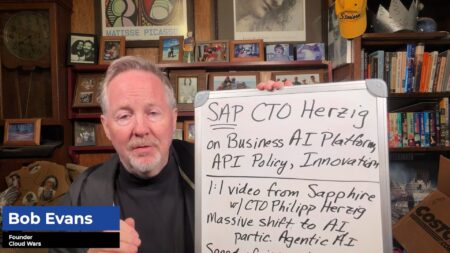
SAP’s Sapphire announcements reveal a company shifting from software provider to business AI powerhouse, with agentic AI, API modernization, and tighter enterprise security at the center.

Skills codify workflow details that are too often managed as ‘institutional knowledge,’ making those instructions accessible and reusable for agentic AI automation.

OpenAI’s expanded AWS partnership signals a major shift toward cooperative AI ecosystems where competitors increasingly collaborate to accelerate enterprise adoption.

OpenAI’s latest Codex upgrades show the company rapidly evolving from standalone AI tools toward a unified “super app” where persistent AI agents can work across apps, retain memory, automate workflows, and increasingly act on behalf of users.

Palantir delivered extraordinary Q1 results while arguing that enterprise AI must evolve beyond “software” into fully governed AI infrastructure capable of delivering measurable, auditable, and operational business outcomes at scale.

AWS’s AI business has surged to a $20B run rate in just three years, vastly outpacing its early cloud growth. However, competitors like Google Cloud and Microsoft are growing faster, raising questions about AWS’s long-term dominance.
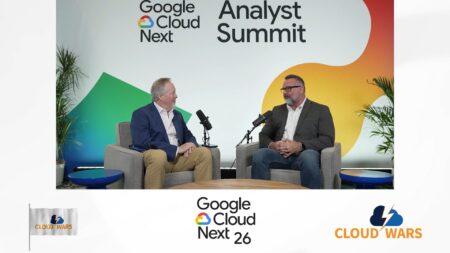
Enterprise AI success depends on balancing fast innovation with strong governance, and integrated platforms make that easier to achieve.

Oracle argues the future is not apps versus agents, but applications and agents working together as one.
Agentic AI is shifting enterprise systems from answering questions to taking secure, autonomous action at scale.

While many predict AI will destroy enterprise software vendors, SAP’s Q1 2026 results tell a different story: cloud revenue rose 27%, Cloud ERP Suite grew 30%, and backlog climbed 25%, proving strong momentum.
Enterprise AI success is shifting from software consumption metrics to measurable business outcomes and shared accountability between providers and customers.
Enterprises must redesign data platforms so autonomous AI agents can reason, act, and securely drive business outcomes across the organization.

After years of disconnected AI breakthroughs, Gemini Enterprise delivers a cohesive system that simplifies deployment, enhances usability, and enables enterprises to fully leverage agentic AI across operations, data, and workflows.

Google Cloud heads into Next with momentum, expected to unveil major advances in AI security, sovereignty, and Gemini Enterprise to strengthen its leadership in the rapidly evolving AI Economy.

New metrics provide visibility into usage patterns, while expanded controls improve governance over content sources in Purview platform.