


James Oleinik explains how Work IQ powers Copilot with real-time enterprise context, turning AI into an intelligent execution layer for work.
James Oleinik explains how Work IQ powers Copilot with real-time enterprise context, turning AI into an intelligent execution layer for work.

Despite strong optimism around AI adoption, Workday found that most enterprise users still act as intermediaries between AI tools, reducing productivity and undermining the promise of automation.
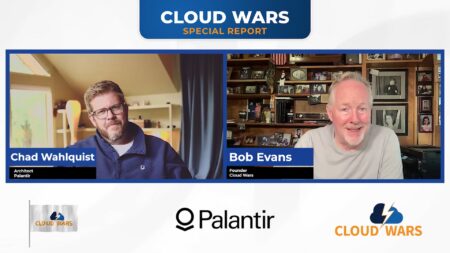
The enterprise AI battleground is shifting from model access to operational context, governance, and differentiated execution infrastructure.

Anthropic’s reported $200 billion Google Cloud commitment highlights the staggering scale of AI infrastructure demand and the increasingly collaborative relationships between traditional hyperscale competitors.

Enterprise AI has shifted from experimentation to urgent execution, forcing cloud providers to deliver measurable business outcomes faster than ever.

SAP and Palantir are helping redefine enterprise technology, as Christian Klein and Alex Karp both argue that AI-driven execution has moved their companies beyond the traditional definition of software vendors.
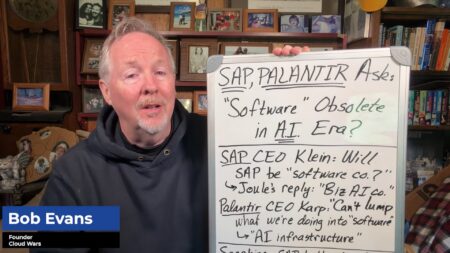
SAP and Palantir argue that agentic AI is transforming their businesses beyond traditional software into something more akin to business AI platforms and AI infrastructure providers.

Enterprise AI success depends not just on innovation speed, but on governance, interoperability, migration readiness, and organizational change.
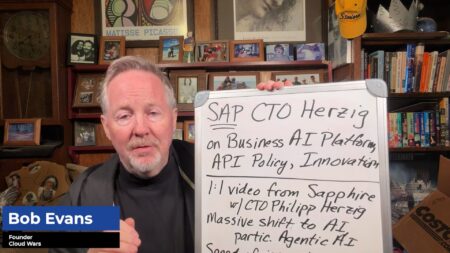
SAP’s Sapphire announcements reveal a company shifting from software provider to business AI powerhouse, with agentic AI, API modernization, and tighter enterprise security at the center.

SAP is positioning industry-specific AI as a stronger differentiator than generic horizontal enterprise AI tools.
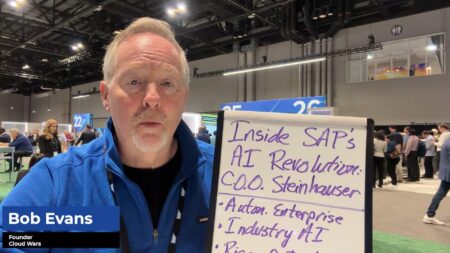
SAP is accelerating its autonomous enterprise strategy with agents, Business Data Cloud, and industry-specific innovation in what could be its most ambitious transformation yet.

At Paragon Films, MCP enables AI agents to do everything from pinpointing invoice discrepancies to making employee knowledge ‘immortal.’

OpenAI’s expanded AWS partnership signals a major shift toward cooperative AI ecosystems where competitors increasingly collaborate to accelerate enterprise adoption.

New feature rollout includes support for tapping — or building — reusable skills that Cowork can invoke to complete a task or workflow on a user’s behalf.
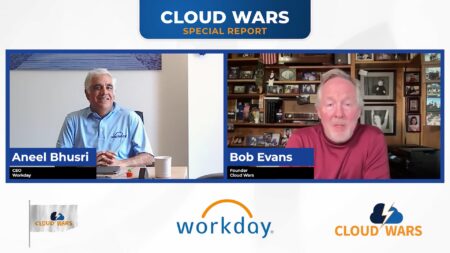
A conversation about enterprise AI readiness, governance challenges, and the next major growth opportunity in intelligent business applications.

OpenAI’s latest Codex upgrades show the company rapidly evolving from standalone AI tools toward a unified “super app” where persistent AI agents can work across apps, retain memory, automate workflows, and increasingly act on behalf of users.

Brent Wodicka, CTO of AIS, explains how ISVs and corporate software developers need to build ‘agent-friendly pathways’ to software platforms to enable autonomous actions.

Palantir delivered extraordinary Q1 results while arguing that enterprise AI must evolve beyond “software” into fully governed AI infrastructure capable of delivering measurable, auditable, and operational business outcomes at scale.

AWS’s AI business has surged to a $20B run rate in just three years, vastly outpacing its early cloud growth. However, competitors like Google Cloud and Microsoft are growing faster, raising questions about AWS’s long-term dominance.

Deloitte partner says most organizations are still in the transition phase of tapping AI in their ERP environments, but the technology can improve data consistency and improve financial compliance.