

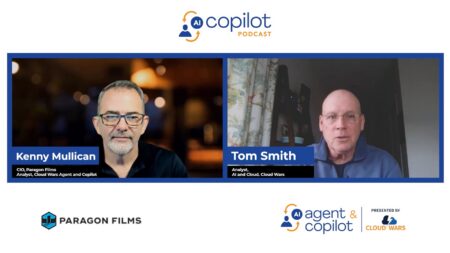
At Paragon Films, MCP enables AI agents to do everything from pinpointing invoice discrepancies to making employee knowledge ‘immortal.’
At Paragon Films, MCP enables AI agents to do everything from pinpointing invoice discrepancies to making employee knowledge ‘immortal.’

CEO Christian Klein has been aggressively forging a new SAP via acquisitions in the data field, a shift to consumption pricing, and AI-centered partnerships.
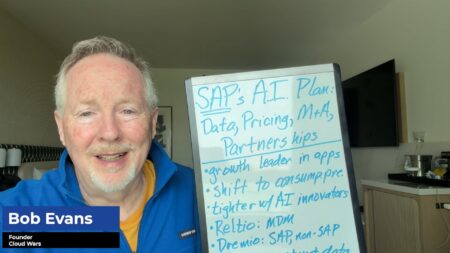
SAP’s AI plan includes strategic partnerships and acquisitions as well as major shifts toward consumption pricing and customer alignment.

New feature rollout includes support for tapping — or building — reusable skills that Cowork can invoke to complete a task or workflow on a user’s behalf.
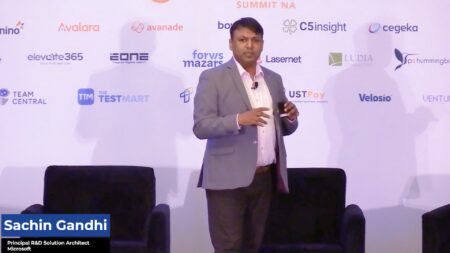
Sachin Gandhi explains how Copilot is evolving into the enterprise interface, enabling agentic workflows that automate processes and turn business data into real-time knowledge.
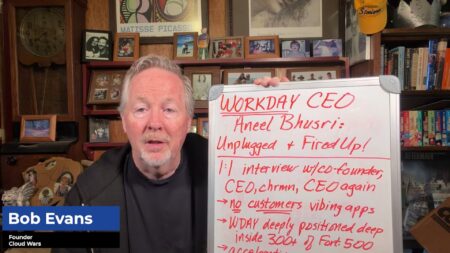
Aneel Bhusri is back as Workday CEO and focused on turning the company into an AI-first, agentic enterprise software powerhouse.

As initial release of ‘control plane’ becomes widely available, Microsoft is expanding agent registry, Shadow AI protections, and threat detection capabilities.
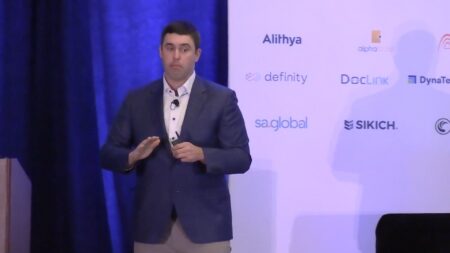
Microsoft’s James Oleinik explains how enterprise AI is shifting from a human-driven assistant to systems that independently execute work on behalf of users.
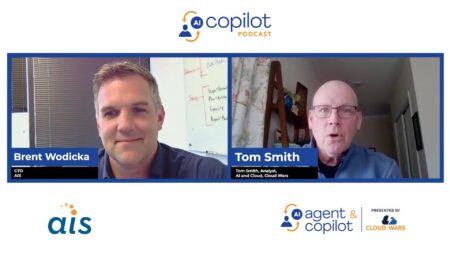
Brent Wodicka, CTO of AIS, explains how ISVs and corporate software developers need to build ‘agent-friendly pathways’ to software platforms to enable autonomous actions.

Dona Sarkar explains how the shift from generative AI to agentic AI is redefining enterprise systems through self-correcting, multi-agent collaboration.

Google Cloud’s explosive AI-driven growth is reshaping cloud momentum, challenging AWS’s long-held leadership despite its larger market scale.
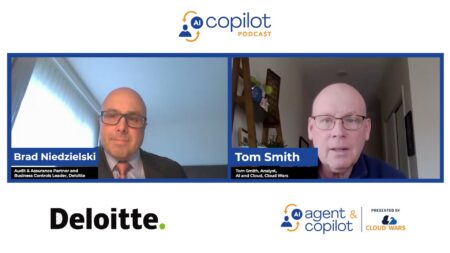
Deloitte partner says most organizations are still in the transition phase of tapping AI in their ERP environments, but the technology can improve data consistency and improve financial compliance.
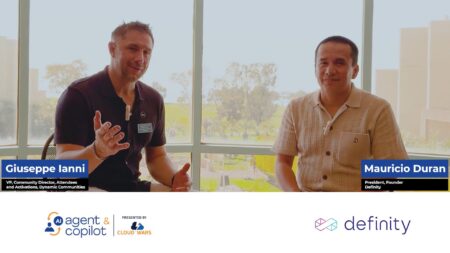
Definity First founder Mauricio Duran explains why enterprises must start with business problems — not technology — to successfully move AI into production.
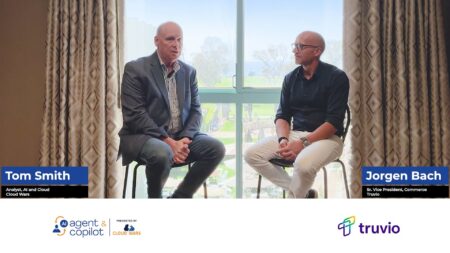
At the AI Agent & Copilot Summit, Truvio’s Jorgen Bach explains how unified platforms and AI agents are helping enterprises close the ERP value gap and operationalize AI adoption.

Google Cloud doubles down on the agentic AI race with a $750M ecosystem investment designed to accelerate partner innovation, enterprise adoption, and competitive momentum against Microsoft and AWS.

Addition to Microsoft 365 Copilot helps users sort through large amounts of data and conversations to determine required near-term actions and build comprehensive plans.
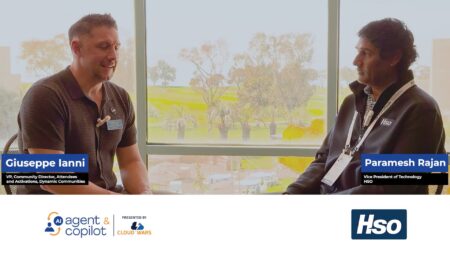
HSO explains how embedding AI agents into ERP and business workflows is accelerating implementations, improving data transformation, and driving real user adoption through industry-specific automation.

Dona Sarkar explains why AI should be viewed as a tool for empowerment rather than job replacement, urging professionals to become “AI power users” who learn how to harness AI within their own roles and industries.
Stellantis and Microsoft launch a sweeping AI partnership spanning engineering, cybersecurity, and enterprise transformation.
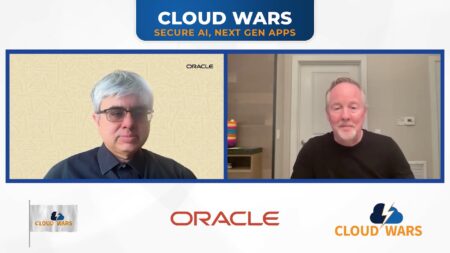
Agentic AI is shifting enterprise systems from answering questions to taking secure, autonomous action at scale.