


Oracle and Alphabet are pioneering new approaches to finance massive AI infrastructure expansion, using debt and equity markets to meet unprecedented customer demand for cloud and AI services.
Oracle and Alphabet are pioneering new approaches to finance massive AI infrastructure expansion, using debt and equity markets to meet unprecedented customer demand for cloud and AI services.

Oracle and Google Cloud are challenging conventional wisdom by using outside funding to support massive AI infrastructure investments driven by unprecedented customer demand.

ServiceNow CEO Bill McDermott says the company is now AI-native and targeting five high-growth markets worth more than $600 billion, backed by strong momentum in AI, security, CRM, employee experience, and data management.
An exploration of why future agility, rather than future-proofing, is becoming the defining characteristic of successful digital businesses.
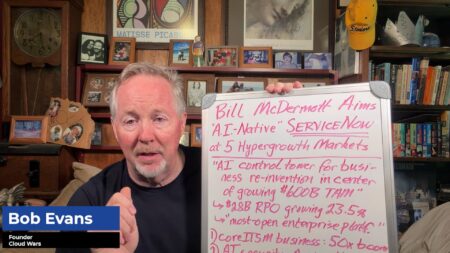
ServiceNow is betting its future on being AI-native, with Bill McDermott outlining five hyper-growth markets that could drive long-term expansion and strengthen its leadership position.

Autopilots increase the level of AI autonomy and automation. Build event also places major focus on agentic AI development — and controls — at the desktop.

Puri discusses how AI-powered analysis of vast biological databases helps researchers identify patterns, design new therapeutic molecules, and significantly improve experimental success rates in modern pharmaceutical research.

AI is dramatically reducing implementation effort, forcing enterprise services firms to rethink staffing, pricing, and customer engagement models.

Copilot Studio’s new visibility and governance capabilities help organizations scale AI automation while preserving security and operational oversight.

Giuseppe Ianni and Nandita Puri discuss how AI is helping connect fragmented biomedical research, reducing years of literature review into months of analysis and creating new opportunities for rare disease treatments.

Features for controlling the actions of agents — ensuring they don’t misbehave — bring the enterprise-level controls required by IT/security pros and business leaders alike.

Dona Sarkar explains why coding agents succeed first in AI adoption thanks to structured data, clear validation, and measurable outcomes.

AI and Microsoft expert Paul Swider details a personal health assistant he’s built called Tula that unifies all of a patient’s data and aims to level the healthcare playing field.

The biggest AI opportunity in enterprise software may be reducing implementation friction, not simply adding generative features.

James Oleinik explains how Work IQ powers Copilot with real-time enterprise context, turning AI into an intelligent execution layer for work.

Despite strong optimism around AI adoption, Workday found that most enterprise users still act as intermediaries between AI tools, reducing productivity and undermining the promise of automation.
The enterprise AI battleground is shifting from model access to operational context, governance, and differentiated execution infrastructure.

Anthropic’s reported $200 billion Google Cloud commitment highlights the staggering scale of AI infrastructure demand and the increasingly collaborative relationships between traditional hyperscale competitors.

Enterprise AI has shifted from experimentation to urgent execution, forcing cloud providers to deliver measurable business outcomes faster than ever.

SAP and Palantir are helping redefine enterprise technology, as Christian Klein and Alex Karp both argue that AI-driven execution has moved their companies beyond the traditional definition of software vendors.