

Oracle EVP Steve Miranda shares the company’s agentic AI vision, introducing its first Agentic Applications and explaining how AI agents are reshaping enterprise workflows.
Oracle EVP Steve Miranda shares the company’s agentic AI vision, introducing its first Agentic Applications and explaining how AI agents are reshaping enterprise workflows.
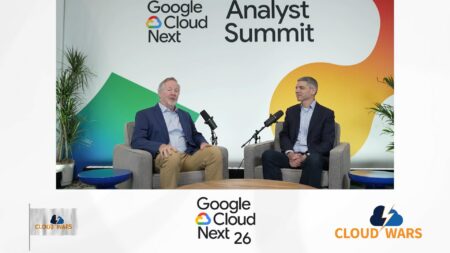
Enterprises must redesign data platforms so autonomous AI agents can reason, act, and securely drive business outcomes across the organization.

After years of disconnected AI breakthroughs, Gemini Enterprise delivers a cohesive system that simplifies deployment, enhances usability, and enables enterprises to fully leverage agentic AI across operations, data, and workflows.
Google Cloud heads into its Next event with strong momentum, focusing on AI security, sovereignty, and Gemini Enterprise enhancements to help enterprises scale AI while addressing rising cybersecurity threats and regulatory demands.
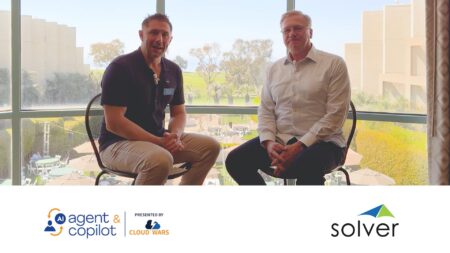
Tad Remington explains how Solver is embedding AI agents into FP&A workflows, enabling organizations to analyze trusted, pre-structured financial data and streamline planning processes without requiring extensive manual intervention or custom-built systems.

Microsoft addresses the limitations of pure AI autonomy by integrating workflows and agents, creating more structured, flexible automation systems tailored to enterprise production environments.
AI agents are advancing rapidly, but compliance concerns persist, and Panopticore aims to solve this with deterministic governance and verifiable audit trails at the network infrastructure level.
Google introduces Gemma 4, an advanced open AI model series designed for local deployment. With mobile-first capabilities, multimodal processing, and strong reasoning, it empowers developers to build scalable AI applications without relying on cloud infrastructure.
Round of enhancements also includes simplified prompting during agent-building processes, new content moderation controls to govern sensitive material.

Microsoft’s 2026 Release Wave 1 introduces deeper Copilot integration, expanded agentic AI experiences, and new governance and automation capabilities across Dynamics 365, Power Platform, and Microsoft 365 Copilot, accelerating the shift toward enterprise-wide agentic operations.
With 209% ROI and six-month payback, Business Central is helping organizations streamline finance operations while enabling AI-powered insights through unified data and standardized processes.

Google Cloud showcased its cybersecurity strategy at RSAC 2026, highlighting its Wiz acquisition and new agentic AI tools designed to automate threat detection, improve response times, and strengthen multicloud security in an increasingly complex digital landscape.
New AI platforms are eliminating data silos by integrating multiple enterprise systems into unified, intelligent workflows.
SAP plans a gradual move from SaaS subscriptions to AI usage-based pricing, signaling a structural change in enterprise software economics.
Google Cloud and Baker Hughes have partnered to tackle the massive energy demands of AI data centers, combining industrial power expertise with advanced AI to improve efficiency, sustainability, and reliability in global digital infrastructure.
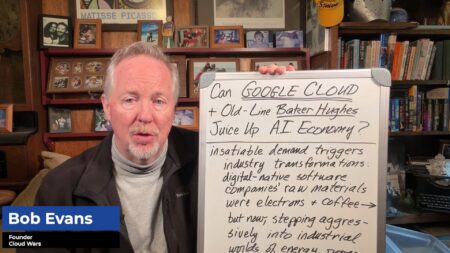
The surge in AI data center demand is collapsing industry lines, pushing tech companies into energy partnerships that could redefine power generation, infrastructure investment, and long-term innovation strategies.
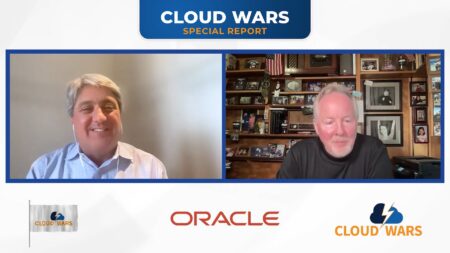
New AI-powered applications enable users to instruct systems with goals instead of processes, dramatically changing enterprise workflows and decision-making.
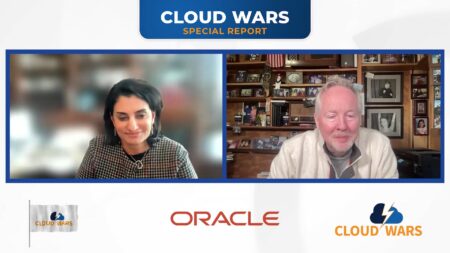
A unified, end-to-end approach is replacing fragmented healthcare systems with connected data and intelligent workflows powered by modern infrastructure.
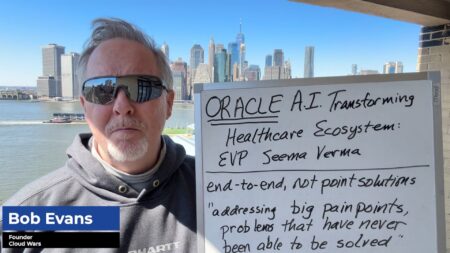
By leveraging AI, Oracle aims to shift healthcare from disconnected systems to a fully integrated ecosystem connecting providers, payers, and patients with improved efficiency and coordination.
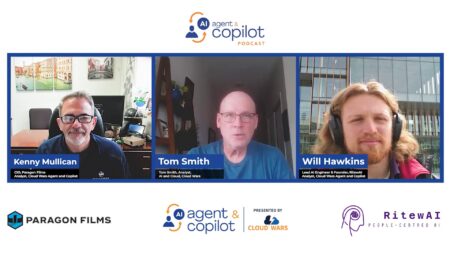
In their highlights from AI Agent and Copilot Summit, Kenny Mullican and WIll Hawkins explain the value of support for third-party tools, note the need for greater interoperability in the Microsoft stack.