

At its DevDay developer conference, OpenAI made major announcements regarding new products and changes, particularly advancements with GPTs
At its DevDay developer conference, OpenAI made major announcements regarding new products and changes, particularly advancements with GPTs

Some highlights from OpenAI’s developer conference, featuring turbocharged GPT, custom GPTs, and a strategic Microsoft partnership, emphasizing rapid AI adoption for CIOs and businesses.
Baidu is the first Chinese tech company to pass government approval for its own LLM, as it releases ERNIE bot to the public.

AI Index Report episode 4: AptEdge empowers customer service agents with AI; generative AI funding is distributed across 5 core categories; and Microsoft delivers Bing Chat Enterprise.
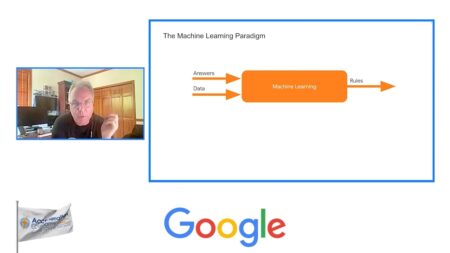
By breaking down the acronym GPT (generative pre-trained transformers), we can enhance our understanding of the new technology’s powers and limitations.
Kieron Allen explains how Informatica’s CLAIRE GPT is further democratizing data for Informatica users.

Analyst Toni Witt shares two real-world use cases demonstrating how large language models like GPT-4 enhance finance processes, reduce errors and biases, and boost efficiency.
GPT is the underlying machine learning model that powers ChatGPT. Toni Witt explains what it is, and how its evolution will impact generative AI.

Databricks has rolled out its own AI model intended as a simpler alternative to ChatGPT, with an aim to help customers build chatbots.

With the recent announcement of ChatGPT plugins, many companies are developing ways to optimize Generative AI capabilities.
With OpenAI’s recent release of the next generation of GPT, Toni Witt breaks down highlights including more accurate and more safe outputs.

With a squarely enterprise-focused business model and an AI product set to serve enterprise requirements, Cohere has staked out a distinctive position in the AI ecosystem.

Analyst Tom Smith sheds light on SaaS software startup Gong, a pioneer in the application of AI to the selling process, which could translate to increased revenue.
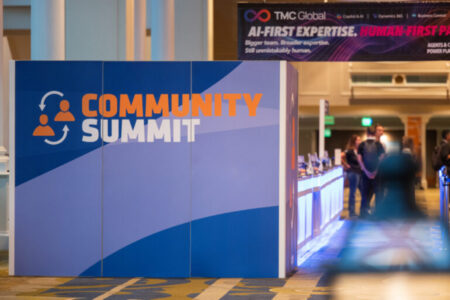
Community Summit NA 2026 opened in Nashville with Microsoft leaders and enterprise customers exploring AI agents, vibe coding, governance, and business transformation, emphasizing the importance of human judgment, employee engagement, and measurable outcomes.

Google Cloud’s Gemini Agent combines personal AI capabilities with enterprise-grade governance, multicloud connectivity, and model flexibility. CEO Thomas Kurian believes these integrated features will help organizations deploy sophisticated AI agents more efficiently and affordably.
Microsoft has distilled lessons from hundreds of internal AI transformation projects into five principles focused on business outcomes, end-to-end workflow redesign, employee involvement, expanded human capabilities, and continuous learning between people and AI.
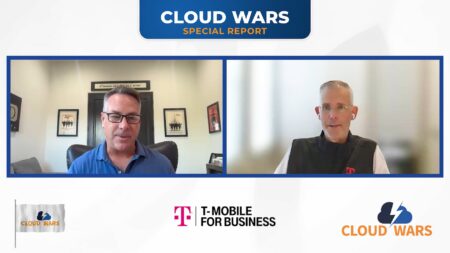
AI is accelerating demand for always-available networks, but the underlying connectivity foundation must remain adaptable enough to support whatever technology comes next.
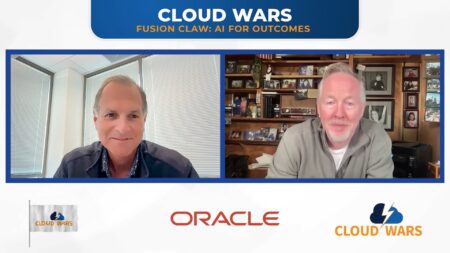
Oracle Fusion Claw combines AI reasoning, deterministic computing, and enterprise governance to execute complex business processes with increasing autonomy.
AI leaders are accelerating their push into vertical industries through customer-designed products, deeper data integration, and industry-specific skills.
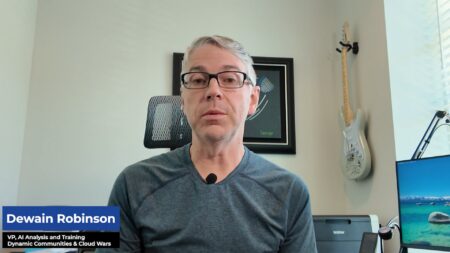
AI infrastructure spending is reaching unprecedented levels, but rising CapEx is beginning to outpace cash flow, raising questions about how hyperscalers will fund continued AI investment.