


An exploration of why future agility, rather than future-proofing, is becoming the defining characteristic of successful digital businesses.
An exploration of why future agility, rather than future-proofing, is becoming the defining characteristic of successful digital businesses.

Christopher Lochhead explains how AI is making knowledge and execution increasingly free, shifting competitive advantage to agent-driven systems.

OpenAI’s enterprise business is emerging as the company’s primary growth engine, already accounting for 40% of revenue and expected to reach 50% by the end of 2026, according to CRO Denise Dresser.
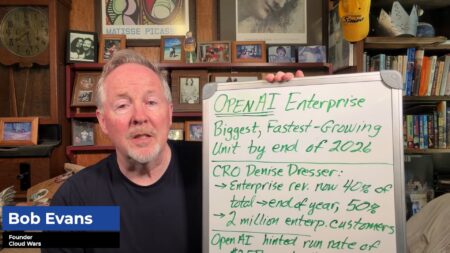
OpenAI’s enterprise business now accounts for 40% of revenue and could reach 50% by year-end, signaling a major shift toward enterprise AI leadership.

Enterprise AI success depends not just on innovation speed, but on governance, interoperability, migration readiness, and organizational change.

SAP is positioning industry-specific AI as a stronger differentiator than generic horizontal enterprise AI tools.

OpenAI’s latest Codex upgrades show the company rapidly evolving from standalone AI tools toward a unified “super app” where persistent AI agents can work across apps, retain memory, automate workflows, and increasingly act on behalf of users.

After years of disconnected AI breakthroughs, Gemini Enterprise delivers a cohesive system that simplifies deployment, enhances usability, and enables enterprises to fully leverage agentic AI across operations, data, and workflows.
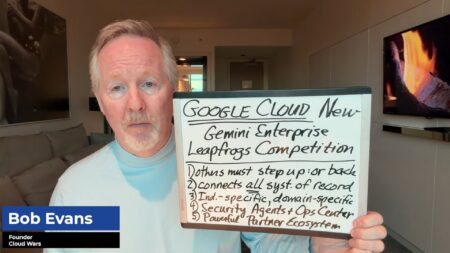
At Google Cloud Next, Gemini Enterprise emerges as a major step forward in enterprise AI, combining integrated data access, industry agents, advanced security, and partner innovation into a simplified, end-to-end platform.
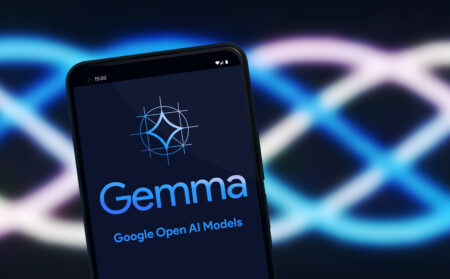
Google introduces Gemma 4, an advanced open AI model series designed for local deployment. With mobile-first capabilities, multimodal processing, and strong reasoning, it empowers developers to build scalable AI applications without relying on cloud infrastructure.

Round of enhancements also includes simplified prompting during agent-building processes, new content moderation controls to govern sensitive material.

With revenue scaling faster than Alphabet and Meta, OpenAI is investing heavily in infrastructure and partnerships to support surging AI demand and enterprise adoption.

New AI-powered applications enable users to instruct systems with goals instead of processes, dramatically changing enterprise workflows and decision-making.

Dona Sarkar calls out the “tech bro”-driven AI hype machine and shares a blueprint to push AI into mainstream use cases that will deliver on the tech’s considerable promise.

Monday’s outage impacting several Claude tools was relatively brief, but it highlights the integral role of AI in modern workflows and the need for robust continuity plans.

Microsoft expands Copilot with business-process agents, tuning templates, and standalone AI assistants designed to transform workflows across sales, finance, service, and enterprise productivity.

Security Dashboard for AI is built to rein in AI sprawl with Defender, Entra, and Purview integration as well as inventory functions that span Microsoft and widely used third-party AI software.

The Publisher Content Marketplace aims to solve both monetization and credibility challenges in AI by enabling structured licensing agreements between publishers and AI developers.

Discover six key trends for scaling agentic AI in organizations, from end-to-end workflows and system integration to governance, model flexibility, and productivity gains.
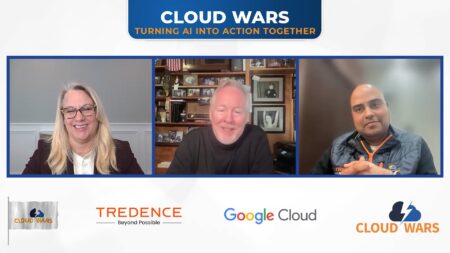
Enterprises are shifting from AI insights to automated actions that adapt continuously and operate at real-time speed.