

For two years, the loudest prediction in enterprise software has been that AI agents will hollow out traditional business applications. Microsoft is making the opposite bet in ERP — and with Dynamics 365 Finance, it’s building the agile foundation that lets finance teams put agents to work without giving up control.
The System of Record Strikes Back
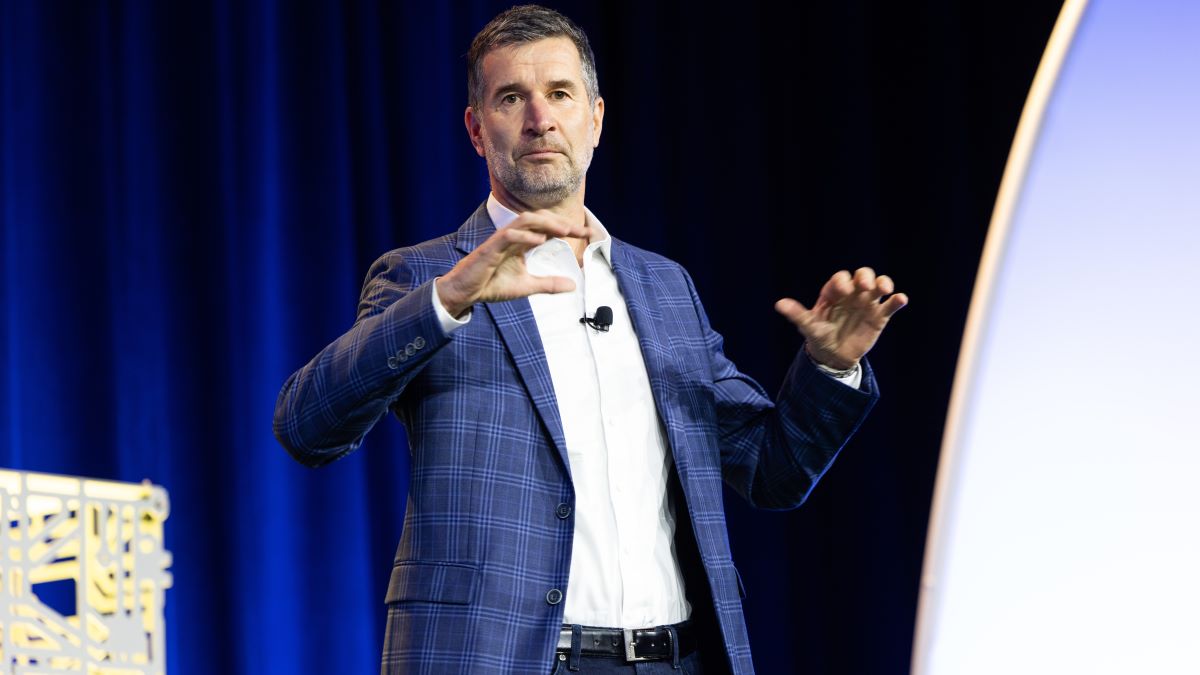
The news peg is a fresh analyst placement for Microsoft in cloud ERP for finance. But the more important story is the argument Georg Glantschnig, Microsoft’s Corporate Vice President of AI ERP, makes about why the ERP core is gaining strategic weight, not losing it.
As AI moves into finance work, Glantschnig wrote, “the financial system of record matters more than ever.” On the idea that agents will make business applications less relevant, he’s blunt: “In ERP, we’re seeing the opposite.”
His logic is simple and, for any CFO, hard to dispute. An answer Copilot gives a finance chief, or a task it completes for a controller, is only as trustworthy as the data, accounting rules, and controls underneath it. A reconciliation isn’t done because two totals match. The transactions have to be valid, the discrepancies explained, and the result defensible when the auditors show up.
That’s the core insight here: agentic AI in finance doesn’t replace the ledger. It raises the stakes on getting the ledger right.
A Core Built to Flex
For multinationals, financial complexity isn’t an exception to manage — it’s baked into the operating model. A single transaction can cross legal entities, currencies, tax jurisdictions, and reporting standards before it lands in consolidated results. It has to keep doing that cleanly while the business acquires companies, enters new markets, and changes how it sells.
That’s where agility starts: with deterministic systems that apply defined rules the same way every time, no matter how fast the business is moving. Microsoft is investing accordingly in the Dynamics 365 Finance core:
- Re-engineered financial journals built for higher transaction volumes and cross-entity complexity, with the ability to view intercompany transactions, create accruals, and preview allocations before posting.
- Country-by-country regulatory readiness, including electronic invoicing and e-reporting in France and the next phase of Brazil’s tax reform.
The Adecco Group shows what that looks like at scale. The talent advisory giant runs 450 legal entities across 60 countries and territories and is standardizing its financial processes on Dynamics 365 Finance. In Japan, it cut two days from its financial close, and it expects to save $540,000 over three years by retiring legacy systems.
The takeaway for finance leaders weighing an ERP modernization: the foundation you choose sets the ceiling on how much work agents can reliably take on.
Taking the Ledger to Where Finance Actually Works
A trusted core is necessary, but it’s not sufficient. Finance work rarely stays inside the ERP: analysis happens in Excel, questions arrive in Outlook, and decisions get made in Teams — usually with numbers copied out of the ledger by hand.
Microsoft’s answer is to make Copilot the interface to that work. As Dynamics 365 ERP applications connect to Work IQ, Copilot can draw on financial records, business rules and organizational context within each user’s security permissions. In practice, that means:
- A finance leader can ask a ledger question mid-business review and get an answer grounded in the relevant data
- Responses come with citations and deep links back to the underlying records, so reviewers can trace every answer to its source
- With Copilot Cowork and the Dynamics 365 ERP plugin, an analyst can hand off multi-step work — like checking close-task status across legal entities — while staying in control of the outcome
Critically, access to financial data stays governed by the same identity, permissions and compliance controls that run across the Microsoft Cloud. That’s what makes this agile rather than reckless: the data moves to where people work, but the guardrails move with it.
What Glantschnig Told the Community Summit Crowd
None of this is new messaging for Glantschnig. As one of the keynote speakers at Community Summit NA 2026 in Nashville earlier this month, he gave the Dynamics community three guidelines for AI initiatives:
- Reimagine whole processes — redesign end-to-end, cross-functional workflows rather than bolting AI onto individual tasks.
- Govern for trust — put the governance in place so AI operates inside a system people can rely on.
- Focus on outcomes — pick a process, define what success looks like, then learn and scale as results come in.
In the F/SCM Microsoft Platform General Session, Glantschnig sharpened the point. AI’s real value, he argued, comes from rethinking how work gets done, not from shaving seconds off individual tasks. He zeroed in on the “coordination tax” employees pay every day: hunting for information, chasing responses, and working through approval chains. That’s exactly the kind of cross-system, cross-team work agents can take on — as long as trust, governance, and measurable outcomes stay front and center.
Amanda Hillman, Strategy Director, Dynamics 365 ERP at Microsoft, made that vision tangible. Her live demos were the standout of the session, showing what an agile AI foundation on Dynamics 365 looks like in a real workday:
- A demand planner uses Copilot to spot a market opportunity, test it against production capacity and financial impact, and line up approvals from marketing, finance, warehousing and supply chain.
- An agent tracks responses and nudges stakeholders, while the employee keeps final approval authority.
- Every approved change is documented with an audit trail before it’s written back to the business systems.
- Business skills capture institutional knowledge and guide agents through recurring work such as the monthly demand review.
- Agents run work in parallel, pausing for human review at key decision points — and Activate, an AI-assisted implementation framework, applies the same approach to planning and coordinating expansion projects.
Hillman’s demos made the abstract concrete: Copilot as the interface, agents doing the coordination, and the ERP holding the governed record underneath. That’s the same three-layer model laid out in the blog post, running live on stage.
At a customer roundtable the same week, he connected the foundation argument directly to the economics of agents. Without business context, agents fall back on trial and error, burning tokens as they test approach after approach. With Work IQ supplying process knowledge and operational context from Dynamics 365, an agent can follow the right path the first time — and carry that context into the next conversation. Dewain Robinson of Dynamic Communities estimated the latest Work IQ advances could cut token usage by as much as 80%.
Glantschnig also urged customers to keep customizations to a minimum, since heavy customization makes data harder for agents to reach. Roundtable attendee Syndicate Sales offers the extreme example: it went from roughly 10,000 customizations to zero during its Dynamics migration. That’s the agile foundation in practice — a clean, standard core is what makes agents faster, cheaper and more accurate to run.
Agents Where Judgment Matters — Not Everywhere
Here’s where Microsoft’s approach gets refreshingly disciplined. “Not every finance task needs an agent,” Glantschnig wrote. Rules-based processes such as posting and allocations belong in the ERP, where they execute consistently. Agents earn their keep where interpretation is required: matching transactions that don’t quite line up, processing supplier invoices in a dozen formats, and chasing down exceptions.
Inside Dynamics 365 Finance, that shows up in two places:
- The Account Reconciliation Agent flags exceptions between subledgers and the general ledger and suggests fixes. Teams decide which legal entities and modules it covers, how much it processes and when they’re notified — and can preview a simulation of a resolution before it’s applied.
- In accounts payable, intelligent invoice recognition and suggested finance entries help more invoices flow through without manual handling.
Pamarco Technologies, a maker of anilox rolls and printing technology with seven legal entities and customers in nearly 70 countries, shows how far a composable stack can go. Using Copilot Cowork, Copilot Studio and the Dynamics 365 ERP MCP server on top of Dynamics 365 Finance, Pamarco now codes non-PO freight invoices with roughly 95% success, advances tasks in its period-close workspace and preps reporting like its monthly board sales deck. CIO Glyn Wilson says about 40% of financial close tasks are now automated by autonomous agents.
Note the architecture: agents built with open tooling like MCP, sitting on top of a close workspace, permissions model and records that remain the system of record. That’s the agile part — customers can compose new agents fast because the foundation underneath doesn’t move.
The Cloud Wars Take
Strip away the analyst-report packaging and what Microsoft is really laying out is a three-layer blueprint for AI in finance:
- A financial core built for multinational complexity — deterministic, auditable and ready for regulatory change.
- Copilot as the interface — bringing governed ERP data into Excel, Outlook and Teams.
- Agents applied with intent — deployed where judgment is needed, not where rules already do the job.
The bigger point for CFOs: AI in finance will only be as agile as the foundation it runs on. Glantschnig puts the ceiling plainly — agents will take on more of finance’s work, but “only as much as the foundation underneath them allows.”
Put the blog post next to Glantschnig’s Community Summit guidance and the message is consistent: reimagine whole processes, govern them, and build on a core clean enough that agents don’t waste time — or tokens — finding their way.
That’s the right framing for the 2027 budget season. The vendors that win the agentic ERP race won’t be the ones with the most agents; they’ll be the ones whose platforms let customers add, govern, and trust agents at speed. With Dynamics 365 Finance, Microsoft is making a strong case that it intends to be one of them. Expect more on this at Microsoft Ignite, November 17–20.