

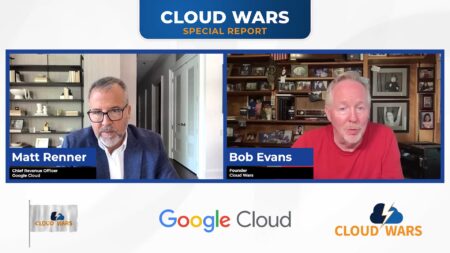
Enterprise AI has shifted from experimentation to urgent execution, forcing cloud providers to deliver measurable business outcomes faster than ever.
Enterprise AI has shifted from experimentation to urgent execution, forcing cloud providers to deliver measurable business outcomes faster than ever.
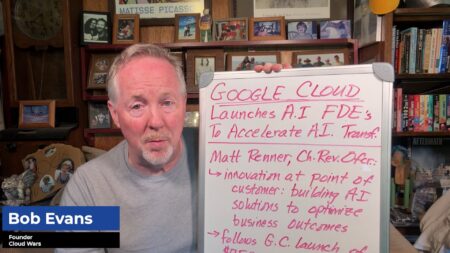
Google Cloud is accelerating enterprise AI adoption with specialized AI engineers and a $750 million ecosystem fund, signaling a more aggressive customer execution strategy.

SAP is positioning industry-specific AI as a stronger differentiator than generic horizontal enterprise AI tools.

CEO Christian Klein has been aggressively forging a new SAP via acquisitions in the data field, a shift to consumption pricing, and AI-centered partnerships.

As initial release of ‘control plane’ becomes widely available, Microsoft is expanding agent registry, Shadow AI protections, and threat detection capabilities.

Oracle’s latest AI Database updates deliver faster failover, improved uptime, and zero data loss capabilities. With new security tools and quantum-resistant encryption, enterprises can run mission-critical AI workloads more securely and efficiently.
AWS’s AI business has surged to a $20B run rate in just three years, vastly outpacing its early cloud growth. However, competitors like Google Cloud and Microsoft are growing faster, raising questions about AWS’s long-term dominance.
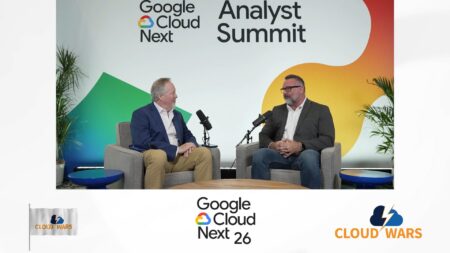
Enterprise AI success depends on balancing fast innovation with strong governance, and integrated platforms make that easier to achieve.

Google Cloud, Oracle, Microsoft, and AWS now hold more than $2 trillion in combined backlog and RPO, revealing massive contracted demand for AI and cloud services that will convert into future revenue.
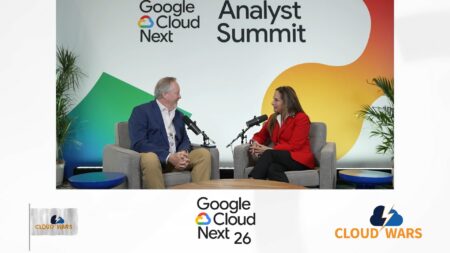
Open cloud strategies and agentic AI are helping public sector organizations modernize faster without costly vendor lock-in.
Google Cloud doubles down on the agentic AI race with a $750M ecosystem investment designed to accelerate partner innovation, enterprise adoption, and competitive momentum against Microsoft and AWS.

Stellantis and Microsoft launch a sweeping AI partnership spanning engineering, cybersecurity, and enterprise transformation.

After years of disconnected AI breakthroughs, Gemini Enterprise delivers a cohesive system that simplifies deployment, enhances usability, and enables enterprises to fully leverage agentic AI across operations, data, and workflows.

A major focus for sa.global is building industry-specific AI agents tailored to professional services sectors like construction and legal, aiming to reduce inefficiencies, automate workflows, and protect revenue streams.
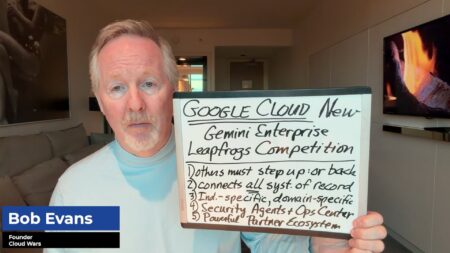
At Google Cloud Next, Gemini Enterprise emerges as a major step forward in enterprise AI, combining integrated data access, industry agents, advanced security, and partner innovation into a simplified, end-to-end platform.
Google Cloud heads into its Next event with strong momentum, focusing on AI security, sovereignty, and Gemini Enterprise enhancements to help enterprises scale AI while addressing rising cybersecurity threats and regulatory demands.

AWS launched its Interconnect-multicloud service years after Oracle pioneered the concept, highlighting a shift in cloud leadership. Oracle’s partnerships and strategy have reshaped the market, leaving AWS in a reactive, follower position.
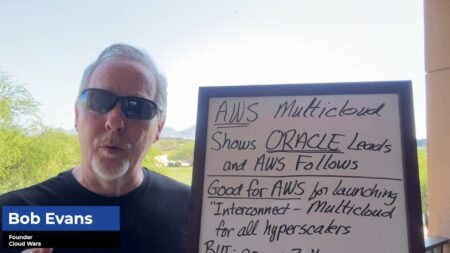
Multi-cloud partnerships reveal a deeper divide in cloud leadership, where Oracle’s early moves enabled seamless cross-platform deployment, leaving AWS positioned as a delayed follower.

Microsoft and Publicis Groupe are expanding a long-running partnership to create a full-stack marketing solution powered by cloud, agentic AI, and identity-based data, helping marketers automate workflows, modernize legacy systems, and unlock faster, smarter growth opportunities.
Microsoft’s shift toward in-house AI models reflects a broader strategy to reduce dependence on OpenAI while strengthening its position as both an AI platform provider and model innovator.