


OpenAI’s enterprise business is emerging as the company’s primary growth engine, already accounting for 40% of revenue and expected to reach 50% by the end of 2026, according to CRO Denise Dresser.
OpenAI’s enterprise business is emerging as the company’s primary growth engine, already accounting for 40% of revenue and expected to reach 50% by the end of 2026, according to CRO Denise Dresser.

Microsoft and EY’s expanded partnership combines AI-native engineering with business consulting to help organizations scale transformative AI initiatives.

The biggest AI opportunity in enterprise software may be reducing implementation friction, not simply adding generative features.

Salesforce is targeting one of enterprise AI’s biggest barriers: outdated manual workflows that prevent agentic AI from operating efficiently at scale.
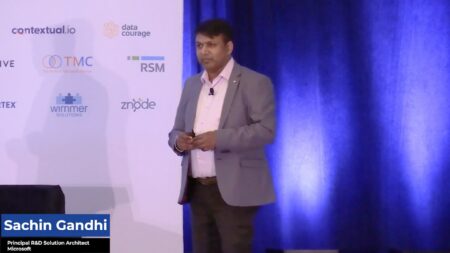
Sachin Gandhi explains how AI agents are transforming supply chains by autonomously planning and executing logistics operations.

Christopher Lochhead explains how AI is accelerating category-level shifts that create entirely new kinds of jobs while rapidly reshaping the future of work.

SAP and Palantir are helping redefine enterprise technology, as Christian Klein and Alex Karp both argue that AI-driven execution has moved their companies beyond the traditional definition of software vendors.

Enterprise AI success depends not just on innovation speed, but on governance, interoperability, migration readiness, and organizational change.

SAP is positioning industry-specific AI as a stronger differentiator than generic horizontal enterprise AI tools.
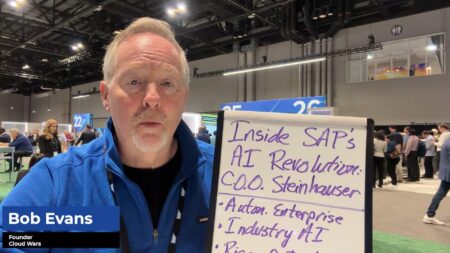
SAP is accelerating its autonomous enterprise strategy with agents, Business Data Cloud, and industry-specific innovation in what could be its most ambitious transformation yet.

CEO Christian Klein has been aggressively forging a new SAP via acquisitions in the data field, a shift to consumption pricing, and AI-centered partnerships.

A major barrier to AI adoption isn’t willingness but governance, as leaders seek secure, observable, and controllable systems to confidently deploy AI across enterprise environments.

At the AI Agent & Copilot Summit, Truvio’s Jorgen Bach explains how unified platforms and AI agents are helping enterprises close the ERP value gap and operationalize AI adoption.

Enterprise leaders should focus less on automation savings and more on how agentic AI accelerates growth and customer value.

Google Cloud doubles down on the agentic AI race with a $750M ecosystem investment designed to accelerate partner innovation, enterprise adoption, and competitive momentum against Microsoft and AWS.
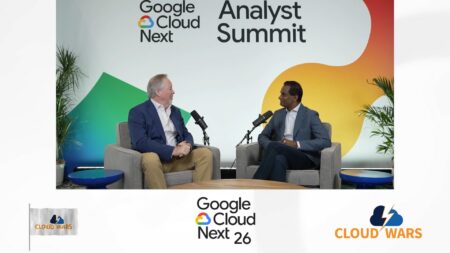
Enterprise AI success is shifting from software consumption metrics to measurable business outcomes and shared accountability between providers and customers.
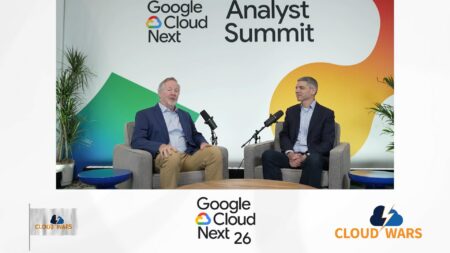
Enterprises must redesign data platforms so autonomous AI agents can reason, act, and securely drive business outcomes across the organization.

A major focus for sa.global is building industry-specific AI agents tailored to professional services sectors like construction and legal, aiming to reduce inefficiencies, automate workflows, and protect revenue streams.

Marc Benioff criticizes CEOs who scapegoat AI for layoffs, calling it a “lazy way out” and urging leaders to take accountability for business decisions during technological disruption.

Through its AI Tour and new initiatives, Microsoft is transforming South Korea into a global AI hub while investing heavily in Thailand’s cloud and AI infrastructure to accelerate national competitiveness and workforce readiness.