

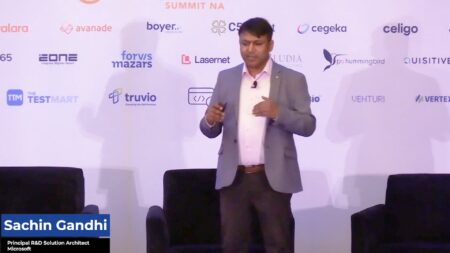
AI agents are driving a shift from product-focused organizations to autonomous, end-to-end process excellence across the enterprise.
AI agents are driving a shift from product-focused organizations to autonomous, end-to-end process excellence across the enterprise.

Enterprise AI success depends not just on innovation speed, but on governance, interoperability, migration readiness, and organizational change.
New feature rollout includes support for tapping — or building — reusable skills that Cowork can invoke to complete a task or workflow on a user’s behalf.
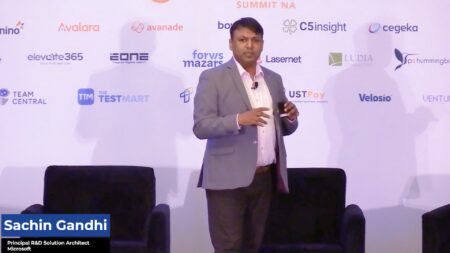
Sachin Gandhi explains how Copilot is evolving into the enterprise interface, enabling agentic workflows that automate processes and turn business data into real-time knowledge.
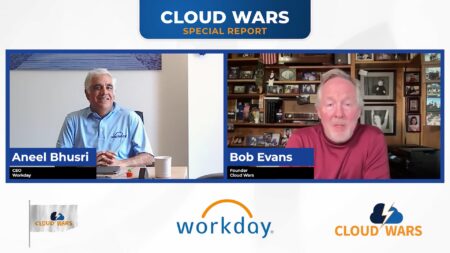
A conversation about enterprise AI readiness, governance challenges, and the next major growth opportunity in intelligent business applications.

OpenAI’s latest Codex upgrades show the company rapidly evolving from standalone AI tools toward a unified “super app” where persistent AI agents can work across apps, retain memory, automate workflows, and increasingly act on behalf of users.

As initial release of ‘control plane’ becomes widely available, Microsoft is expanding agent registry, Shadow AI protections, and threat detection capabilities.
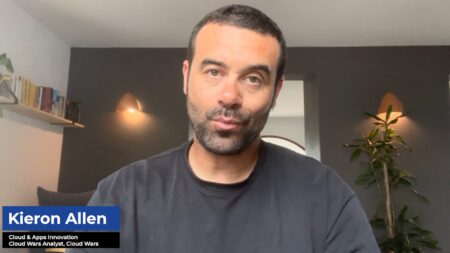
Workday and Achievers are bringing AI-powered behavioral intelligence into HCM, helping enterprises strengthen engagement, productivity, and employee retention through integrated recognition tools.
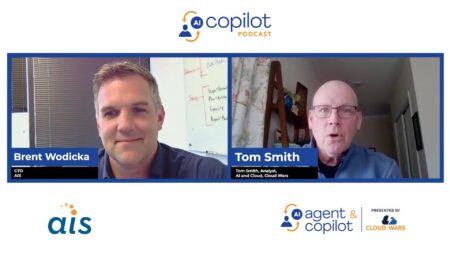
Brent Wodicka, CTO of AIS, explains how ISVs and corporate software developers need to build ‘agent-friendly pathways’ to software platforms to enable autonomous actions.

The rise of OpenClaw has pushed Microsoft to evolve Copilot beyond chat-based AI into a fully agentic platform, blending automation, coordination, and enterprise-grade governance within Microsoft 365.
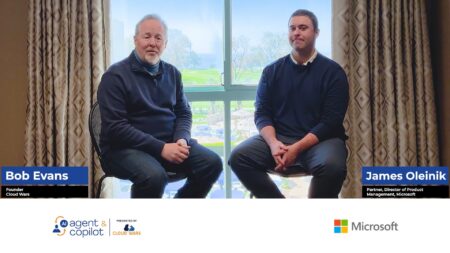
A major barrier to AI adoption isn’t willingness but governance, as leaders seek secure, observable, and controllable systems to confidently deploy AI across enterprise environments.
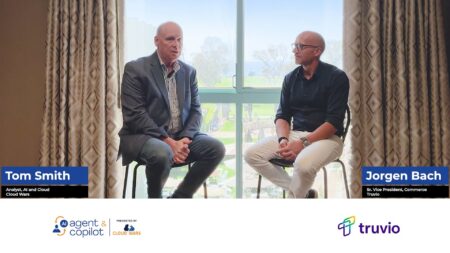
At the AI Agent & Copilot Summit, Truvio’s Jorgen Bach explains how unified platforms and AI agents are helping enterprises close the ERP value gap and operationalize AI adoption.

Enterprise leaders should focus less on automation savings and more on how agentic AI accelerates growth and customer value.

HSO explains how embedding AI agents into ERP and business workflows is accelerating implementations, improving data transformation, and driving real user adoption through industry-specific automation.

Oracle EVP Steve Miranda shares the company’s agentic AI vision, introducing its first Agentic Applications and explaining how AI agents are reshaping enterprise workflows.

Latest MCP product from Microsoft works with cloud or on-premises SQL databases for efficient, secure connections to corporate resources without requiring language or framework expertise.
AI agents are advancing rapidly, but compliance concerns persist, and Panopticore aims to solve this with deterministic governance and verifiable audit trails at the network infrastructure level.

Round of enhancements also includes simplified prompting during agent-building processes, new content moderation controls to govern sensitive material.

Initial release supports actions across agents, multiple AI models, and interoperability through the two most widely embraced interoperability standards.

Microsoft’s 2026 Release Wave 1 introduces deeper Copilot integration, expanded agentic AI experiences, and new governance and automation capabilities across Dynamics 365, Power Platform, and Microsoft 365 Copilot, accelerating the shift toward enterprise-wide agentic operations.