

Cloud Wars
  • Home
  • Top 10
  • CW Minute
  • CW Podcast
  • Categories
    • AI and Copilots
    • Innovation & Leadership
    • Cybersecurity
    • Data
  • Member Resources
    • Cloud Wars AI Agent
    • Digital Summits
    • Guidebooks
    • Reports
  • About Us
    • Our Story
    • Tech Analysts
    • Marketing Services
  • Ask Copilot
  • Agentic AI Battleground
Twitter Instagram
  • Summit NA
  • Dynamics Communities
  • AI Copilot Summit NA
  • Ask Cloud Wars
Twitter LinkedIn
Cloud Wars
  • Home
  • Top 10
  • CW Minute
  • CW Podcast
  • Categories
    • AI and CopilotsWelcome to the Acceleration Economy AI Index, a weekly segment where we cover the most important recent news in AI innovation, funding, and solutions in under 10 minutes. Our goal is to get you up to speed – the same speed AI innovation is taking place nowadays – and prepare you for that upcoming customer call, board meeting, or conversation with your colleague.
    • Innovation & Leadership
    • CybersecurityThe practice of defending computers, servers, mobile devices, electronic systems, networks, and data from malicious attacks.
    • Data
  • Member Resources
    • Cloud Wars AI Agent
    • Digital Summits
    • Guidebooks
    • Reports
  • About Us
    • Our Story
    • Tech Analysts
    • Marketing Services
  • Agentic AI Battleground
    • Login / Register
Cloud Wars
    • Login / Register
Home » Microsoft Foundry Crunches Volumes of Agent Activity To Investigate, Correct Errors
AI and Copilots

Microsoft Foundry Crunches Volumes of Agent Activity To Investigate, Correct Errors

Tom SmithBy Tom SmithOctober 5, 20263 Mins Read
Facebook Twitter LinkedIn Email
Share
Facebook Twitter LinkedIn Email

When AI agents make mistakes, developers that created them need to manually reconstruct failures and search for patterns in the “traces” or logs of activity that capture the work involved in completing a task.

Microsoft is striving to simplify that manual process with a new feature in its Foundry AI development and governance platform. Insights in Foundry analyzes traces to determine likely causes of agentic mistakes and recommend ways to overcome them. It surfaces recurring and previously unknown behaviors, explains likely causes with supporting evidence, and recommends next steps for developers to resolve them.   

Foundry already provided tracing, monitoring, and evaluation capabilities to help development teams understand where agents need attention, evaluation, or more extensive iteration.

Insights in Foundry goes deeper, analyzing volumes of traces (which are stored in the Azure Monitor Application Insights resource) and looking for patterns that would be difficult to find by reading one trace at a time.

Patterns yielded by Insights give developers a starting point for investigation. Findings can include failures in tool calls, context handling issues, output quality, reliability, latency, or unnecessary token use.

Possible responses to a confirmed finding include:

  • Making a targeted change to correct an instruction, tool description, code path, or workflow when evidence indicates a specific problem
  • Adding evaluation coverage to create or update a dataset so the behavior becomes an explicit test before and after a change
  • Routing the issue to its owner if a dependency or platform failure is the cause, then working with that owner to fix the underlying issue
  • Exploring alternatives by using an optimization workflow such as Agent Optimizer — which generates improvements to evaluate then measures them against developers’ goals — when improving the behavior involves generating and comparing multiple candidate solutions.

Insights doesn’t open pull requests, build evaluators, or deploy fixes on its own. No updates occur without human review. Developers review each proposal and then manage through their normal processes including source control, evaluation, approval, and deployment.

To illustrate how Insights will operate, Microsoft provided the example of an AI agent that performs customer order support. If an order-status lookup fails, an agent that’s not functioning properly may still tell a customer that their order was delivered. A single manual trace could make that look like an isolated mistake. Across hundreds of requests, it becomes a pattern requiring deeper evaluation.

Insights will analyze order support agent traces, which show the lookup failure followed by the unsupported delivery claim. A developer can inspect the request, the tool calls and their results, as well as the final response, then compare them with successful executions. The development team might then test whether an instruction change prevents unsupported delivery claims while preserving correct answers when the lookup succeeds. They validate the result before deploying the change and review new production evidence afterward.

Insights in Foundry is available in public preview.

More Insights on AI Agent Development:

  • Microsoft, GitHub, and Anthropic Reshape AI Developer Economics
  • Developer Economics: GitHub Delivers Multi-Model Orchestration at Runtime
  • With GitHub Copilot Integration, Teams Powers Greater Developer-Agent Collaboration
  • Microsoft Governance Tools Ensure AI Agents Play Within the Rules at Runtime

Interested in Microsoft?

Schedule a discovery meeting to see if we can help achieve your goals

Connect With Us

Book a Demo

ai ai agent Cloud Wars featured Microsoft
Share. Facebook Twitter LinkedIn Email
Analystuser

Tom Smith

Editor in Chief, analyst, Cloud Wars

Areas of Expertise
  • AI/ML
  • Business Apps
  • Cloud
  • Digital Business

Tom Smith analyzes AI, copilots, cloud companies, and tech innovations for Cloud Wars. He has worked as an analyst tracking technology and tech companies for more than 20 years.

  Contact Tom Smith ...

Related Posts

AWS Drops Billion-Dollar Chip Gift on SAP, Salesforce, Workday

October 5, 2026

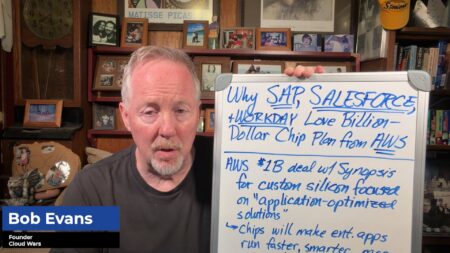
Why SAP, Salesforce + Workday Love Billion-Dollar Chip Plan from AWS

October 5, 2026

Agentic AI Faces a Reckoning as Enterprises Demand Real Business Value

October 2, 2026

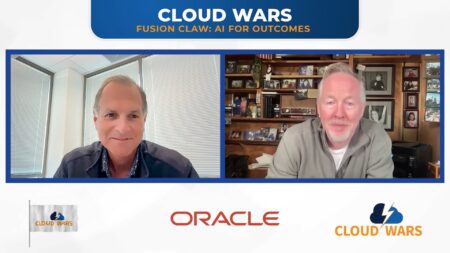
Oracle’s Fusion Claw Brings Governed Autonomy to Enterprise AI | Cloud Wars Live

October 2, 2026
Add A Comment

Comments are closed.

Recent Posts
  • AWS Drops Billion-Dollar Chip Gift on SAP, Salesforce, Workday
  • Microsoft Foundry Crunches Volumes of Agent Activity To Investigate, Correct Errors
  • Why SAP, Salesforce + Workday Love Billion-Dollar Chip Plan from AWS
  • Agentic AI Faces a Reckoning as Enterprises Demand Real Business Value
  • Oracle’s Fusion Claw Brings Governed Autonomy to Enterprise AI | Cloud Wars Live

  • Ask Cloud Wars AI Agent
  • Tech Guidebooks
  • Industry Reports
  • Newsletters

Join Today

Most Popular Guidebooks and Reports

Accounts Payable Reimagined: ERP-Native Automation in Dynamics 365

March 30, 2026

elevaite365 Test Automation: Turning Software Testing into a Strategic Asset with AI

March 6, 2026

Driving Business Transformation with Agentic AI and ServiceNow

January 9, 2026

The Agentic Enterprise: How Microsoft and Industry Leaders Are Redefining Work Through AI

September 2, 2025

Advertisement
Cloud Wars
Twitter LinkedIn
  • Home
  • About Us
  • Privacy Policy
  • Get In Touch
  • Marketing Services
  • Do not sell my information
© 2026 Cloud Wars.

Type above and press Enter to search. Press Esc to cancel.

  • Login
Forgot Password?
Lost your password? Please enter your username or email address. You will receive a link to create a new password via email.
body::-webkit-scrollbar { width: 7px; } body::-webkit-scrollbar-track { border-radius: 10px; background: #f0f0f0; } body::-webkit-scrollbar-thumb { border-radius: 50px; background: #dfdbdb }