


Microsoft and ServiceNow illustrate a larger AI shift toward open protocols, governance, and control as enterprises seek to deploy agents across increasingly ambitious initiatives.
Microsoft and ServiceNow illustrate a larger AI shift toward open protocols, governance, and control as enterprises seek to deploy agents across increasingly ambitious initiatives.

Work IQ could address one of enterprise AI’s biggest obstacles: agents that lack business context. Microsoft is using existing applications, processes, semantic models, and institutional knowledge to create a reusable intelligence foundation for Copilot and agents.

Google Cloud CEO Thomas Kurian says general-purpose AI alone cannot meet complex industry requirements, prompting the company to surround Gemini Enterprise with specialized skills, trusted data connections, agentic workflows, governance, and partner solutions.

OpenAI has responded to the GPT-5.6-Sol security incident involving Hugging Face by strengthening cybersecurity safeguards, expanding its Daybreak program, and introducing GPT-5.6-Cyber for vetted defenders conducting advanced vulnerability research and security testing.

Salesforce scores a major AI win as the Pentagon approves its agents for autonomous tasks, reinforcing the security and governance credentials of its agentic infrastructure.

Bill McDermott is combining ServiceNow’s AI Control Tower, cybersecurity, and governance capabilities to give CEOs greater certainty and control as enterprise AI creates unprecedented risk and complexity.

Microsoft says AI sovereignty is about maintaining national control while embracing the world’s best AI technologies, rather than isolating countries from global innovation.

SAP is partnering with Giotto.ai to evaluate reasoning-focused AI models that could make Joule agents more reliable, secure, and effective in complex enterprise decision-making.

The next wave of enterprise AI will depend less on models and more on governed, connected data and operational context, according to Salesforce and Databricks.

Microsoft is accelerating its Frontier Firm vision with a new business unit that embeds 6,000 AI and industry experts directly with customers to build, optimize, and scale enterprise AI systems.

Enterprise AI growth increasingly depends on implementation expertise rather than model capabilities alone.

KPMG and Microsoft are expanding their partnership to help enterprises deploy agentic AI at scale through standardized governance, deployment, and management frameworks.
ServiceNow and Accenture have launched a forward deployed engineering program that embeds AI experts directly with customers to accelerate the deployment, scaling, and business impact of agentic AI initiatives.

Copilot Studio’s new visibility and governance capabilities help organizations scale AI automation while preserving security and operational oversight.

Amazon Bedrock AgentCore Payments marks a major step toward economically active AI agents capable of discovering, evaluating, and paying for digital resources without human intervention.

The biggest AI opportunity in enterprise software may be reducing implementation friction, not simply adding generative features.
ServiceNow has joined the fast-growing agentic AI movement with Project Arc, an autonomous desktop agent developed with NVIDIA that can execute enterprise tasks securely across multiple tools, signaling a shift beyond conversational copilots.

Enterprise AI success depends not just on innovation speed, but on governance, interoperability, migration readiness, and organizational change.
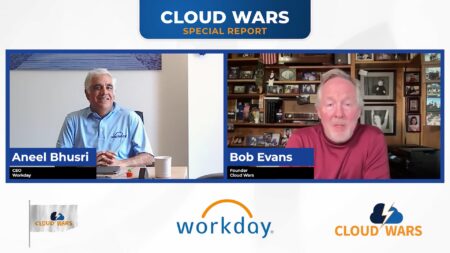
A conversation about enterprise AI readiness, governance challenges, and the next major growth opportunity in intelligent business applications.
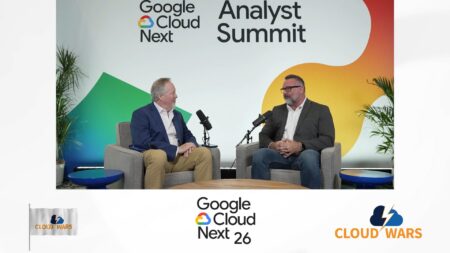
Enterprise AI success depends on balancing fast innovation with strong governance, and integrated platforms make that easier to achieve.