


As digital transformation enters the AI era, ServiceNow and Accenture are helping organizations move beyond cloud migration by embedding AI agents into cybersecurity, compliance, and enterprise risk management workflows.
As digital transformation enters the AI era, ServiceNow and Accenture are helping organizations move beyond cloud migration by embedding AI agents into cybersecurity, compliance, and enterprise risk management workflows.

Addition to the company’s governance control plan eliminates a wide range of manual steps required to transition an agent from local usage to enterprise availability.

Microsoft is testing new AI-powered workplace devices under Project Solara, aiming to create agent-first experiences that move AI interactions beyond traditional PCs and applications.

Workday’s strong Q1 performance highlights CEO Aneel Bhusri’s push to transform the company into an AI-native enterprise focused on agentic AI innovation, lawful governance, and accelerated product development to compete with SAP, Oracle, and Microsoft.

Amazon Bedrock AgentCore Payments marks a major step toward economically active AI agents capable of discovering, evaluating, and paying for digital resources without human intervention.

SAP and Palantir are helping redefine enterprise technology, as Christian Klein and Alex Karp both argue that AI-driven execution has moved their companies beyond the traditional definition of software vendors.
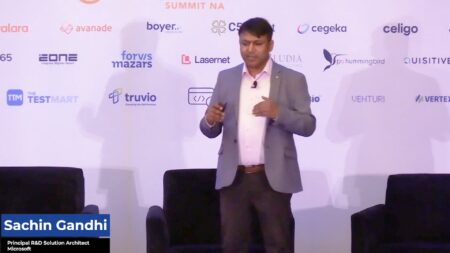
AI agents are driving a shift from product-focused organizations to autonomous, end-to-end process excellence across the enterprise.

SAP is positioning industry-specific AI as a stronger differentiator than generic horizontal enterprise AI tools.

The rise of OpenClaw has pushed Microsoft to evolve Copilot beyond chat-based AI into a fully agentic platform, blending automation, coordination, and enterprise-grade governance within Microsoft 365.

Enterprise leaders should focus less on automation savings and more on how agentic AI accelerates growth and customer value.

Addition to Microsoft 365 Copilot helps users sort through large amounts of data and conversations to determine required near-term actions and build comprehensive plans.
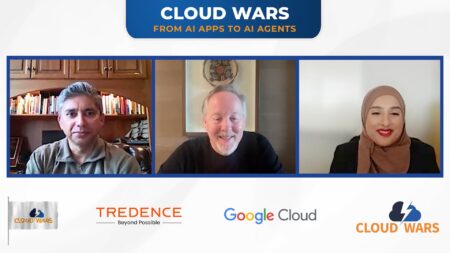
Enterprises must move beyond AI apps and build agentic systems that reason, coordinate, and execute across multiple business workflows.

Microsoft addresses the limitations of pure AI autonomy by integrating workflows and agents, creating more structured, flexible automation systems tailored to enterprise production environments.

AI agents are advancing rapidly, but compliance concerns persist, and Panopticore aims to solve this with deterministic governance and verifiable audit trails at the network infrastructure level.

Zenity and ServiceNow are pioneering AI SecOps, combining governance and security capabilities to help enterprises confidently deploy and manage AI agents at scale across business operations.
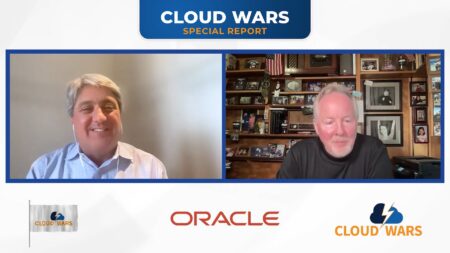
New AI-powered applications enable users to instruct systems with goals instead of processes, dramatically changing enterprise workflows and decision-making.
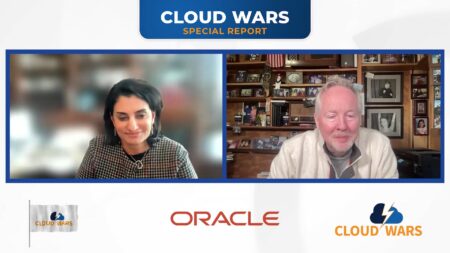
A unified, end-to-end approach is replacing fragmented healthcare systems with connected data and intelligent workflows powered by modern infrastructure.

Agentforce Contact Center represents Salesforce’s next evolution in customer service, merging voice, digital channels, and AI into one system. It empowers autonomous AI agents while ensuring human operators receive full interaction context for faster issue resolution.

Rather than replacing SaaS, AI is becoming its most powerful accelerator. Oracle’s approach embeds agentic AI across Fusion applications, enabling faster deployments, reduced operational complexity, and dramatically improved customer outcomes.

Microsoft’s new Copilot Tasks signals a shift from AI chat to autonomous action, positioning Copilot as a personal assistant that can manage everyday tasks through natural-language commands.