


Microsoft and ServiceNow illustrate a larger AI shift toward open protocols, governance, and control as enterprises seek to deploy agents across increasingly ambitious initiatives.
Microsoft and ServiceNow illustrate a larger AI shift toward open protocols, governance, and control as enterprises seek to deploy agents across increasingly ambitious initiatives.

Insights in Foundry analyzes “traces” to determine likely causes of mistakes by AI agents and recommend ways to overcome them.

Work IQ highlights Microsoft’s growing effort to turn its enormous reservoir of enterprise context into a powerful asset for more efficient AI agents.
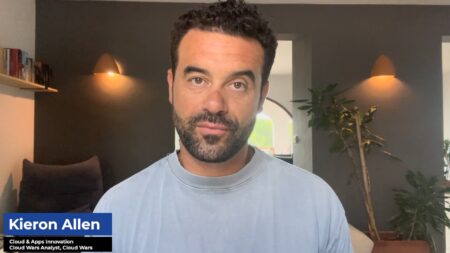
Work IQ represents a potentially important evolution in enterprise AI, moving personalization beyond emails and documents toward a deeper understanding of organizational context.
Since returning as CEO, Aneel Bhusri has reshaped Workday’s agentic AI strategy, eliminating or combining simpler agents while prioritizing sophisticated AI systems capable of solving complex HR and finance problems and delivering measurable customer ROI.
ServiceNow adds six agentic security offerings designed to automate threat detection, governance, compliance, and remediation.
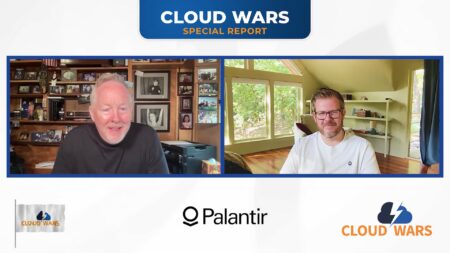
Palantir’s rapid growth reflects an enterprise AI strategy centered on measurable customer outcomes, operational transformation, sovereignty, and deep long-term partnerships.

Salesforce scores a major AI win as the Pentagon approves its agents for autonomous tasks, reinforcing the security and governance credentials of its agentic infrastructure.

Enterprise AI’s next breakthrough will come from evaluating agents against real business workflows and continuously improving their performance with proprietary organizational knowledge.
Oracle is expanding its Google Cloud partnership by bringing Gemini models across its enterprise AI portfolio, strengthening its flexible, multi-model approach to enterprise AI.

Project Perception represents Microsoft’s push beyond reactive cybersecurity, coordinating red, blue, and green AI agents in a closed-loop system designed to continuously identify vulnerabilities, assess risks, implement fixes, and strengthen enterprise defenses.

AI agents are beginning to outpace Copilot licenses, signaling that organizations are creating increasingly valuable custom automation across the Microsoft ecosystem.

As digital transformation enters the AI era, ServiceNow and Accenture are helping organizations move beyond cloud migration by embedding AI agents into cybersecurity, compliance, and enterprise risk management workflows.

Addition to the company’s governance control plan eliminates a wide range of manual steps required to transition an agent from local usage to enterprise availability.
Microsoft is testing new AI-powered workplace devices under Project Solara, aiming to create agent-first experiences that move AI interactions beyond traditional PCs and applications.

Workday’s strong Q1 performance highlights CEO Aneel Bhusri’s push to transform the company into an AI-native enterprise focused on agentic AI innovation, lawful governance, and accelerated product development to compete with SAP, Oracle, and Microsoft.

Amazon Bedrock AgentCore Payments marks a major step toward economically active AI agents capable of discovering, evaluating, and paying for digital resources without human intervention.

SAP and Palantir are helping redefine enterprise technology, as Christian Klein and Alex Karp both argue that AI-driven execution has moved their companies beyond the traditional definition of software vendors.
AI agents are driving a shift from product-focused organizations to autonomous, end-to-end process excellence across the enterprise.

SAP is positioning industry-specific AI as a stronger differentiator than generic horizontal enterprise AI tools.