

Palantir’s extraordinary 93% revenue growth and CEO Alex Karp’s unconventional philosophy could reshape enterprise software, emphasizing AI sovereignty, customer control of data, intensive partnerships, and compensation tied directly to measurable value creation.

Search Results: risk (1695)
ServiceNow CEO Bill McDermott is positioning the company as the enterprise AI Control Tower, combining governance, cybersecurity, workflow orchestration, integration, and automation to help customers manage the growing complexity and risks of enterprise AI.
Bill McDermott is combining ServiceNow’s AI Control Tower, cybersecurity, and governance capabilities to give CEOs greater certainty and control as enterprise AI creates unprecedented risk and complexity.
Project Perception represents Microsoft’s push beyond reactive cybersecurity, coordinating red, blue, and green AI agents in a closed-loop system designed to continuously identify vulnerabilities, assess risks, implement fixes, and strengthen enterprise defenses.
AI’s unprecedented growth is forcing even the world’s best-run companies to rethink traditional risk management and embrace massive, calculated bets on the future.
Google has introduced Gemini 3.6 Flash, Gemini 3.5 Flash-Lite, and Gemini 3.5 Flash Cyber, focusing on lower costs, faster AI agents, improved coding, and specialized cybersecurity capabilities for enterprise customers.
Microsoft and more than 20 tech companies urge U.S. lawmakers to protect open-weight AI models, arguing openness drives innovation and competition.
Nadella believes enterprises should have the freedom to choose AI providers, privately train models, manage costs, and retain complete control over their accumulated organizational intelligence.
Project Perception scales vulnerability discovery for today’s AI-powered threats. Initially available in Defender, Perception will extend across the company’s security lineup.
Customers will be able to capitalize on data from ZoomInfo, Dun & Bradstreet, Gong, and others in the flow of their Dynamics 365 sales processes.
Despite investor concerns over rising CapEx, Alphabet believes aggressive AI infrastructure spending will generate multiyear returns as enterprise AI adoption accelerates across industries.
AWS is expanding Security Hub with AI-specific protections and Azure support to secure AI and multicloud environments from a single platform.
Purview, Defender, and Graph API are all being enhanced to bring agents running on end-user devices under unified governance ‘control plane.’
AI is dramatically accelerating software development, but Cedric Wells argues that organizations must balance rapid innovation with architecture, security, governance, and quality assurance to safely move AI-generated solutions into production.
The world’s largest cloud providers are embracing innovative financing, partnerships, and infrastructure strategies as unprecedented AI demand drives what may become the largest industrial construction effort in modern history.
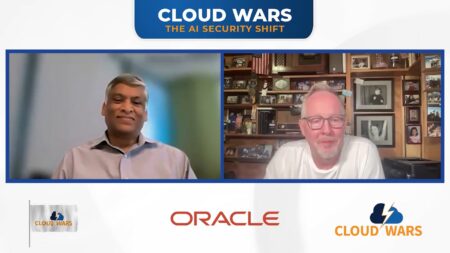
As AI transforms cybersecurity, Oracle is helping customers protect data through faster patching, stronger resilience, and database-first security.
OpenAI has enhanced ChatGPT Health with GPT-5.5 Instant, delivering more accurate health guidance through physician-led evaluations, improved reasoning, and better recognition of urgent medical situations for hundreds of millions of users.
Dona Sarkar argues that most AI failures stem from unclear business objectives and poor data quality rather than limitations in the technology itself.
The companies that survive disruption are the ones focused on solving problems, not protecting products.
Enterprise AI growth increasingly depends on implementation expertise rather than model capabilities alone.