


Microsoft says AI sovereignty is about maintaining national control while embracing the world’s best AI technologies, rather than isolating countries from global innovation.
Microsoft says AI sovereignty is about maintaining national control while embracing the world’s best AI technologies, rather than isolating countries from global innovation.

Ahead of Microsoft and AWS earnings, Google Cloud has established a commanding growth advantage, with revenue increasing 82% and backlog soaring 390%, signaling strong customer confidence and significant future revenue opportunities.

Customers will be able to capitalize on data from ZoomInfo, Dun & Bradstreet, Gong, and others in the flow of their Dynamics 365 sales processes.

Google Cloud’s 82% growth highlights a dramatic shift in customer demand as Microsoft and AWS prepare to report earnings in a rapidly evolving AI market.

Despite investor concerns over rising CapEx, Alphabet believes aggressive AI infrastructure spending will generate multiyear returns as enterprise AI adoption accelerates across industries.

Alphabet is embracing massive AI infrastructure investments despite investor backlash, betting that today’s spending will secure tomorrow’s cloud leadership.

Salesforce is deepening Slack’s role in enterprise AI by allowing users to orchestrate multiple AI agents while maintaining centralized authentication and security.

Google Cloud’s $4.8 billion sequential revenue increase establishes a new benchmark for Microsoft Cloud and AWS as investors prepare for their upcoming earnings reports.

Upgrades include automatically created documents and files, as well as interactive reports. Approvals and other repeatable work can be handled through automation.
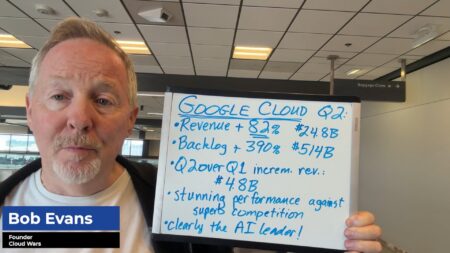
Explosive Q2 results suggest Google Cloud is outperforming rivals where it matters most—winning new AI business and accelerating faster than Microsoft Cloud and AWS.

AWS is expanding Security Hub with AI-specific protections and Azure support to secure AI and multicloud environments from a single platform.

Microsoft’s latest education findings reveal that AI access is no longer the hurdle—effective implementation and structured training are.

Purview, Defender, and Graph API are all being enhanced to bring agents running on end-user devices under unified governance ‘control plane.’

Google Cloud and Palantir are accelerating faster than many AI competitors because customers value measurable business transformation over technical benchmarks such as model size or context windows, creating exceptional momentum in the rapidly expanding AI economy.

As Q2 earnings approach, Palantir, Google Cloud, and Oracle lead the Cloud Wars Top 10 in revenue growth, highlighting the extraordinary pace of the AI market and the massive backlog fueling future expansion.

Palantir leads the latest Cloud Wars rankings as Bob Evans previews Q2 earnings and explains why cloud and AI remain the world’s fastest-growing technology market.

AI is dramatically accelerating software development, but Cedric Wells argues that organizations must balance rapid innovation with architecture, security, governance, and quality assurance to safely move AI-generated solutions into production.

Salesforce’s latest AI announcement combines autonomous customer support, responsible AI governance, and a pricing model built around delivering successful business outcomes.

The world’s largest cloud providers are embracing innovative financing, partnerships, and infrastructure strategies as unprecedented AI demand drives what may become the largest industrial construction effort in modern history.

Autonomous agent or ‘autopilot’ – touted for executing high-level autonomous tasks – now offers improved usability and model choice.