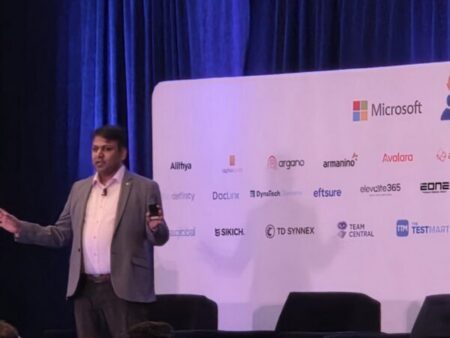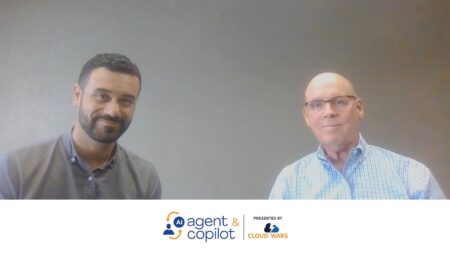




In this episode of the AI Agent & Copilot Podcast, host Tom Smith speaks with Vaishali Vinay, Data Scientist at Microsoft, and Raghav Batta, Data Scientist at Microsoft, about their upcoming masterclass at the 2026 AI Agent & Copilot Summit NA in San Diego. They discuss how AI can serve as a threat research partner for cybersecurity teams, augmenting human expertise in threat hunting and detection engineering while helping organizations proactively defend against increasingly sophisticated cyber attacks.
Key Takeaways
- AI as a Threat Research Partner: Vinay explains that traditional threat hunting and detection engineering have historically been highly manual processes requiring significant time and expertise. AI can now assist by analyzing attacker behavior and identifying detection opportunities faster. As Vinay notes, the goal is to augment our human experts and accelerate this threat research process much faster.
- Scaling Cyber Defense in an AI-Powered Threat Landscape: Batta highlights that as AI adoption grows across industries, the volume of data and potential attack vectors increases rapidly. Organizations must therefore adapt AI for defensive purposes as well. “The amount of data which is produced… is increasing at a nonlinear scale,” Bhatta explains. AI copilots help defenders process this scale by assisting with detection engineering, threat hunting, and proactive defense strategies that protect infrastructure and customers from evolving cyber threats.
- Capturing and Sharing ‘Tribal Knowledge’ Through AI: Cybersecurity often depends on the deep experience of veteran researchers who understand attacker behavior patterns. Batta suggests AI copilots can help scale that expertise across teams. He explains that copilots can serve as a “source of tribal knowledge,” enabling newer analysts and teams to leverage insights that historically lived only in the heads of experienced researchers. This dramatically increases productivity and knowledge transfer within security organizations.
- AI Attackers vs. AI Defenders: The session also acknowledges that cyber attackers are increasingly leveraging AI themselves. That makes defensive innovation essential. Vinay and Batta emphasize the importance of building AI systems that analyze attack techniques and automatically recommend detection rules. This dynamic defense model enables security teams to react faster to emerging threats and reduces the manual workload traditionally required to understand complex attack patterns.