


AI leaders are embracing self-regulation as Washington weighs stronger oversight, raising questions about enforcement, consumer risk, and how the U.S. can regulate AI without slowing innovation.
AI leaders are embracing self-regulation as Washington weighs stronger oversight, raising questions about enforcement, consumer risk, and how the U.S. can regulate AI without slowing innovation.

Google Cloud is simplifying enterprise modernization with an AI-driven, end-to-end approach that can shrink complex business-case processes from weeks to minutes.

SoftBank plans to borrow over $11 billion through bonds to help fund a $10 billion OpenAI investment, signaling extraordinary confidence in the AI company.

Organizations pursuing AI-driven layoffs could eventually face expensive rehiring needs while competitors that reinvest in employees use AI to accelerate productivity and growth.

AI infrastructure spending is surging to $2.59 trillion, but rising compute and memory costs are putting pressure on cash flow and forcing hyperscalers to rethink AI investment.

Microsoft is bringing OpenAI’s GPT-6 Astra to Foundry, combining advanced agentic capabilities with enterprise security, compliance, governance, and identity controls.
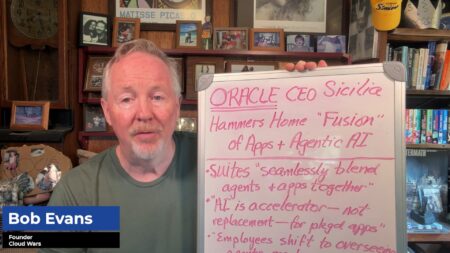
Oracle has been clear in defining where apps end and agents end, with CEO Mike Sicilia driving it home in comments in the Q1 earnings call.

Meta’s massive Azure spending shows how AI is reshaping tech competition, with rivals increasingly becoming customers as infrastructure emerges as the new battleground.

OpenAI once prominently promoted an AI super app, but its disappearance from Sarah Friar’s latest strategic update raises questions about whether the concept has quietly become vaporware.

Microsoft, Salesforce, and UiPath are taking different approaches to free developer AI capacity as consumption emerges as an increasingly important metric for the enterprise technology industry.

Google Cloud and Mahindra are bringing Gemini Enterprise directly into vehicles, demonstrating how AI is moving beyond traditional digital environments and becoming embedded in physical-world endpoints.

Marc Benioff’s Salesforce is betting that combining Anthropic’s AI momentum with its massive enterprise presence can unlock new opportunities for customers and accelerate its AI strategy.

Oracle is expanding its Google Cloud partnership by bringing Gemini models across its enterprise AI portfolio, strengthening its flexible, multi-model approach to enterprise AI.

Bill McDermott is combining ServiceNow’s AI Control Tower, cybersecurity, and governance capabilities to give CEOs greater certainty and control as enterprise AI creates unprecedented risk and complexity.

AI agents are beginning to outpace Copilot licenses, signaling that organizations are creating increasingly valuable custom automation across the Microsoft ecosystem.

Microsoft and more than 20 tech companies urge U.S. lawmakers to protect open-weight AI models, arguing openness drives innovation and competition.

AI is dramatically accelerating software development, but Cedric Wells argues that organizations must balance rapid innovation with architecture, security, governance, and quality assurance to safely move AI-generated solutions into production.

Hyperscalers are embracing unprecedented financing strategies and partnerships as AI demand forces massive investments in next-generation data center infrastructure.

Microsoft is shifting Copilot Cowork to usage-based pricing while exploring lower-cost AI models, signaling a strategy focused on performance, economics, and customer choice.

Enterprise AI growth increasingly depends on implementation expertise rather than model capabilities alone.