


Palantir leads the latest Cloud Wars rankings as Bob Evans previews Q2 earnings and explains why cloud and AI remain the world’s fastest-growing technology market.
Palantir leads the latest Cloud Wars rankings as Bob Evans previews Q2 earnings and explains why cloud and AI remain the world’s fastest-growing technology market.

AI is dramatically accelerating software development, but Cedric Wells argues that organizations must balance rapid innovation with architecture, security, governance, and quality assurance to safely move AI-generated solutions into production.

AI is transforming enterprise implementation by using industry templates, Microsoft FastTrack methodologies, and AI-driven workflows to reduce complexity, speed up delivery, and improve post-sales execution.

The world’s largest cloud providers are embracing innovative financing, partnerships, and infrastructure strategies as unprecedented AI demand drives what may become the largest industrial construction effort in modern history.

Autonomous agent or ‘autopilot’ – touted for executing high-level autonomous tasks – now offers improved usability and model choice.

Hyperscalers are embracing unprecedented financing strategies and partnerships as AI demand forces massive investments in next-generation data center infrastructure.

Cecilia Flombaum and John Scandar explain how AI is reshaping enterprise sales cycles, with increased focus on governance, ROI, and the convergence of business applications and modern work platforms.

The AI Deployment Wars are expanding beyond technology into branding. Microsoft’s ambitious Frontier Company contrasts sharply with AWS’s practical Forward Deployed Engineering, raising questions about which message resonates with enterprise executives.

AWS and Microsoft are taking radically different branding approaches to AI deployment, raising questions about which strategy enterprise customers will embrace.

Google Cloud’s $750 million investment in partner training and certification reflects its belief that customers benefit most when trusted partners lead AI transformation initiatives.
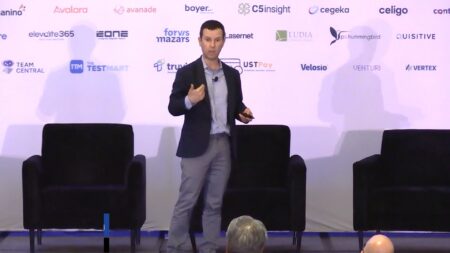
Thales Teixeira shows how AI enables companies to evolve from product vendors into strategic business partners.

Solgari’s Ed Grant explains why customer engagement data is the foundation of successful AI strategies and how organizations are turning conversations into business outcomes.
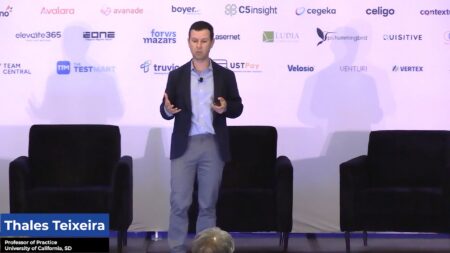
Thales Teixeira shares a practical framework for deploying customer-centric AI agents, highlighting the common implementation mistakes organizations should avoid and the strategies that turn AI into a true competitive advantage.

The new AI Deployment Wars reveal that enterprise customers need more than technology: they need strategy, process modernization, secure integration, and change management.

Customers are reporting high confidence levels in AI agents managing data workflows, but the numbers drop when tasks apply to AI workflows such as coding functions.

The world’s leading AI companies are investing nearly $10 billion to ensure AI deployments generate measurable business outcomes rather than simply impressive technology.

Microsoft is accelerating its Frontier Firm vision with a new business unit that embeds 6,000 AI and industry experts directly with customers to build, optimize, and scale enterprise AI systems.

Dona Sarkar argues that most AI failures stem from unclear business objectives and poor data quality rather than limitations in the technology itself.

Microsoft’s new Frontier Company represents the company’s biggest step yet toward making its frontier firm vision a reality for enterprise customers.

The companies that survive disruption are the ones focused on solving problems, not protecting products.