


Palantir’s 70% growth highlights how outcome-based AI pricing and rapid enterprise expansion are creating a new playbook for cloud success.
Palantir’s 70% growth highlights how outcome-based AI pricing and rapid enterprise expansion are creating a new playbook for cloud success.
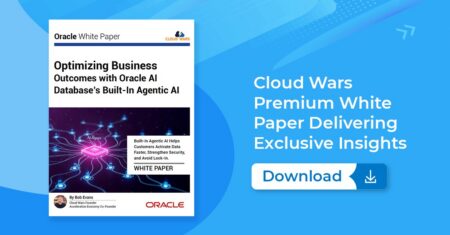
How Oracle is embedding agentic AI directly into its database platform to help enterprises accelerate innovation, strengthen security, and reduce architectural complexity.

Christopher Lochhead explains how AI is accelerating category-level shifts that create entirely new kinds of jobs while rapidly reshaping the future of work.

Anthropic’s reported $200 billion Google Cloud commitment highlights the staggering scale of AI infrastructure demand and the increasingly collaborative relationships between traditional hyperscale competitors.

Enterprise AI has shifted from experimentation to urgent execution, forcing cloud providers to deliver measurable business outcomes faster than ever.

SAP and Palantir are helping redefine enterprise technology, as Christian Klein and Alex Karp both argue that AI-driven execution has moved their companies beyond the traditional definition of software vendors.
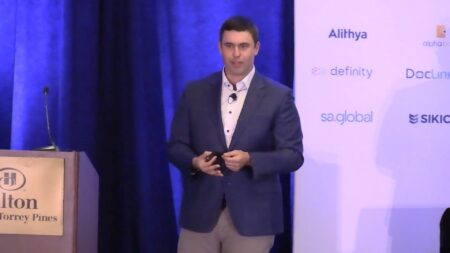
James Oleinik explains how Microsoft’s agentic system of work positions Copilot as the central interface while autonomous AI agents execute enterprise workflows at scale.
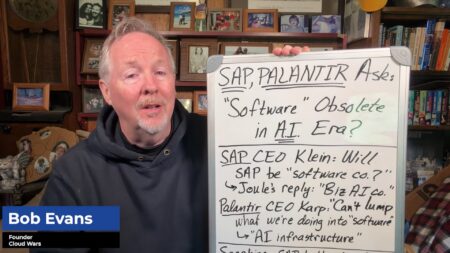
SAP and Palantir argue that agentic AI is transforming their businesses beyond traditional software into something more akin to business AI platforms and AI infrastructure providers.

ServiceNow has joined the fast-growing agentic AI movement with Project Arc, an autonomous desktop agent developed with NVIDIA that can execute enterprise tasks securely across multiple tools, signaling a shift beyond conversational copilots.
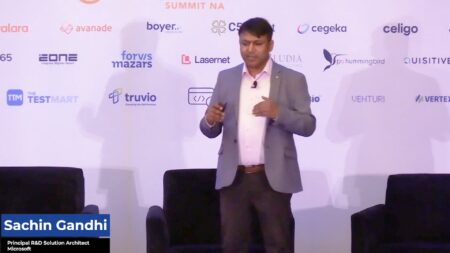
AI agents are driving a shift from product-focused organizations to autonomous, end-to-end process excellence across the enterprise.

Enterprise AI success depends not just on innovation speed, but on governance, interoperability, migration readiness, and organizational change.
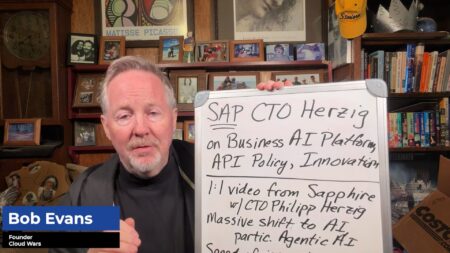
SAP’s Sapphire announcements reveal a company shifting from software provider to business AI powerhouse, with agentic AI, API modernization, and tighter enterprise security at the center.
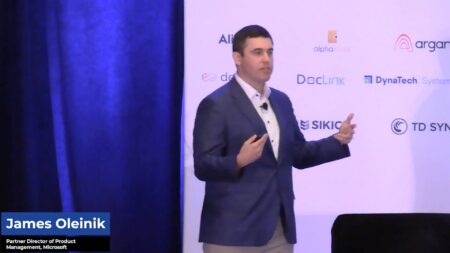
Microsoft’s James Oleinik explains how enterprise software is shifting from app-centric workflows to AI agent-driven systems where intent replaces manual navigation.

SAP is positioning industry-specific AI as a stronger differentiator than generic horizontal enterprise AI tools.
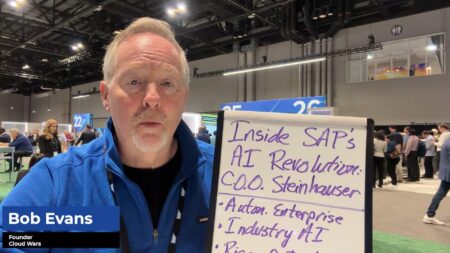
SAP is accelerating its autonomous enterprise strategy with agents, Business Data Cloud, and industry-specific innovation in what could be its most ambitious transformation yet.

Skills codify workflow details that are too often managed as ‘institutional knowledge,’ making those instructions accessible and reusable for agentic AI automation.
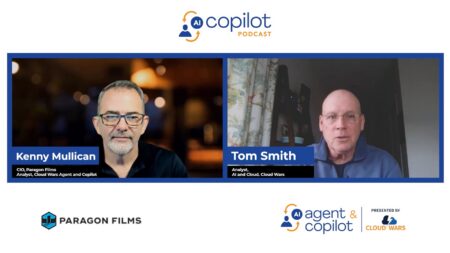
At Paragon Films, MCP enables AI agents to do everything from pinpointing invoice discrepancies to making employee knowledge ‘immortal.’

CEO Christian Klein has been aggressively forging a new SAP via acquisitions in the data field, a shift to consumption pricing, and AI-centered partnerships.
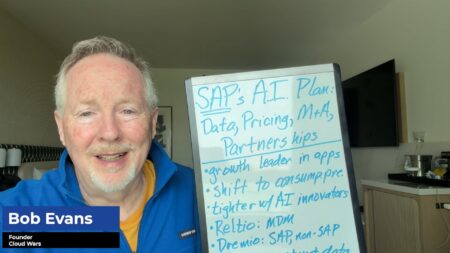
SAP’s AI plan includes strategic partnerships and acquisitions as well as major shifts toward consumption pricing and customer alignment.

New feature rollout includes support for tapping — or building — reusable skills that Cowork can invoke to complete a task or workflow on a user’s behalf.