

Bill Doerrfeld speaks with oak9 Co-founder Aakash Shah about ways to reduce known and unknown vulnerabilities brought on by open-source software.
Bill Doerrfeld speaks with oak9 Co-founder Aakash Shah about ways to reduce known and unknown vulnerabilities brought on by open-source software.

In Cybersecurity Minute, Ep. 31, Chris Hughes says it’s clear that the Senate’s Securing Open Source Software Act emphasizes how critical open-source software is to national security and society.

Metaverse development will create unfathomable amounts of data in countless forms. Is immudb the open-source ledger database solution to handle it all?
In this Cybersecurity Minute, Chris talks about efforts being made to improve open-source software security by OpenSSF.
Software built nowadays leverages open-source software, which alleviates the need to rebuild something that already exists.

For many small and mid-sized companies, up-front licensing costs present a barrier to getting an RPA initiative off the ground. In those situations open source may be your best choice. And in larger companies, open-source tools may serve to fill gaps that commercial products might not fill, such as automating Python.

Autopilots increase the level of AI autonomy and automation. Build event also places major focus on agentic AI development — and controls — at the desktop.

AI and Microsoft expert Paul Swider details a personal health assistant he’s built called Tula that unifies all of a patient’s data and aims to level the healthcare playing field.
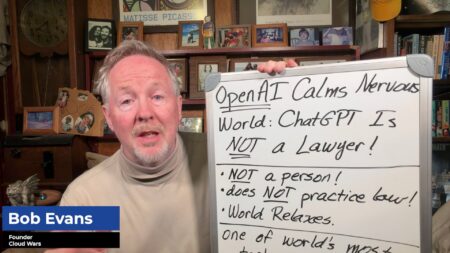
A recent court case pushed OpenAI to specifically define ChatGPT as “not a lawyer.” How does this impact the future of AI?
New feature rollout includes support for tapping — or building — reusable skills that Cowork can invoke to complete a task or workflow on a user’s behalf.

OpenAI’s latest Codex upgrades show the company rapidly evolving from standalone AI tools toward a unified “super app” where persistent AI agents can work across apps, retain memory, automate workflows, and increasingly act on behalf of users.
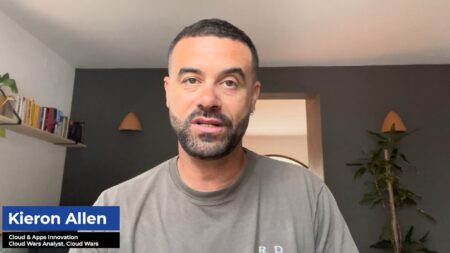
Microsoft and OpenAI restructure their landmark partnership, enabling broader competition while maintaining strategic ties, signaling a major shift in how AI alliances will evolve across the global cloud ecosystem.

The rise of OpenClaw has pushed Microsoft to evolve Copilot beyond chat-based AI into a fully agentic platform, blending automation, coordination, and enterprise-grade governance within Microsoft 365.

Addition to Microsoft 365 Copilot helps users sort through large amounts of data and conversations to determine required near-term actions and build comprehensive plans.

New features enhance research quality by using multiple models to produce outputs while comparing and refining results, as well as optimizing presentation of research results.
OpenAI aims to scale revenue from $5B to potentially $280B by 2030, but a reported $800B cut in infrastructure spending raises questions about how compute-driven growth can sustain such aggressive enterprise expansion.
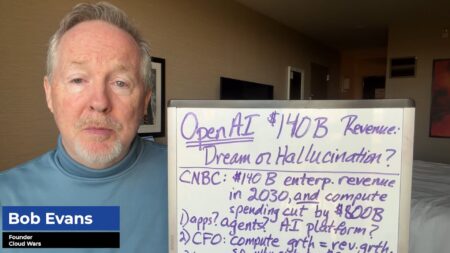
OpenAI’s ambitious 2030 revenue forecast collides with contradictory spending cuts, prompting concerns about strategy, execution, and credibility among enterprise customers and key infrastructure partners.

OpenAI has secured $110 billion in funding from Amazon, NVIDIA, and SoftBank, valuing the company at $730 billion. The investment aims to expand global AI infrastructure, accelerate frontier model development, and scale enterprise and consumer AI adoption worldwide.

As AI infrastructure demand surges toward a projected $4.3 trillion market, OpenAI recalibrates its spending timeline to balance investor confidence with continued aggressive investment in compute infrastructure.
Anthropic’s clash with OpenClaw may have cost it a pivotal AI-era hire as Steinberger takes his talents to OpenAI.