

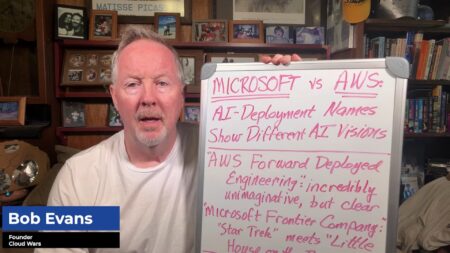
The AI Deployment Wars are expanding beyond technology into branding. Microsoft’s ambitious Frontier Company contrasts sharply with AWS’s practical Forward Deployed Engineering, raising questions about which message resonates with enterprise executives.
Search Results: culture (810)
AWS and Microsoft are taking radically different branding approaches to AI deployment, raising questions about which strategy enterprise customers will embrace.
OpenAI’s new token management tool highlights a deeper challenge: CEOs, not AI administrators, must decide how scarce AI resources are allocated across the business.
Google Cloud, OpenAI, and Anthropic are investing heavily in deployment capabilities, ecosystems, and forward-deployed engineers to help customers achieve measurable business outcomes and accelerate enterprise AI adoption beyond model selection.
The race to transform enterprises through AI is creating unprecedented demands for deployment expertise, customer success, and organizational change management.
Christopher Lochhead explains why AI is making knowledge and execution less valuable while elevating human judgment, taste, creativity, and category creation.
Google Cloud has launched Google AI Threat Defense, an AI-powered cybersecurity platform designed to help organizations proactively identify, prioritize, and remediate threats while keeping pace with increasingly sophisticated AI-driven cyberattacks.
Microsoft and EY’s expanded partnership combines AI-native engineering with business consulting to help organizations scale transformative AI initiatives.
The biggest AI opportunity in enterprise software may be reducing implementation friction, not simply adding generative features.
Microsoft says the future of AI success depends less on individual readiness and more on organizational culture, management support, and redesigned workflows.
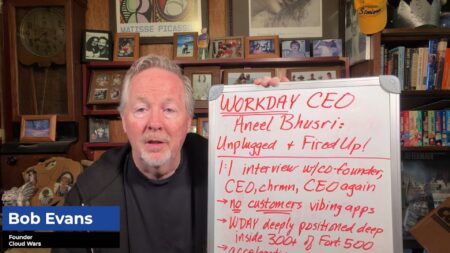
Aneel Bhusri is back as Workday CEO and focused on turning the company into an AI-first, agentic enterprise software powerhouse.
Dona Sarkar explains why AI should be viewed as a tool for empowerment rather than job replacement, urging professionals to become “AI power users” who learn how to harness AI within their own roles and industries.
Enterprises must redesign data platforms so autonomous AI agents can reason, act, and securely drive business outcomes across the organization.
A high-energy final day at the AI Agent & Copilot Summit explores reskilling, prompt engineering frameworks, and the shift from AI experimentation to real-world execution.
The conversation explores how orchestration—both technical and human—is becoming a critical capability, with organizations increasingly treating AI agents as part of the workforce that must be coordinated and managed effectively.
Palantir delivered stunning Q4 results, with revenue up 70% and U.S. commercial growth surging 137%, as CEO Alex Karp credited differentiated AI implementation and “magical” frontline outcomes for accelerating enterprise and government adoption.
Despite record growth, Microsoft lost its #1 cloud ranking due to cybersecurity failures exposed by a federal watchdog report and internal leadership admissions.
Mike Sicilia shares details on the culture and mindset that has boosted Oracle to the #2 spot on the Cloud Wars Top 10 rankings, as highlighted in this recap.
In dethroning Microsoft, Google Cloud showcases the impact of enterprise-focused AI, security, and ecosystem alignment, with Thomas Kurian’s leadership driving exponential growth.
AWS tumbles to #7 as SAP climbs and Palantir rockets up the Cloud Wars rankings, reflecting shifting dynamics in the enterprise AI race.