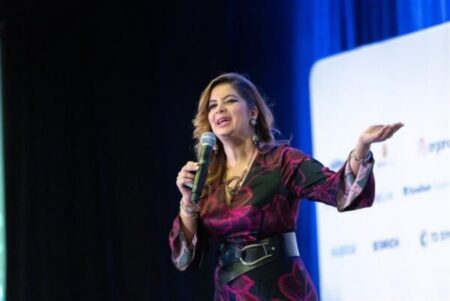



After yesterday’s introductory keynotes, the first full day of this year’s AI Agent & Copilot Summit began with a playful but enlightening keynote from longtime Microsoft executive and official Chief Troublemaker, Dona Sarkar (you can read a full analysis of her speech by my colleague Tom Smith).
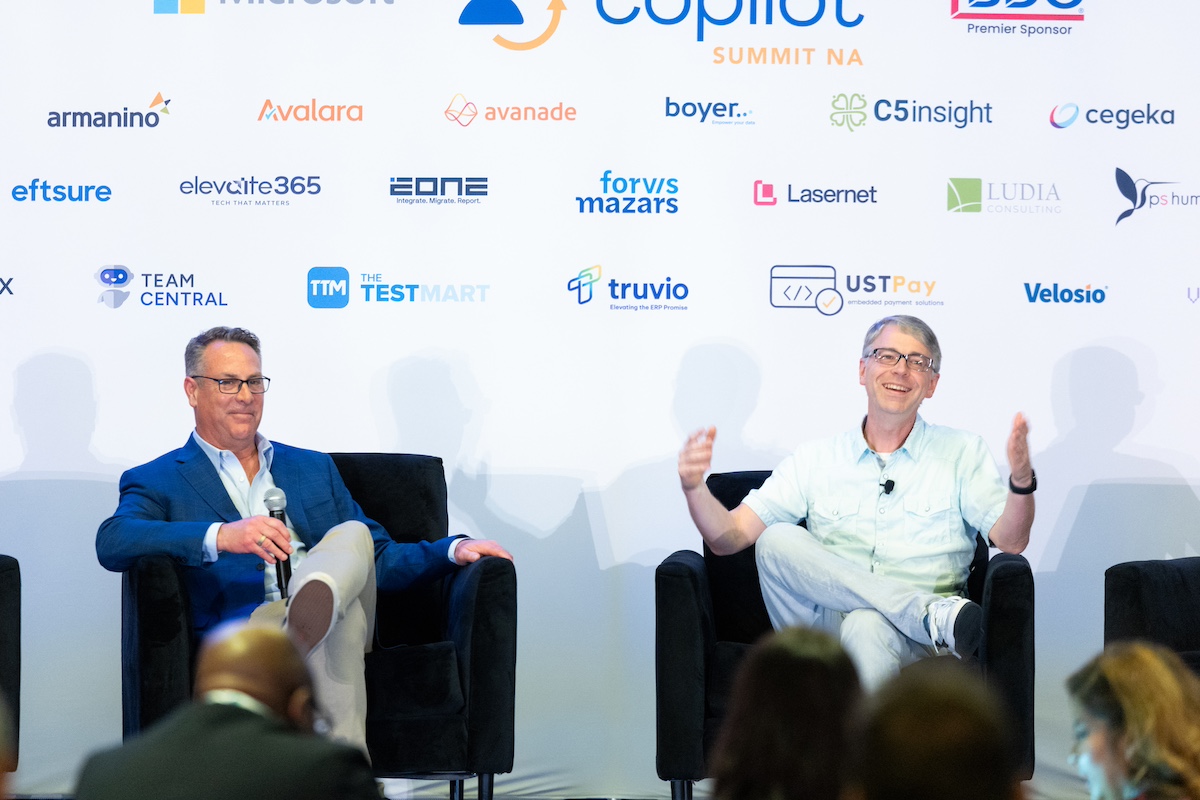
In a later session from Principal Copilot Architect at Microsoft Dewain Robinson who was joined on stage by Dynamics Communities and Cloud Wars CEO John Siefert, Robinson took a deep dive into Copilot Studio and the innovations that are setting apart this powerful tool for agent creation and management.
A central theme was the shift from simple summarization to reasoning models. While early copilots were effective at summaraizing information, said Robinson, the newer generation is designed to evaluate and choose the most appropriate response or action.
These models don’t just generate answers — they assess context, decide what information is relevant, and effectively “think” through problems, explained Robinson. He said that this evolution is closely tied to Copilot Studio’s role as an orchestration engine.
AI Industry Accelerator and Innnnovation Burst Sessions
The programming in the Grand Ballroom wasn’t just traditional. This year, the schedule also included AI Industry Accelerator and Innovation Burst sessions, which were targeted short deep dives into topics based on feedback from last year’s attendees.
The AI Industry Accelerator sessions were varied, covering a range of industries and featuring stories directly from companies that shared testimonials about how the introduction of AI has worked for them. In one of these sessions, “Humans as Orchestrators of Agents,” Jim McCarthy, COO at Vixxo, and Derek Neighbors, Chief Technology Officer – AI at Vixxo, shared their journey of building a generative AI-enabled tool for field agents.
“There still needs to be someone to turn the wrench, but everything that gets you to that point can be done by agents,” said McCarthy. The Vixxo team is transitioning their staff to drive their work through agents, with the aim of achieving 100% human orchestration by the end of the year.
This year’s Innovation Burst sessions were limited to five minutes, providing fast-paced, high-impact insights on how to best utilize Agentic AI tools and Copilot. Mason Whitaker, President of Volt Technologies, delivered a particularly impactful session aimed at showing attendees how they can achieve quick AI wins and deliver ROI in just 90 days.
Beyond the Main Stage
The AI Agent & Copilot Summit isn’t only about high-profile wins and understanding the wider industry; it’s about practical walkthroughs that show users how to achieve the wins they’ve seen on stage. A key parallel track, the Masterclasses at the summit covered the entirety of the Microsoft agent and Copilot ecosystem, from agentic strategy to governance and access.
In his session, “Integrating the AI Landscape,” Kent Weare, Principal Product Manager at Microsoft, took the audience through a journey of AI integration. Starting with an introduction to Model Context Protocol (MCP), Weare focused on its role in enabling modern AI architectures.
The session then moved into creating MCP servers in Azure Logic Apps and included a practical walkthrough of how to build an MCP server using Logic Apps. The demonstration showed how to create and register an MCP server through the platform’s interface, including use of the MCP server menu option. A key takeaway was the importance of exposing only the specific data fields required, rather than large volumes of unnecessary data, to improve efficiency and relevance.
Weare then moved on to Copilot Studio, showing live on screen how to intergrate MCP servers with Copilot Studio. Finally, the session highlighted a recent integration between Microsoft Foundry and Logic Apps, enabling Logic Apps to be connected and exposed as MCP servers.
Another significant session was led by Mohamed Derhalli, Lead Architect at Cyclotron. “Extending Microsoft 365 Copilot: A Practical Guide to Declarative Agents” included an explanation of what it means to extend M365 Copliot. A key focus was on data, in short, ensuring Copliot has more access to third-party data. This, said Derhalli, is essential for enabling Copilot to reason more effectively and deliver greater value.
Derhalli explored the reasons why agent strategies often fail, highlighting issues such as over-engineering too early, slow adoption, and unclear ROI. He introduced a framework distinguishing between “agents for me” (declarative agents within M365 Copilot) and “agents for we” (custom agents developed in Copilot Studio) to help clarify decision-making. Ultimately, simpler and internally-focused use cases are best suited for declarative agents, while more complex or external-facing scenarios require the flexibility and deeper design considerations that Copilot Studio offers.