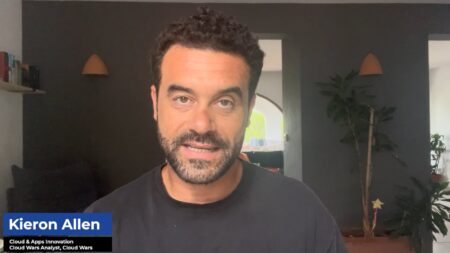



Bob Evans speaks with Chad Wahlquist, an Architect at Palantir, about what is driving the company’s extraordinary growth and, more importantly, what customers are getting from its technology. Wahlquist argues that Palantir’s momentum comes from helping enterprises solve difficult operational problems rather than simply deploying AI or chasing model benchmarks. Their conversation explores AI sovereignty, business outcomes, Palantir’s Ontology, LLM complexity, customer operating leverage, and the importance of retaining control over enterprise decision-making.
Outcomes Over AI Hype
The Big Themes:
- Outcomes Drive Palantir’s Growth: Wahlquist connects Palantir’s growth to the tangible returns customers see after adopting its technology. Rather than treating AI as a standalone investment or another piece of enterprise software, customers increasingly expand their Palantir relationships because successful initial projects create opportunities for broader deployment. He points to strong net dollar retention as evidence that existing customers are spending more after experiencing ROI. The underlying philosophy is straightforward: when an investment generates meaningful business value, executives are willing to repeat and expand it.
- Production LLMs Create New Problems: Getting an LLM working is only the beginning. Wahlquist discusses the stochastic and probabilistic nature of models, changing provider guardrails, security requirements, model deprecations, and unpredictable behavior across edge cases. Technically switching from one model to another might appear simple, but ensuring that a replacement works reliably across production workflows is significantly harder. This creates a fundamental enterprise question: how do businesses build durable operations on technology whose behavior and availability can change?
- Protect the Enterprise Decision Loop: One of the conversation’s most important ideas is that a business can be understood as a collection of decisions. Companies continually observe data, apply logic, take actions, measure outcomes, and adjust future decisions. Wahlquist calls that feedback loop a source of business “alpha” — the proprietary knowledge that helps one organization outperform another. As AI agents become participants in enterprise decision-making, ownership of that loop becomes increasingly important. Companies should understand who controls the data, logic, actions, outcomes, and learning generated through those processes.
The Big Quote: “LLMs don’t just magically fix everything. They also create new problems that you have to go solve.”
More from Chad Wahlquist and Palantir:
Follow Chad on LinkedIn or explore Palantir’s Sovereign AI overview, Palantir’s Ontology documentation, and Palantir’s AIP overview.