

Enterprise AI’s next breakthrough will come from evaluating agents against real business workflows and continuously improving their performance with proprietary organizational knowledge.
workflows
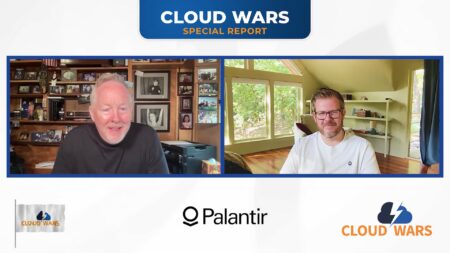
Palantir CEO Alex Karp is challenging traditional enterprise software with an approach that prioritizes customer data control, streamlined selling, and outcomes-based compensation.
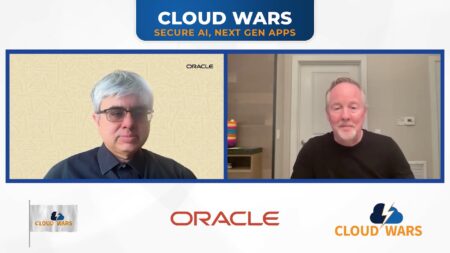
Oracle is expanding its Google Cloud partnership by bringing Gemini models across its enterprise AI portfolio, strengthening its flexible, multi-model approach to enterprise AI.
Project Perception represents Microsoft’s push beyond reactive cybersecurity, coordinating red, blue, and green AI agents in a closed-loop system designed to continuously identify vulnerabilities, assess risks, implement fixes, and strengthen enterprise defenses.
Businesses can unlock greater AI value by understanding when to use chat assistants, coding agents, co-work agents, or custom workflows.
AI innovation is shifting from occasional product launches to continuous improvement, requiring business leaders to focus on workflows, experimentation, and human expertise rather than simply adopting the newest AI models.
As digital transformation enters the AI era, ServiceNow and Accenture are helping organizations move beyond cloud migration by embedding AI agents into cybersecurity, compliance, and enterprise risk management workflows.
Working with DynaTech Systems, Solmax standardized global business processes and created a single source of truth, helping eliminate data silos and improve financial and operational decision-making across multiple regions.
Workday is leveraging its rich employee, finance, and policy data to power AI agents that can act across enterprise workflows.
Copilot Studio’s new visibility and governance capabilities help organizations scale AI automation while preserving security and operational oversight.
Agentic AI is shifting enterprise systems from answering questions to taking secure, autonomous action at scale.
Enterprise AI success is shifting from software consumption metrics to measurable business outcomes and shared accountability between providers and customers.
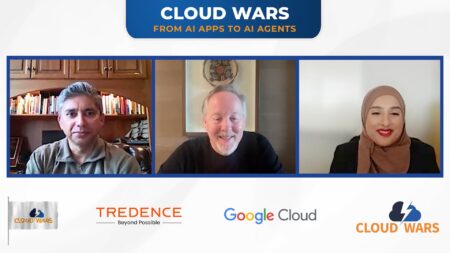
Enterprises must move beyond AI apps and build agentic systems that reason, coordinate, and execute across multiple business workflows.
Google introduces Gemma 4, an advanced open AI model series designed for local deployment. With mobile-first capabilities, multimodal processing, and strong reasoning, it empowers developers to build scalable AI applications without relying on cloud infrastructure.
Microsoft is redefining enterprise productivity by positioning Copilot, agents, and unified AI platforms as the operational backbone of next-generation “frontier firms.”
Microsoft demonstrates the real-world power of Copilot Studio with a customer support AI agent that reduces latency by 61% and cuts human escalations by 70% through multi-agent orchestration.
Organizations must balance AI experimentation with governance to prevent shadow AI projects from fragmenting data and creating new security risks.
ServiceNow introduces the Autonomous Workforce — AI specialists that work alongside humans to run enterprise workflows end-to-end.
Financial services, manufacturing, and retail are leading AI agent implementation, demonstrating how operational use cases are driving measurable transformation across high-impact sectors worldwide.
Microsoft expands Copilot with business-process agents, tuning templates, and standalone AI assistants designed to transform workflows across sales, finance, service, and enterprise productivity.