

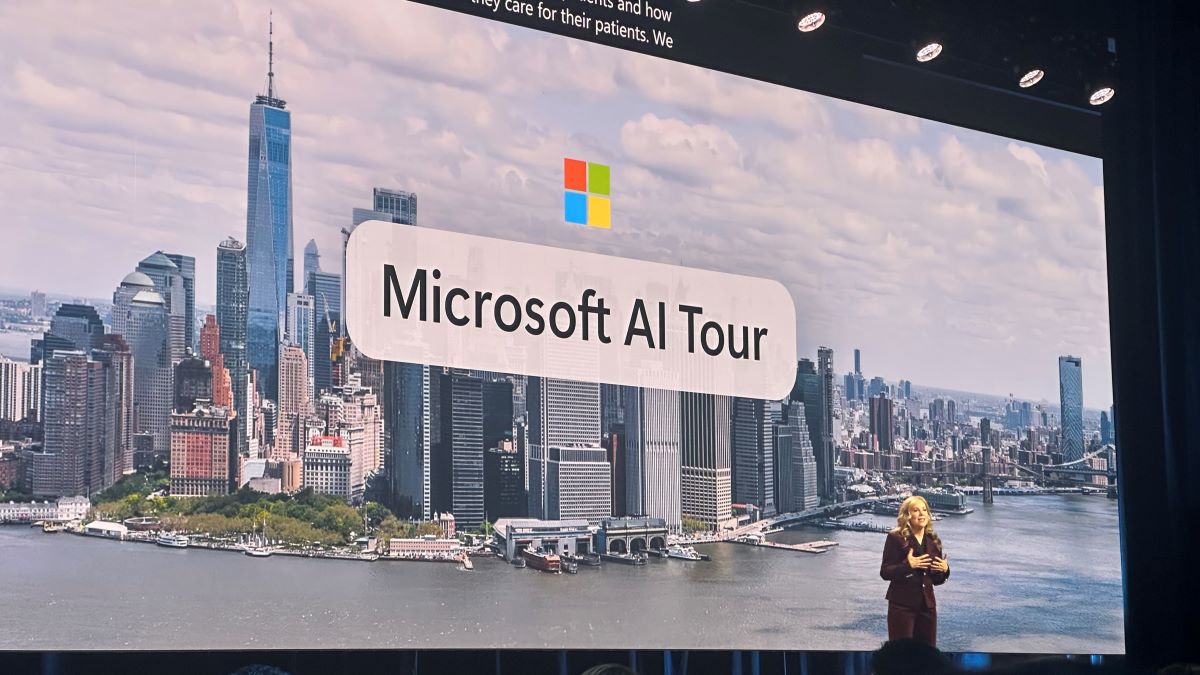
Yesterday, at the New York stop of the eleven-city Microsoft AI Tour, many of the 4,000 attendees took in the keynote, “Becoming Frontier,” which centered on customer stories and a creative demonstration of what an agent-first enterprise, or Frontier Firm, looks like. Tracy Galloway, Chief Operating Officer, Microsoft Americas, steered the show, opening by asking the audience to imagine the ramifications of even a slight AI-driven increase in productivity in the context of New York’s $1.8 trillion GDP.
Ultimately, she stressed, businesses want to think bigger than a slight increase. “How do you move beyond efficiency and harness AI to really unlock creativity, to differentiate, and to drive business growth?”
The keynote proceeded to offer a number of great answers to that question.
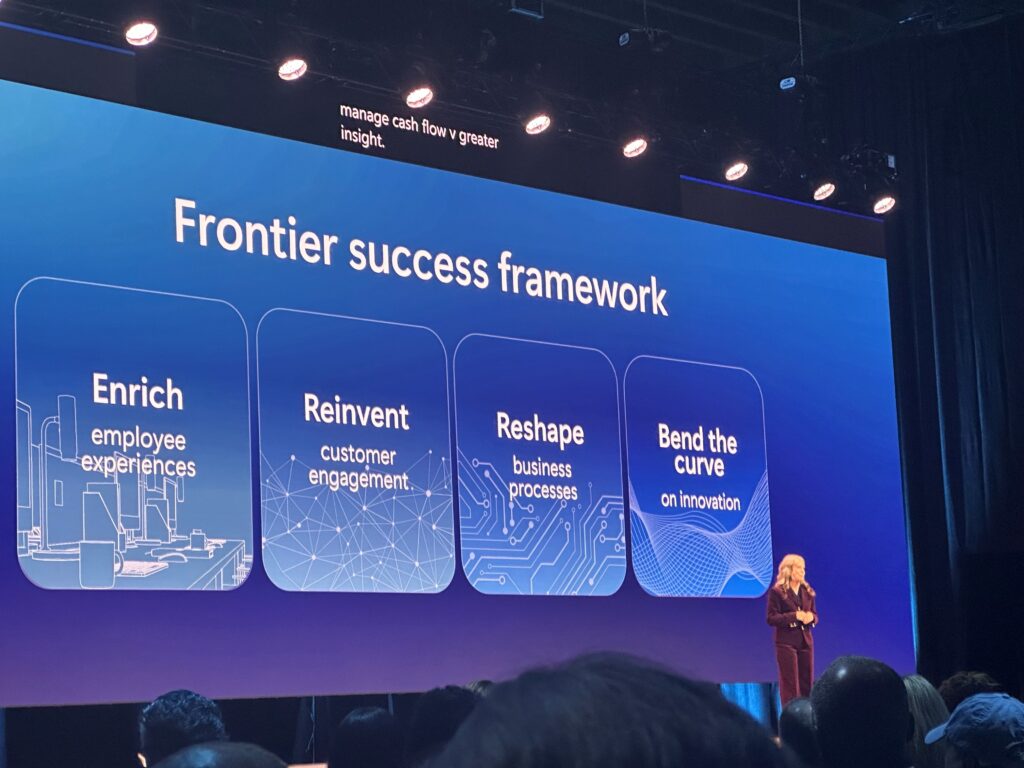
Zava’s AI Ascent
An engaging video featuring fictional clothing start-up, Zava, kicked off a lively, in-depth exploration of what it means to fully-integrate AI into a business and be a frontier organization.
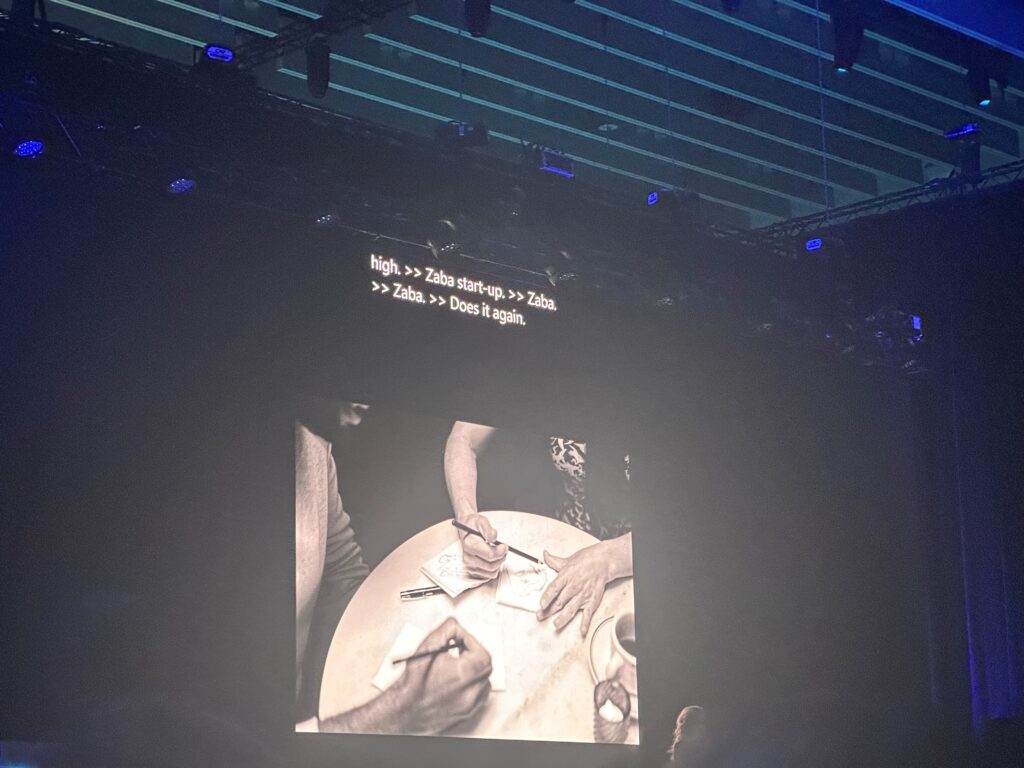
In this imagined example, Zava, which asks the question, “What if clothing could think?” has harnessed AI successfully in areas such as marketing, programming, and security. Tracy Galloway spoke with Zava “employees” to learn more about how they used AI to achieve their goals. Highlights included:
- Work IQ in Copilot personalizes daily workflows by understanding agenda, priorities, and context, not just answering generic questions.
- Model choice: quick-reaction work uses GPT-5, while concise, visual, infographic-style outputs may use Claude.
- Copilot pulls recommended agents inside workflow (like a competitive-intel agent), reducing the “Which agent do I use?” problem.
- MCP server example: agents translate dense ERP fields (SKUs, inventory components) into usable context for downstream planning tasks.
- Agents are grounded via knowledge sources (docs, best practices) and “tools” that let agents take actions, not just generate text.
- Finance demo: Dynamics 365 surfaces agent alerts (reconciliation discrepancies) with recommended fixes and full audit-trail logging.
Customer Voices
Next, Galloway sat down with Mark Luquire, Managing Director, Global Microsoft Alliance Co-Innovation Leader, EY, and Tom Mikluch, Head of Strategy, Office of the COO, Fiserv. Their discussion centered around AI’s impact on both organizations. Key takeaways included:
- Both customers reinforced that “makers” aren’t just developers anymore; domain experts closest to workflows can build high-value agents.
- Structured tactics like prompt-a-thons and peer learning accelerate practical adoption and help employees reach “aha” moments faster.
- AI is being used both internally to improve workforce productivity and externally to embed intelligence into customer-facing products.
- Guardrails for non-technical makers were highlighted as critical, especially least-privilege access and protection of sensitive data.
- Scale is arriving quickly, with tens of thousands of agents across multiple vendors, increasing the need for unified governance.
- Empowering subject-matter experts to build agents unlocks faster automation and more relevant workflow redesign.
Final Thoughts
As the novelty around the capabilities of AI have worn off, businesses are looking at how to most effectively integrate it into their workflows. Yet, doing so can be challenging due to the complexity of the landscape.
Figuring out the right agent and determining which tasks AI can’t handle makes for difficult decisions. The keynote drove home, however, that these decisions cannot be put off without losing revenue opportunities and that organizations should seek to integrate AI into their workflows quickly and entirely.