


AI coding squads are reshaping software development as GitHub Copilot and Claude Code move beyond individual assistants toward collaborative agent teams that share tasks, communicate, and deliver higher-quality results.
AI coding squads are reshaping software development as GitHub Copilot and Claude Code move beyond individual assistants toward collaborative agent teams that share tasks, communicate, and deliver higher-quality results.
Workday accelerated its agentic AI transformation at Rising 2026, unveiling six major innovations spanning autonomous agents, unified data, governance, and workforce intelligence while strengthening its competitive position against SAP, Oracle, and Microsoft.

With Copilot Managed Runtime now in public preview, Microsoft is giving apps built in Lovable and other third-party tools a governed path into the Microsoft 365 tenant, separating where apps are built from where, and how, they run.

Microsoft is extending Work IQ into Dynamics 365 business applications, giving Copilot and AI agents access to operational data, processes, and context that could help them reason across finance, supply chain, sales, service, and Microsoft 365.

Work IQ could address one of enterprise AI’s biggest obstacles: agents that lack business context. Microsoft is using existing applications, processes, semantic models, and institutional knowledge to create a reusable intelligence foundation for Copilot and agents.

Microsoft, Salesforce, and UiPath are taking different approaches to free developer AI capacity as consumption emerges as an increasingly important metric for the enterprise technology industry.

AI vendors are moving toward consumption-based billing as rising token costs make traditional flat-fee and user-based licensing increasingly difficult to sustain.

AI agents are beginning to outpace Copilot licenses, signaling that organizations are creating increasingly valuable custom automation across the Microsoft ecosystem.

Businesses can unlock greater AI value by understanding when to use chat assistants, coding agents, co-work agents, or custom workflows.

Microsoft’s latest education findings reveal that AI access is no longer the hurdle—effective implementation and structured training are.
Microsoft is expanding its AI strategy by embedding Copilot directly into Microsoft 365 Business Standard and Premium plans, simplifying licensing and accelerating AI adoption among small and medium-sized businesses beginning July 1.

Copilot Studio’s new visibility and governance capabilities help organizations scale AI automation while preserving security and operational oversight.

Microsoft says the future of AI success depends less on individual readiness and more on organizational culture, management support, and redesigned workflows.

The rise of OpenClaw has pushed Microsoft to evolve Copilot beyond chat-based AI into a fully agentic platform, blending automation, coordination, and enterprise-grade governance within Microsoft 365.

A major barrier to AI adoption isn’t willingness but governance, as leaders seek secure, observable, and controllable systems to confidently deploy AI across enterprise environments.

Addition to Microsoft 365 Copilot helps users sort through large amounts of data and conversations to determine required near-term actions and build comprehensive plans.
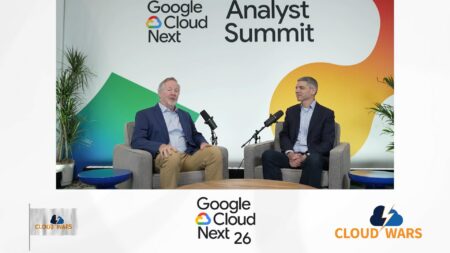
Enterprises must redesign data platforms so autonomous AI agents can reason, act, and securely drive business outcomes across the organization.

Microsoft’s shift toward in-house AI models reflects a broader strategy to reduce dependence on OpenAI while strengthening its position as both an AI platform provider and model innovator.

Microsoft’s latest Windows update signals a shift from widespread Copilot deployment toward more intentional, value-driven AI integration and agentic experiences.

With 209% ROI and six-month payback, Business Central is helping organizations streamline finance operations while enabling AI-powered insights through unified data and standardized processes.