


AWS will add 2 million NVIDIA GPUs to its infrastructure in 2027 and 2028, including Blackwell Ultra, Rubin and Rubin Ultra architectures, as the cloud giant prepares for surging demand for next-generation AI workloads.
AWS will add 2 million NVIDIA GPUs to its infrastructure in 2027 and 2028, including Blackwell Ultra, Rubin and Rubin Ultra architectures, as the cloud giant prepares for surging demand for next-generation AI workloads.

Amazon and Qualcomm Technologies have announced a multi-generational collaboration focused on customized silicon and connectivity for AI infrastructure, with Amazon potentially making up to $60 billion in payments for Qualcomm products, technology, systems and manufacturing services.

The launch of ChatGPT for Teens highlights a broader shift in AI competition, as technology companies increasingly compete not only on model capabilities but also on trust, safety, education and their ability to build lifelong user relationships.

Palantir’s Q2 2026 results reveal 93% growth, a bold AI sovereignty strategy, and how its customer-first approach is reshaping enterprise AI.

While Microsoft generated $59.3 billion in quarterly cloud revenue, Google Cloud’s much faster growth suggests the AI revolution is rapidly reshaping the competitive landscape.

Google Cloud’s $750 million investment in partner training and certification reflects its belief that customers benefit most when trusted partners lead AI transformation initiatives.

Microsoft’s new Frontier Company represents the company’s biggest step yet toward making its frontier firm vision a reality for enterprise customers.

KPMG and Microsoft are expanding their partnership to help enterprises deploy agentic AI at scale through standardized governance, deployment, and management frameworks.

Google Cloud and Palantir have formed a strategic partnership that combines enterprise data, AI, and industry expertise to help organizations accelerate digital transformation and AI adoption.

Google Cloud’s agreement with EQT could accelerate AI adoption faster than conventional sales strategies by reaching hundreds of companies through a single partnership.

OpenAI has launched a global partner network backed by a $150 million fund, signaling a major commitment to enterprise AI adoption through ecosystem-driven customer transformation, workflow redesign, systems integration, and change management.

Palantir’s 70% growth highlights how outcome-based AI pricing and rapid enterprise expansion are creating a new playbook for cloud success.
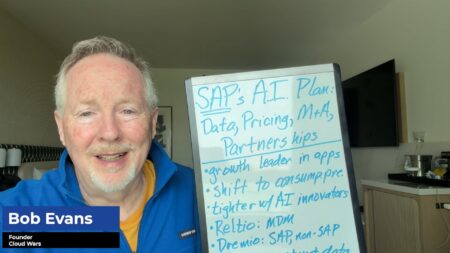
SAP’s AI plan includes strategic partnerships and acquisitions as well as major shifts toward consumption pricing and customer alignment.

Microsoft and Publicis Groupe are expanding a long-running partnership to create a full-stack marketing solution powered by cloud, agentic AI, and identity-based data, helping marketers automate workflows, modernize legacy systems, and unlock faster, smarter growth opportunities.

Microsoft’s $10 billion Japan investment underscores a strategy combining AI infrastructure, workforce development, and data sovereignty to drive global growth while meeting increasingly strict regional compliance requirements.

Microsoft’s shift toward in-house AI models reflects a broader strategy to reduce dependence on OpenAI while strengthening its position as both an AI platform provider and model innovator.

OpenAI has secured $110 billion in funding from Amazon, NVIDIA, and SoftBank, valuing the company at $730 billion. The investment aims to expand global AI infrastructure, accelerate frontier model development, and scale enterprise and consumer AI adoption worldwide.

Palo Alto Networks’ Prisma AIRS and Google Cloud AI unify to ensure security from development to deployment.

In a shift from rivalry to alliance, SAP and Snowflake are teaming up to ease customer data challenges.

The Microsoft‑Oracle database partnership is generating nearly all of Oracle’s multi‑cloud database growth so far, with Larry Ellison believing AWS and Google Cloud will ramp up soon and drive the next wave of revenue.