


Solgari’s Ed Grant explains why customer engagement data is the foundation of successful AI strategies and how organizations are turning conversations into business outcomes.
Solgari’s Ed Grant explains why customer engagement data is the foundation of successful AI strategies and how organizations are turning conversations into business outcomes.
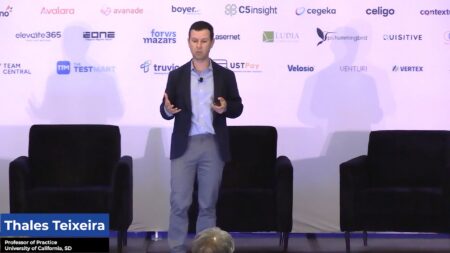
Thales Teixeira shares a practical framework for deploying customer-centric AI agents, highlighting the common implementation mistakes organizations should avoid and the strategies that turn AI into a true competitive advantage.

The new AI Deployment Wars reveal that enterprise customers need more than technology: they need strategy, process modernization, secure integration, and change management.

Customers are reporting high confidence levels in AI agents managing data workflows, but the numbers drop when tasks apply to AI workflows such as coding functions.

The world’s leading AI companies are investing nearly $10 billion to ensure AI deployments generate measurable business outcomes rather than simply impressive technology.

Microsoft is accelerating its Frontier Firm vision with a new business unit that embeds 6,000 AI and industry experts directly with customers to build, optimize, and scale enterprise AI systems.

Dona Sarkar argues that most AI failures stem from unclear business objectives and poor data quality rather than limitations in the technology itself.

Microsoft’s new Frontier Company represents the company’s biggest step yet toward making its frontier firm vision a reality for enterprise customers.

The companies that survive disruption are the ones focused on solving problems, not protecting products.

Akrites coordinates disclosure and remediation as discovery of open-source vulnerabilities in the AI Era is outrunning defense.

Microsoft is shifting Copilot Cowork to usage-based pricing while exploring lower-cost AI models, signaling a strategy focused on performance, economics, and customer choice.

Working with DynaTech Systems, Solmax standardized global business processes and created a single source of truth, helping eliminate data silos and improve financial and operational decision-making across multiple regions.

Dona Sarkar says AI has yet to find its defining mainstream use case, and the companies preparing now will be best positioned when that breakthrough moment arrives.

Addition to the company’s governance control plan eliminates a wide range of manual steps required to transition an agent from local usage to enterprise availability.

Microsoft modernized employee device procurement with a centralized platform before adding agentic AI, cutting costs by $20M and simplifying the user experience.

Sachin Gandhi outlines how enterprises are scaling AI through a growing ecosystem of first-party, partner, and custom agents across core business functions.

A cautionary look at AI adoption, highlighting how poorly chosen use cases and immature implementations can create more operational disruption than business value.

KPMG and Microsoft are expanding their partnership to help enterprises deploy agentic AI at scale through standardized governance, deployment, and management frameworks.

Mustafa Suleyman believes AI progress is accelerating dramatically, with model-training compute expected to increase another thousand-fold over the next three years.

Yogesh Kasat explains why enterprise AI adoption succeeds when organizations begin with practical use cases, measurable ROI, and hands-on experimentation.