


AI leaders are embracing self-regulation as Washington weighs stronger oversight, raising questions about enforcement, consumer risk, and how the U.S. can regulate AI without slowing innovation.
AI leaders are embracing self-regulation as Washington weighs stronger oversight, raising questions about enforcement, consumer risk, and how the U.S. can regulate AI without slowing innovation.
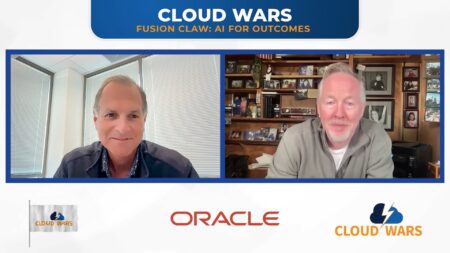
Oracle Fusion Claw combines AI reasoning, deterministic computing, and enterprise governance to execute complex business processes with increasing autonomy.

AWS will add 2 million NVIDIA GPUs to its infrastructure in 2027 and 2028, including Blackwell Ultra, Rubin and Rubin Ultra architectures, as the cloud giant prepares for surging demand for next-generation AI workloads.

Since returning as CEO, Aneel Bhusri has reshaped Workday’s agentic AI strategy, eliminating or combining simpler agents while prioritizing sophisticated AI systems capable of solving complex HR and finance problems and delivering measurable customer ROI.

After proving its custom silicon strategy with Maia 200, Microsoft is preparing a much larger Maia 300 push designed to support both AI training and inference.

Palantir’s extraordinary 93% revenue growth and CEO Alex Karp’s unconventional philosophy could reshape enterprise software, emphasizing AI sovereignty, customer control of data, intensive partnerships, and compensation tied directly to measurable value creation.

Palantir CEO Alex Karp is challenging traditional enterprise software with an approach that prioritizes customer data control, streamlined selling, and outcomes-based compensation.

Bill McDermott is combining ServiceNow’s AI Control Tower, cybersecurity, and governance capabilities to give CEOs greater certainty and control as enterprise AI creates unprecedented risk and complexity.

Nadella believes enterprises should have the freedom to choose AI providers, privately train models, manage costs, and retain complete control over their accumulated organizational intelligence.

SAP delivered 24% cloud revenue growth in Q2 while expanding its cloud backlog to $26.3 billion, with CEO Christian Klein crediting the company’s global partner ecosystem and AI strategy for accelerating customer adoption and positioning SAP for $30 billion in cloud revenue next year.

While Microsoft generated $59.3 billion in quarterly cloud revenue, Google Cloud’s much faster growth suggests the AI revolution is rapidly reshaping the competitive landscape.

Despite investor concerns over rising CapEx, Alphabet believes aggressive AI infrastructure spending will generate multiyear returns as enterprise AI adoption accelerates across industries.

Google Cloud’s $4.8 billion sequential revenue increase establishes a new benchmark for Microsoft Cloud and AWS as investors prepare for their upcoming earnings reports.

SAP is partnering with Giotto.ai to evaluate reasoning-focused AI models that could make Joule agents more reliable, secure, and effective in complex enterprise decision-making.

The AI Deployment Wars are expanding beyond technology into branding. Microsoft’s ambitious Frontier Company contrasts sharply with AWS’s practical Forward Deployed Engineering, raising questions about which message resonates with enterprise executives.
As AI token demand surges, CEOs must take ownership of allocation strategy to ensure scarce AI resources drive business outcomes, not internal politics.
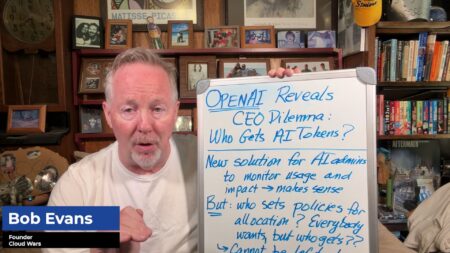
OpenAI’s new token management tool highlights a deeper challenge: CEOs, not AI administrators, must decide how scarce AI resources are allocated across the business.
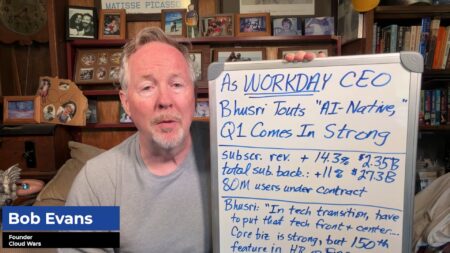
Returning CEO Aneel Bhusri says technology transitions require companies to make emerging technologies their absolute top priority.

The biggest AI opportunity in enterprise software may be reducing implementation friction, not simply adding generative features.

After years of disconnected AI breakthroughs, Gemini Enterprise delivers a cohesive system that simplifies deployment, enhances usability, and enables enterprises to fully leverage agentic AI across operations, data, and workflows.