


Artificial intelligence is creating new business categories, disrupting traditional e-commerce, and empowering entrepreneurs to build products and services with unprecedented capabilities.
Artificial intelligence is creating new business categories, disrupting traditional e-commerce, and empowering entrepreneurs to build products and services with unprecedented capabilities.
Workday accelerated its agentic AI transformation at Rising 2026, unveiling six major innovations spanning autonomous agents, unified data, governance, and workforce intelligence while strengthening its competitive position against SAP, Oracle, and Microsoft.
AI leaders are accelerating their push into vertical industries through customer-designed products, deeper data integration, and industry-specific skills.
At Salesforce Dreamforce, Sam Altman discussed the accelerating capabilities of AI models, the risks of concentrated power, and the need for safety, while offering a striking account of OpenAI’s involvement in a Hugging Face security incident.
Extended, powerful partnerships will prove to be just as important as the expanding AIforce, as Salesforce challenges the traditional mindset with its approach to the future of tech.
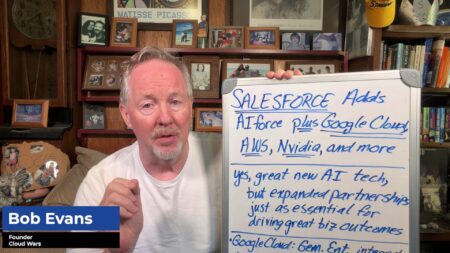
CEO Marc Benioff explained in his Dreamforce keynote how Salesforce unlocks value for customers beyond its AIforce through extended partnerships.

Salesforce CEO Marc Benioff says the company’s Claudeforce partnership with Anthropic can unlock decades of customer data and business value previously “trapped” inside Salesforce systems, creating what he calls an unprecedented enterprise AI opportunity.

Salesforce and Anthropic’s new ClaudeForce partnership could unlock enormous value trapped inside enterprise systems and redefine the future of AI-powered business applications.

Salesforce’s Q2 growth slowed to 11%, but a major Anthropic partnership and the launch of Claudeforce could boost future growth and validate Marc Benioff’s AI ambitions.

AI monetization is moving upstream as rising agentic development costs push Microsoft and other vendors to charge builders for creating, testing, and executing AI-powered products.

Marc Benioff’s Salesforce is betting that combining Anthropic’s AI momentum with its massive enterprise presence can unlock new opportunities for customers and accelerate its AI strategy.

Gmail, Calendar, and Drive users can now access data and perform tasks directly from their Claude conversations, accelerating integration of AI tools and productivity tools.

OpenAI has responded to the GPT-5.6-Sol security incident involving Hugging Face by strengthening cybersecurity safeguards, expanding its Daybreak program, and introducing GPT-5.6-Cyber for vetted defenders conducting advanced vulnerability research and security testing.

AI vendors are moving toward consumption-based billing as rising token costs make traditional flat-fee and user-based licensing increasingly difficult to sustain.

AI’s unprecedented growth is forcing even the world’s best-run companies to rethink traditional risk management and embrace massive, calculated bets on the future.
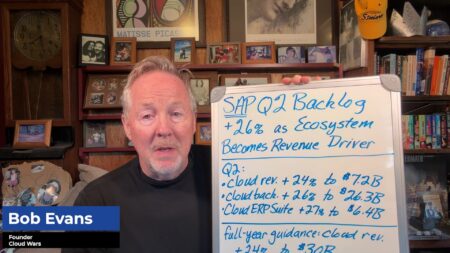
SAP is approaching a potential $30 billion cloud business as its partner-led strategy continues to outpace traditional enterprise software competitors.

Salesforce is deepening Slack’s role in enterprise AI by allowing users to orchestrate multiple AI agents while maintaining centralized authentication and security.

Google Cloud and Palantir are accelerating faster than many AI competitors because customers value measurable business transformation over technical benchmarks such as model size or context windows, creating exceptional momentum in the rapidly expanding AI economy.

Google Cloud’s $750 million investment in partner training and certification reflects its belief that customers benefit most when trusted partners lead AI transformation initiatives.

The new AI Deployment Wars reveal that enterprise customers need more than technology: they need strategy, process modernization, secure integration, and change management.