


Microsoft is extending Work IQ into Dynamics 365 business applications, giving Copilot and AI agents access to operational data, processes, and context that could help them reason across finance, supply chain, sales, service, and Microsoft 365.
Microsoft is extending Work IQ into Dynamics 365 business applications, giving Copilot and AI agents access to operational data, processes, and context that could help them reason across finance, supply chain, sales, service, and Microsoft 365.

Work IQ could address one of enterprise AI’s biggest obstacles: agents that lack business context. Microsoft is using existing applications, processes, semantic models, and institutional knowledge to create a reusable intelligence foundation for Copilot and agents.
OpenAI prominently outlined plans for a unified AI superapp in March, but CFO Sarah Friar’s August description of the company’s AI-native stack makes no mention of it, raising questions about whether OpenAI has changed its strategy.

SAP delivered 24% cloud revenue growth in Q2 while expanding its cloud backlog to $26.3 billion, with CEO Christian Klein crediting the company’s global partner ecosystem and AI strategy for accelerating customer adoption and positioning SAP for $30 billion in cloud revenue next year.

Palantir makes the argument that while some ERP standardization can be beneficial, an over-reliance on it can lead to squandered opportunity with emerging tech.
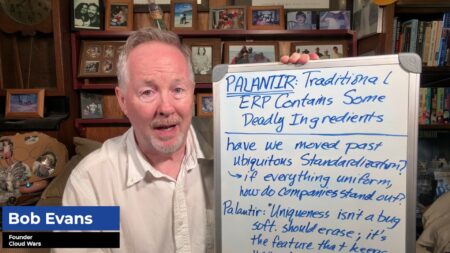
Palantir challenges traditional ERP and standardization, suggesting an alternate approach in the current economy and age of AI.

Working with DynaTech Systems, Solmax standardized global business processes and created a single source of truth, helping eliminate data silos and improve financial and operational decision-making across multiple regions.
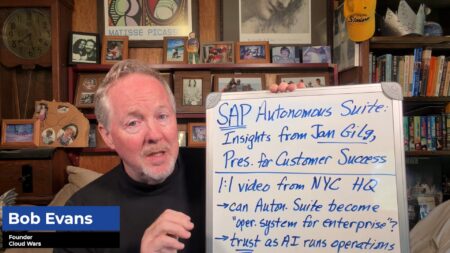
SAP is betting that its new Autonomous Suite will help customers transition from traditional ERP systems to AI-powered enterprises built on trust, automation, and business outcomes.
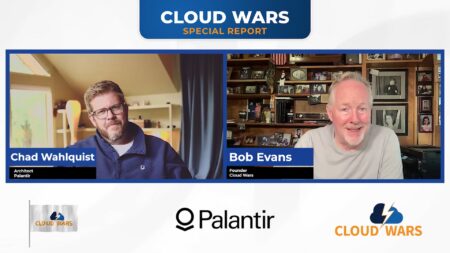
The enterprise AI battleground is shifting from model access to operational context, governance, and differentiated execution infrastructure.

Enterprise AI success depends not just on innovation speed, but on governance, interoperability, migration readiness, and organizational change.

Enterprise leaders should focus less on automation savings and more on how agentic AI accelerates growth and customer value.

Agentic AI is shifting enterprise systems from answering questions to taking secure, autonomous action at scale.
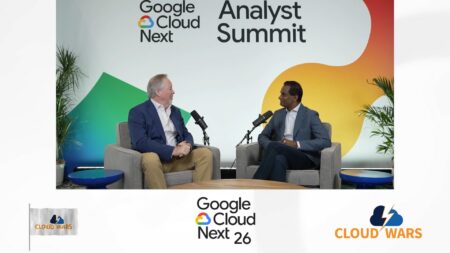
Enterprise AI success is shifting from software consumption metrics to measurable business outcomes and shared accountability between providers and customers.
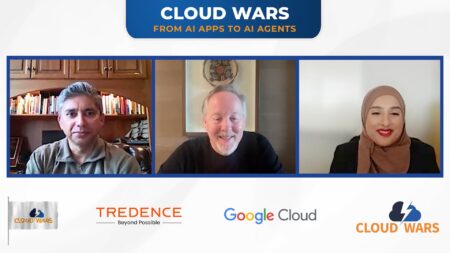
Enterprises must move beyond AI apps and build agentic systems that reason, coordinate, and execute across multiple business workflows.

With 209% ROI and six-month payback, Business Central is helping organizations streamline finance operations while enabling AI-powered insights through unified data and standardized processes.
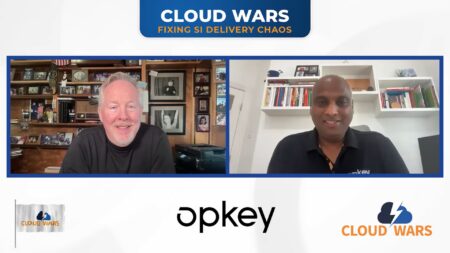
Agentic AI is transforming ERP implementations by automating design, testing, and support, reducing costs and accelerating delivery timelines significantly.
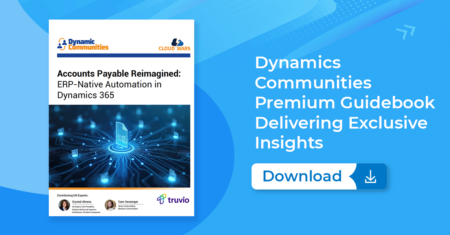
Whether you are reassessing an existing AP solution or planning the next phase of your Dynamics 365 roadmap, this guide is intended to provide context and clarity grounded in real-world experience.

Organizations must balance AI experimentation with governance to prevent shadow AI projects from fragmenting data and creating new security risks.

Microsoft expands Copilot with business-process agents, tuning templates, and standalone AI assistants designed to transform workflows across sales, finance, service, and enterprise productivity.
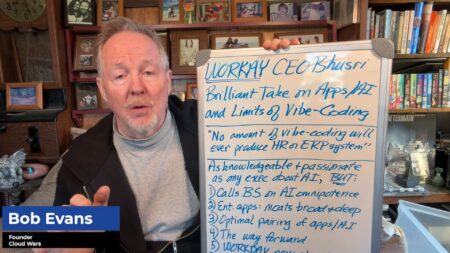
Workday’s Q4 call reframed the AI debate, emphasizing that enterprise applications remain essential even as AI accelerates innovation across HR, ERP, and beyond.