


Skill Recorder creates a foundation for AI to understand workflows, recommend improvements, and ultimately automate workflows, for on-demand or scheduled use cases.
Skill Recorder creates a foundation for AI to understand workflows, recommend improvements, and ultimately automate workflows, for on-demand or scheduled use cases.
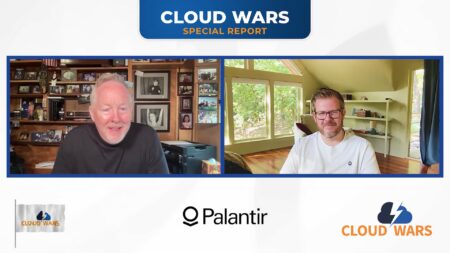
Palantir’s rapid growth reflects an enterprise AI strategy centered on measurable customer outcomes, operational transformation, sovereignty, and deep long-term partnerships.

Salesforce scores a major AI win as the Pentagon approves its agents for autonomous tasks, reinforcing the security and governance credentials of its agentic infrastructure.

Microsoft Research and Paige’s PRISM 2 combines nearly 2.5 million pathology images with clinical language, creating a versatile AI model for cancer detection, biomarker prediction, and research.
Palantir’s extraordinary 93% revenue growth and CEO Alex Karp’s unconventional philosophy could reshape enterprise software, emphasizing AI sovereignty, customer control of data, intensive partnerships, and compensation tied directly to measurable value creation.

Agentic reasoning loops promise better AI answers, but could dramatically increase token consumption and costs as enterprise adoption grows.

Microsoft CEO Satya Nadella has confirmed plans for a Copilot super app that will unite chat, coding, Cowork and autonomous AI agents, creating a single flagship experience spanning both Microsoft’s consumer and commercial AI offerings.

AI vendors are moving toward consumption-based billing as rising token costs make traditional flat-fee and user-based licensing increasingly difficult to sustain.

AI vendors are increasingly turning to forward deployment engineers as enterprises struggle to move AI pilots into production and consumption-based models grow.

Project Perception represents Microsoft’s push beyond reactive cybersecurity, coordinating red, blue, and green AI agents in a closed-loop system designed to continuously identify vulnerabilities, assess risks, implement fixes, and strengthen enterprise defenses.

Oracle lands a major 10-year Pentagon contract worth up to $7 billion, strengthening its government credentials while creating a potentially significant stream of recurring revenue.

AI’s unprecedented growth is forcing even the world’s best-run companies to rethink traditional risk management and embrace massive, calculated bets on the future.

July updates extend the company’s commitment to make a range of AI models and choices available to users. Models from OpenAI and Anthropic have been added.

Google has introduced Gemini 3.6 Flash, Gemini 3.5 Flash-Lite, and Gemini 3.5 Flash Cyber, focusing on lower costs, faster AI agents, improved coding, and specialized cybersecurity capabilities for enterprise customers.

AI agents are beginning to outpace Copilot licenses, signaling that organizations are creating increasingly valuable custom automation across the Microsoft ecosystem.

Microsoft and more than 20 tech companies urge U.S. lawmakers to protect open-weight AI models, arguing openness drives innovation and competition.

Palantir’s Q2 2026 results reveal 93% growth, a bold AI sovereignty strategy, and how its customer-first approach is reshaping enterprise AI.

Data breaches hit hardest in healthcare and financial services, while the firms that tap AI most aggressively are focusing on hunting threats and automating attack responses.
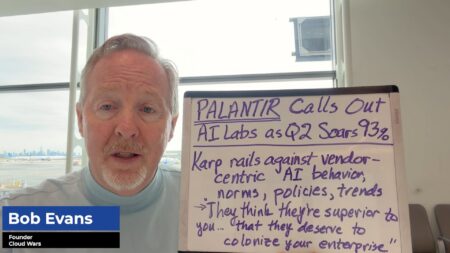
Palantir’s record growth underscores Alex Karp’s belief that customer-controlled AI will produce better business outcomes than today’s dominant technology models.

Nadella believes enterprises should have the freedom to choose AI providers, privately train models, manage costs, and retain complete control over their accumulated organizational intelligence.