


OpenAI’s latest Codex upgrades show the company rapidly evolving from standalone AI tools toward a unified “super app” where persistent AI agents can work across apps, retain memory, automate workflows, and increasingly act on behalf of users.
OpenAI’s latest Codex upgrades show the company rapidly evolving from standalone AI tools toward a unified “super app” where persistent AI agents can work across apps, retain memory, automate workflows, and increasingly act on behalf of users.
Workday and Achievers are bringing AI-powered behavioral intelligence into HCM, helping enterprises strengthen engagement, productivity, and employee retention through integrated recognition tools.
Palantir delivered extraordinary Q1 results while arguing that enterprise AI must evolve beyond “software” into fully governed AI infrastructure capable of delivering measurable, auditable, and operational business outcomes at scale.

The rise of OpenClaw has pushed Microsoft to evolve Copilot beyond chat-based AI into a fully agentic platform, blending automation, coordination, and enterprise-grade governance within Microsoft 365.
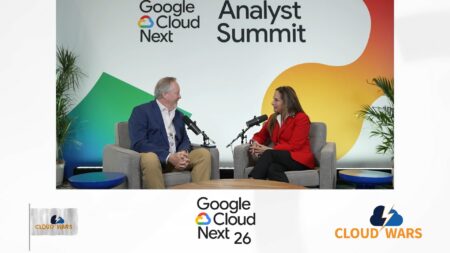
Open cloud strategies and agentic AI are helping public sector organizations modernize faster without costly vendor lock-in.
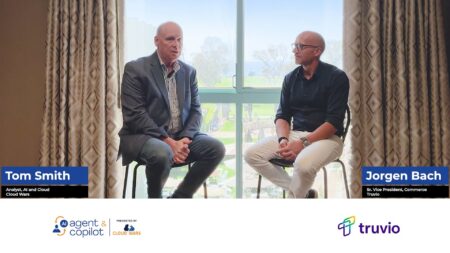
At the AI Agent & Copilot Summit, Truvio’s Jorgen Bach explains how unified platforms and AI agents are helping enterprises close the ERP value gap and operationalize AI adoption.

Enterprise leaders should focus less on automation savings and more on how agentic AI accelerates growth and customer value.
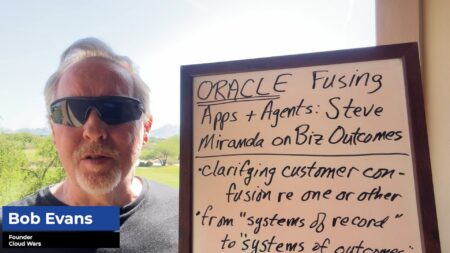
Oracle argues the future is not apps versus agents, but applications and agents working together as one.

Google Cloud doubles down on the agentic AI race with a $750M ecosystem investment designed to accelerate partner innovation, enterprise adoption, and competitive momentum against Microsoft and AWS.

SAP’s surging cloud growth and backlog expose the widening gap between AI-doom narratives and the strong reality of enterprise applications in the agentic AI era.

While many predict AI will destroy enterprise software vendors, SAP’s Q1 2026 results tell a different story: cloud revenue rose 27%, Cloud ERP Suite grew 30%, and backlog climbed 25%, proving strong momentum.
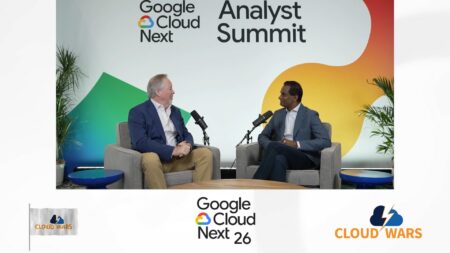
Enterprise AI success is shifting from software consumption metrics to measurable business outcomes and shared accountability between providers and customers.

Microsoft and Publicis Groupe are expanding a long-running partnership to create a full-stack marketing solution powered by cloud, agentic AI, and identity-based data, helping marketers automate workflows, modernize legacy systems, and unlock faster, smarter growth opportunities.

Through its AI Tour and new initiatives, Microsoft is transforming South Korea into a global AI hub while investing heavily in Thailand’s cloud and AI infrastructure to accelerate national competitiveness and workforce readiness.

A podcast discussion between Chander Vaidyanathan, John Siefert, and Morgan Jonnson highlights the role of AP automation in reshaping the modern finance function.

Zenity and ServiceNow are pioneering AI SecOps, combining governance and security capabilities to help enterprises confidently deploy and manage AI agents at scale across business operations.

Marc Benioff’s vision of the Agentic Enterprise places Slack at the core, transforming it into an operating system where AI agents collaborate with humans to drive productivity, innovation, and faster decision-making.
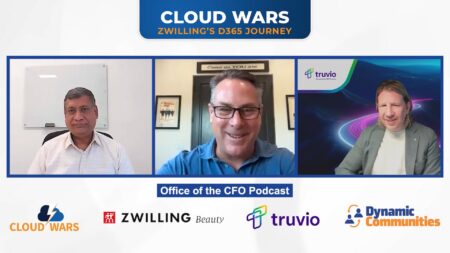
Chander Vaidyanathan and Morgan Johnson discuss how Zwilling Beauty Group’s shift to Dynamics 365 and partnership with Truvio enabled AP automation, improved accuracy, and set the stage for AI-driven transformation.

New AI platforms are eliminating data silos by integrating multiple enterprise systems into unified, intelligent workflows.

SAP plans a gradual move from SaaS subscriptions to AI usage-based pricing, signaling a structural change in enterprise software economics.