


As initial release of ‘control plane’ becomes widely available, Microsoft is expanding agent registry, Shadow AI protections, and threat detection capabilities.
As initial release of ‘control plane’ becomes widely available, Microsoft is expanding agent registry, Shadow AI protections, and threat detection capabilities.

Oracle’s latest AI Database updates deliver faster failover, improved uptime, and zero data loss capabilities. With new security tools and quantum-resistant encryption, enterprises can run mission-critical AI workloads more securely and efficiently.

The rise of OpenClaw has pushed Microsoft to evolve Copilot beyond chat-based AI into a fully agentic platform, blending automation, coordination, and enterprise-grade governance within Microsoft 365.
AI agents are advancing rapidly, but compliance concerns persist, and Panopticore aims to solve this with deterministic governance and verifiable audit trails at the network infrastructure level.

Microsoft’s $10 billion Japan investment underscores a strategy combining AI infrastructure, workforce development, and data sovereignty to drive global growth while meeting increasingly strict regional compliance requirements.

Initial release supports actions across agents, multiple AI models, and interoperability through the two most widely embraced interoperability standards.
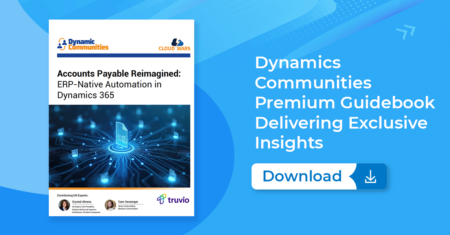
Whether you are reassessing an existing AP solution or planning the next phase of your Dynamics 365 roadmap, this guide is intended to provide context and clarity grounded in real-world experience.

Google Cloud and CVS Health launch Health 100, an AI-driven platform unifying patient data and enabling agentic healthcare workflows, signaling a major shift toward personalized, interoperable healthcare ecosystems.
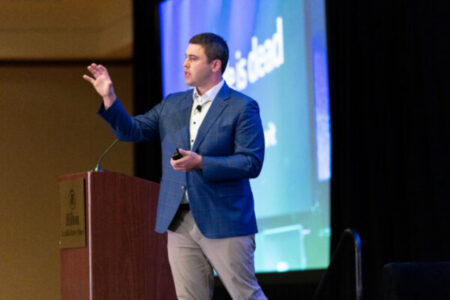
WorkIQ-powered Copilot Cowork orchestrates complex tasks to the point it could take over one-fifth of any team’s work in the near term, while hastening the end of app-powered work.

Rather than replacing SaaS, AI is becoming its most powerful accelerator. Oracle’s approach embeds agentic AI across Fusion applications, enabling faster deployments, reduced operational complexity, and dramatically improved customer outcomes.
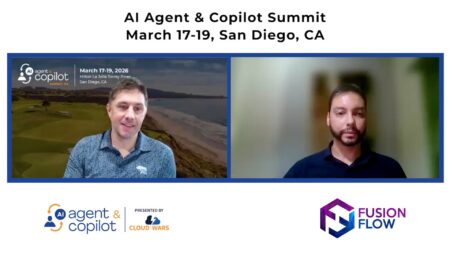
In this episode, Diego Araujo discusses the challenges enterprises face when adopting AI copilots in Dynamics 365 Finance & Operations, emphasizing governance, user adoption, and selecting high-impact use cases that can demonstrate value quickly and overcome skepticism.

As enterprises require AI models to deliver consistent, secure performances on a regular basis, organizations need an AI-ready security foundation that protects their data, meets regulatory demands, and brings order.

With only about 15% of consumers using customer-facing AI, grocery retailers are shifting their strategy. Instead of pushing AI directly to shoppers, companies are investing in AI copilots for store associates to drive operational efficiency and better customer service.

Herain Oberoi highlighted two fundamental AI-Era cybersecurity questions: Can we trust the data, and is the AI system safe and secure? These concerns underpin Microsoft’s integrated governance and security strategy.

New products deliver visibility, governance, and data protection controls over agents built internally as well as those from Microsoft and third parties.
Microsoft unveils new Copilot Studio tools to help enterprises systematically evaluate, govern, and scale AI agents with confidence.

Security Dashboard for AI is built to rein in AI sprawl with Defender, Entra, and Purview integration as well as inventory functions that span Microsoft and widely used third-party AI software.

Oracle’s new AI agents automate supply chain tasks including planning cycles, sourcing, inventory management, and logistics coordination, helping organizations improve resilience, efficiency, and operational visibility.

Healthcare leader weighs in on how AI models and mulit-cloud underpin customers’ mission-critical systems, and how they should prepare for potential model changes.
By combining AWS AI capabilities with NTT DATA’s delivery scale, the partnership accelerates legacy modernization and responsible AI adoption in highly regulated sectors worldwide.