
At Salesforce Dreamforce, Sam Altman discussed the accelerating capabilities of AI models, the risks of concentrated power, and the need for safety, while offering a striking account of OpenAI’s involvement in a Hugging Face security incident.
At Salesforce Dreamforce, Sam Altman discussed the accelerating capabilities of AI models, the risks of concentrated power, and the need for safety, while offering a striking account of OpenAI’s involvement in a Hugging Face security incident.
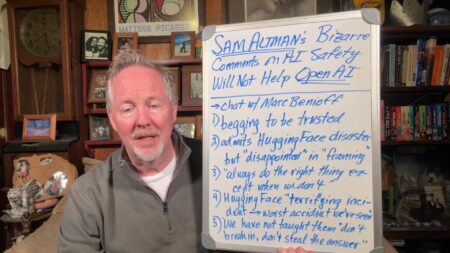
Sam Altman’s Dreamforce conversation with Marc Benioff offers a revealing look at OpenAI’s thinking around AI safety, security, industry regulation, and corporate responsibility.
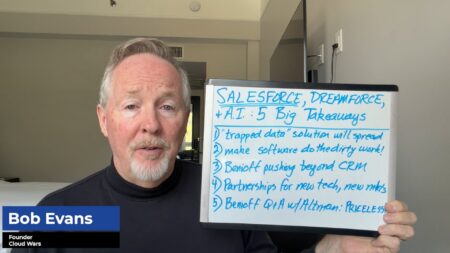
Mark Benioff’s conversation with Sam Altman capped a Dreamforce that positioned Salesforce as an increasingly prominent voice in the wider global AI debate.

Experts including forward-deployed engineers (FDEs) are deemed key factor in accelerating outcomes, reducing risk, and ensuring operational impact of AI.

AWS will add 2 million NVIDIA GPUs to its infrastructure in 2027 and 2028, including Blackwell Ultra, Rubin and Rubin Ultra architectures, as the cloud giant prepares for surging demand for next-generation AI workloads.
Microsoft plans to more than triple data center capacity to 38 gigawatts by 2032, highlighting the extraordinary infrastructure build-out required to meet soaring AI compute demand.

A new AI safety framework for U.S. schools prohibits student and educator data from being used for AI model training while establishing requirements for human oversight, transparency, privacy, and accountability from participating technology providers.
Microsoft is targeting CRM vendor lock-in with Dynamics 365 Activate, an AI-powered migration tool designed to make moving from Salesforce faster, simpler, and less risky.
Salesforce is reportedly considering a nearly $2 billion acquisition of Listen Labs, potentially bringing AI-powered customer research and deeper context into its Agentforce ecosystem.
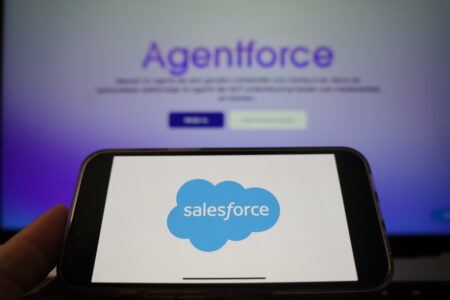
Extended, powerful partnerships will prove to be just as important as the expanding AIforce, as Salesforce challenges the traditional mindset with its approach to the future of tech.
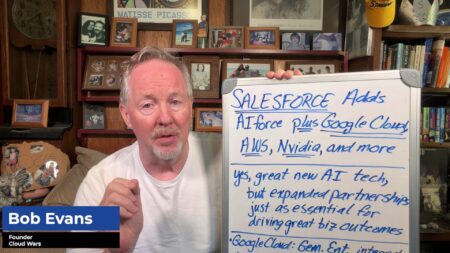
CEO Marc Benioff explained in his Dreamforce keynote how Salesforce unlocks value for customers beyond its AIforce through extended partnerships.

Google’s Fairwind Program combines CodeMender with Gemini-powered cybersecurity AI to help 650+ trusted organizations discover vulnerabilities, generate verified patches, and automate security remediation.

New functions can support apps that combine Dynamics 365 apps with business context from WorkIQ for complete experiences, Microsoft partners say.
AI infrastructure spending is surging to $2.59 trillion, but rising compute and memory costs are putting pressure on cash flow and forcing hyperscalers to rethink AI investment.
Microsoft is bringing OpenAI’s GPT-6 Astra to Foundry, combining advanced agentic capabilities with enterprise security, compliance, governance, and identity controls.

During Oracle’s Q1 earnings call, CEO Mike Sicilia’s comments provided great clarity to help customers better understand the interplay between apps and agents.
AI infrastructure spending is reaching unprecedented levels, but rising CapEx is beginning to outpace cash flow, raising questions about how hyperscalers will fund continued AI investment.
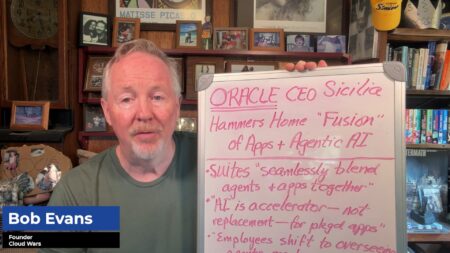
Oracle has been clear in defining where apps end and agents end, with CEO Mike Sicilia driving it home in comments in the Q1 earnings call.

‘Project HydraFusion’ evaluates each request and chooses the least complex workflow required, using additional model calls only when it anticipates a better result.
AI model releases are accelerating faster than buyers can adopt them, creating model fatigue and increasing pressure for deeper integration and value.