

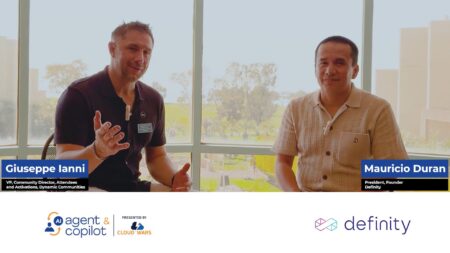
Definity First founder Mauricio Duran explains why enterprises must start with business problems — not technology — to successfully move AI into production.
Definity First founder Mauricio Duran explains why enterprises must start with business problems — not technology — to successfully move AI into production.
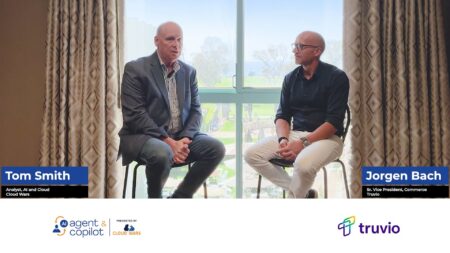
At the AI Agent & Copilot Summit, Truvio’s Jorgen Bach explains how unified platforms and AI agents are helping enterprises close the ERP value gap and operationalize AI adoption.
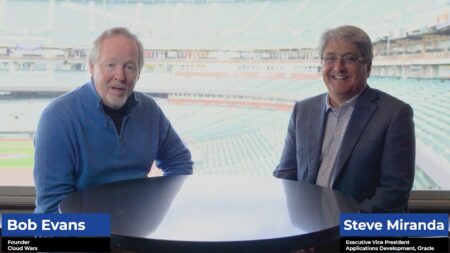
Enterprise leaders should focus less on automation savings and more on how agentic AI accelerates growth and customer value.
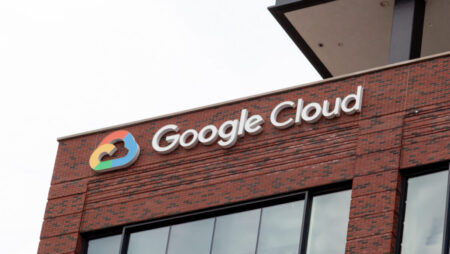
Google Cloud doubles down on the agentic AI race with a $750M ecosystem investment designed to accelerate partner innovation, enterprise adoption, and competitive momentum against Microsoft and AWS.
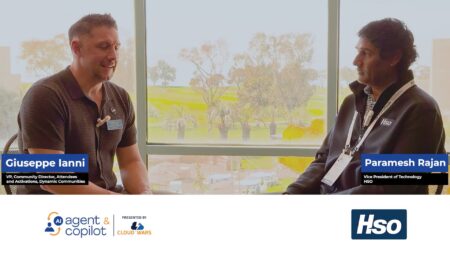
HSO explains how embedding AI agents into ERP and business workflows is accelerating implementations, improving data transformation, and driving real user adoption through industry-specific automation.

Dona Sarkar explains why AI should be viewed as a tool for empowerment rather than job replacement, urging professionals to become “AI power users” who learn how to harness AI within their own roles and industries.
Stellantis and Microsoft launch a sweeping AI partnership spanning engineering, cybersecurity, and enterprise transformation.
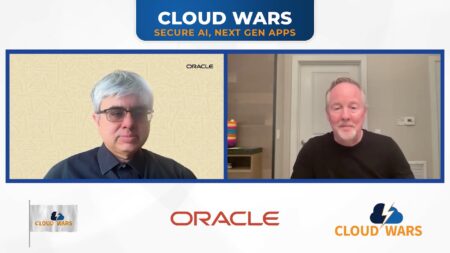
Agentic AI is shifting enterprise systems from answering questions to taking secure, autonomous action at scale.
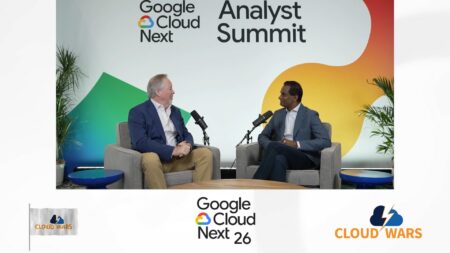
Enterprise AI success is shifting from software consumption metrics to measurable business outcomes and shared accountability between providers and customers.

Oracle EVP Steve Miranda shares the company’s agentic AI vision, introducing its first Agentic Applications and explaining how AI agents are reshaping enterprise workflows.

After years of disconnected AI breakthroughs, Gemini Enterprise delivers a cohesive system that simplifies deployment, enhances usability, and enables enterprises to fully leverage agentic AI across operations, data, and workflows.
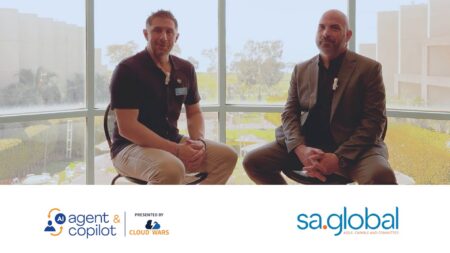
A major focus for sa.global is building industry-specific AI agents tailored to professional services sectors like construction and legal, aiming to reduce inefficiencies, automate workflows, and protect revenue streams.
Google Cloud heads into its Next event with strong momentum, focusing on AI security, sovereignty, and Gemini Enterprise enhancements to help enterprises scale AI while addressing rising cybersecurity threats and regulatory demands.
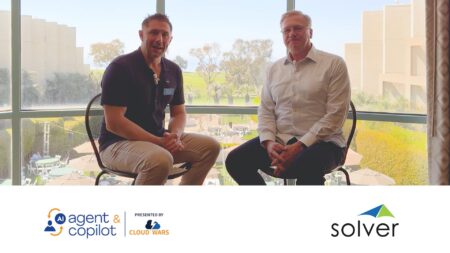
Tad Remington explains how Solver is embedding AI agents into FP&A workflows, enabling organizations to analyze trusted, pre-structured financial data and streamline planning processes without requiring extensive manual intervention or custom-built systems.

Microsoft addresses the limitations of pure AI autonomy by integrating workflows and agents, creating more structured, flexible automation systems tailored to enterprise production environments.

Marc Benioff criticizes CEOs who scapegoat AI for layoffs, calling it a “lazy way out” and urging leaders to take accountability for business decisions during technological disruption.
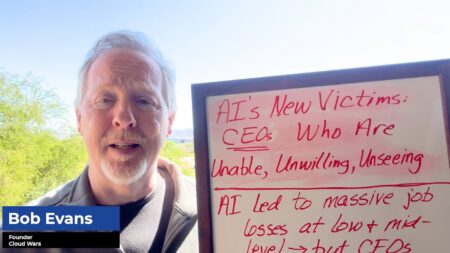
AI disruption is shifting from workforce layoffs to CEO accountability, as companies demand faster, decisive leadership to survive the transformation reshaping every industry.

Latest MCP product from Microsoft works with cloud or on-premises SQL databases for efficient, secure connections to corporate resources without requiring language or framework expertise.
AI agents are advancing rapidly, but compliance concerns persist, and Panopticore aims to solve this with deterministic governance and verifiable audit trails at the network infrastructure level.
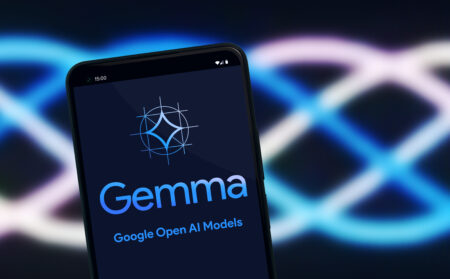
Google introduces Gemma 4, an advanced open AI model series designed for local deployment. With mobile-first capabilities, multimodal processing, and strong reasoning, it empowers developers to build scalable AI applications without relying on cloud infrastructure.