

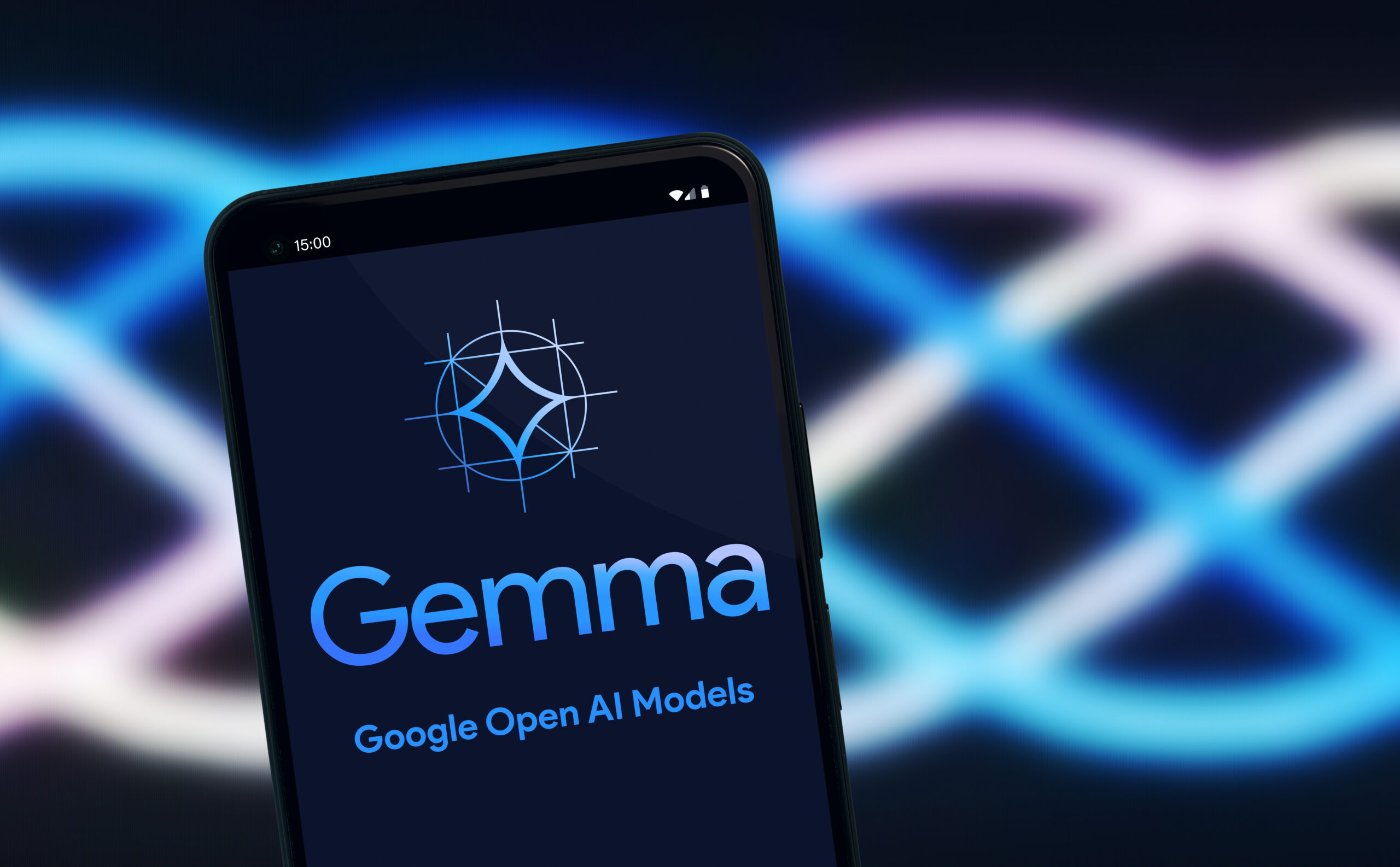

Google has announced the launch of Gemma 4, the company’s most advanced open model series to date. Quick refresher: Gemini is Google’s flagship large language model (LLM) family, designed for extensive cloud deployment and powering Google’s AI products, as well as other enterprise-grade applications. In contrast, Gemma is a smaller, lightweight open model developed to run locally on everyday hardware.
While Gemma is based on the same research that led to Gemini 3, it is designed to be developer-friendly and customizable. So what can you expect from Gemma 4?
Mobile-First AI
Google is launching Gemma 4 in four sizes, depending on the needs of the developer. They include Effective 2B (E2B), Effective 4B (E4B), 26B Mixture of Experts (MoE), and 31B Dense. According to Google, the new open model series has excelled beyond chat and can now support complex logic workflows and agentic use cases, delivering “frontier-level capabilities with significantly less hardware overhead.”

Community Summit North America is the largest independent innovation, education, and training event for Microsoft business applications delivered by Expert Users, Microsoft Leaders, MVPs, and Partners. Register now to attend Community Summit in Nashville, TN from October 11-15.
The models have been sized to deliver mobile-first AI, and can run and be fine-tuned on Android devices, laptop GPUs, and more complex developer workstations. And, with an open-source Apache 2.0 license comes unprecedented flexibility:
“This open-source license provides a foundation for complete developer flexibility and digital sovereignty; granting you complete control over your data, infrastructure, and models,” reads a Google announcement blog.
Gemma 4 Standout Features
| Feature | Description |
|---|---|
| State-of-the-art reasoning | Gemma 4 introduces major improvements in mathematical reasoning and instruction-following compared to earlier model generations. |
| Agentic applications | Native support for function calling, structured JSON output, and system instructions enables developers to build fully functional AI agents. |
| Code generation | Offline code generation capabilities allow developers to turn local workstations into local-first AI coding assistants. |
| Visual and audio features | The full Gemma 4 family processes images and video natively, while E2B and E4B models add native audio input for speech recognition and understanding. |
| Increased context | Edge models include a 128K context window, with larger variants supporting up to 256K context length for complex workflows. |
| Advanced language support | Training across more than 140 languages enables global developer adoption and multilingual AI deployment. |
Closing Thoughts
Google’s investment in Gemma 4, along with its significant focus on the technology’s origins from the powerful Gemini model series, underscores the fact that now: Google users can benefit from impressive performance and capabilities without needing to rely on enterprise-grade infrastructure.
In many ways, Google is betting that the next wave of AI is not just about model intelligence, but also about portability. This doesn’t signify a shift away from hyperscale data centers; rather, it’s an acknowledgment of customers’ desires to implement AI within their organizations, on devices, offline, privately, and affordably. Gemma 4 represents a major advancement in offering multimodality that can be deployed locally.
Ask Cloud Wars AI Agent about this analysis