


Microsoft, Oracle, Google Cloud, and AWS have amassed $2.3 trillion in contracted backlog, underscoring unprecedented demand across the booming cloud and AI economy.
Microsoft, Oracle, Google Cloud, and AWS have amassed $2.3 trillion in contracted backlog, underscoring unprecedented demand across the booming cloud and AI economy.

During a conversation with Bob Evans, Oracle EVP Chris Leone outlined how Fusion Agentic Applications automate business processes using teams of AI agents, enabling organizations to improve productivity while executing work directly inside Oracle’s system of record.
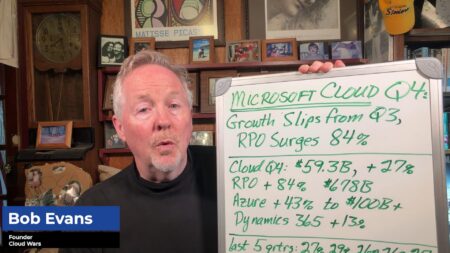
Microsoft’s consistency contrasts sharply with Google’s accelerating growth, revealing two very different momentum stories in today’s cloud infrastructure market.
An analysis of how Oracle is helping enterprises prepare their data infrastructure for large-scale agentic AI deployments.

As Q2 earnings approach, Palantir, Google Cloud, and Oracle lead the Cloud Wars Top 10 in revenue growth, highlighting the extraordinary pace of the AI market and the massive backlog fueling future expansion.

The world’s largest cloud providers are embracing innovative financing, partnerships, and infrastructure strategies as unprecedented AI demand drives what may become the largest industrial construction effort in modern history.
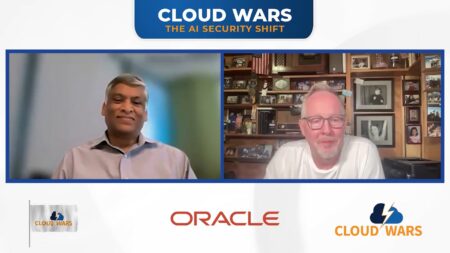
As AI transforms cybersecurity, Oracle is helping customers protect data through faster patching, stronger resilience, and database-first security.

The Hyperscaler Backlog Sweepstakes defines the top AI factories, ranking Google Cloud, Oracle, Microsoft, and AWS in the top four.

The Hyperscaler Backlog Sweepstakes — including Oracle, Microsoft, Google Cloud, and Oracle — have led to a backlog total of $2.1 trillion.

For 40 years, Larry Ellison used Oracle earnings calls to forecast industry trends, challenge competitors, and champion innovation. His apparent withdrawal from that platform marks the end of one of technology’s most influential public forums.
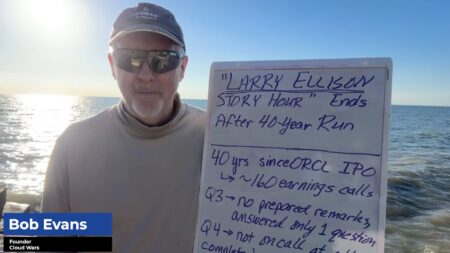
Larry Ellison’s decision to step away from earnings calls demonstrates confidence in Oracle’s operational leadership and long-term direction.

A 363% surge in Oracle’s RPO demonstrates extraordinary customer demand and positions the company as one of the fastest-growing forces in enterprise AI and cloud computing.

While Microsoft dominates current cloud revenue, Oracle’s rapidly expanding RPO points to a dramatically different competitive landscape ahead.

The combination of 47% cloud revenue growth and 363% RPO growth suggests Oracle’s AI investments are translating into both current revenue gains and unprecedented future demand.
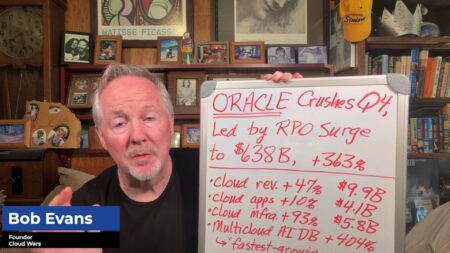
Oracle delivers a blockbuster Q4 with cloud revenue up 47%, OCI soaring 93%, and a staggering $138 billion increase in RPO, signaling unprecedented demand for AI infrastructure and cloud services.

Oracle and Alphabet are pioneering new approaches to finance massive AI infrastructure expansion, using debt and equity markets to meet unprecedented customer demand for cloud and AI services.
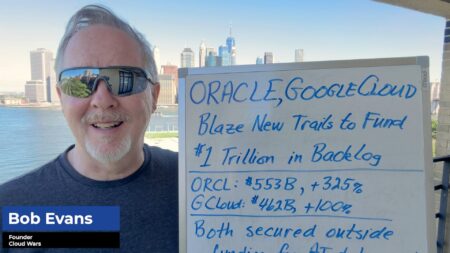
Oracle and Google Cloud are challenging conventional wisdom by using outside funding to support massive AI infrastructure investments driven by unprecedented customer demand.

Google Cloud has launched Google AI Threat Defense, an AI-powered cybersecurity platform designed to help organizations proactively identify, prioritize, and remediate threats while keeping pace with increasingly sophisticated AI-driven cyberattacks.
Workday’s strong Q1 performance highlights CEO Aneel Bhusri’s push to transform the company into an AI-native enterprise focused on agentic AI innovation, lawful governance, and accelerated product development to compete with SAP, Oracle, and Microsoft.

How Oracle is embedding agentic AI directly into its database platform to help enterprises accelerate innovation, strengthen security, and reduce architectural complexity.