

Rejecting “SaaSpocalypse” fears, Aneel Bhusri argues AI will enhance enterprise applications rather than replace them. Workday’s strategy focuses on AI agents embedded within its HR and finance platform to drive new growth and customer value.
Rejecting “SaaSpocalypse” fears, Aneel Bhusri argues AI will enhance enterprise applications rather than replace them. Workday’s strategy focuses on AI agents embedded within its HR and finance platform to drive new growth and customer value.
Monday’s outage impacting several Claude tools was relatively brief, but it highlights the integral role of AI in modern workflows and the need for robust continuity plans.
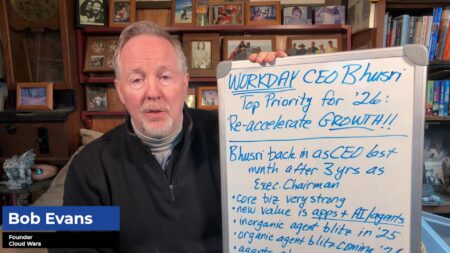
Workday is betting its future growth on blending AI agents with its existing HR and finance platforms, rejecting the notion that large language models alone can replace enterprise software.
Financial services, manufacturing, and retail are leading AI agent implementation, demonstrating how operational use cases are driving measurable transformation across high-impact sectors worldwide.
Salesforce’s planned acquisition of Momentum strengthens its AI portfolio by integrating unstructured conversational data into Agentforce 360 and Slackbot, accelerating agentic workflows and delivering deeper customer insights for sales and go-to-market teams.
Microsoft expands Copilot with business-process agents, tuning templates, and standalone AI assistants designed to transform workflows across sales, finance, service, and enterprise productivity.
Salesforce delivered $41.5B in annual revenue and $11.2B in Q4, with Marc Benioff calling it one of the best performances in software history as AI offerings like Agentforce drive renewed growth momentum.
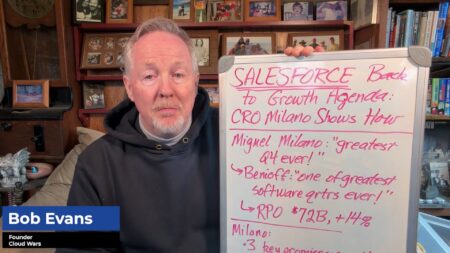
Salesforce posts 12% Q4 revenue growth and 14% RPO growth, signaling a confident return to high-performance execution.
Returning CEO Aneel Bhusri used Workday’s Q4 earnings call to dismantle claims that AI will replace ERP and HR systems, outlining instead a hybrid future where deterministic enterprise apps and probabilistic AI work together.
The company’s first Autonomous Workforce deliverable is a Level 1 Service Desk AI Specialist that diagnoses and resolves common, low-priority IT support requests.
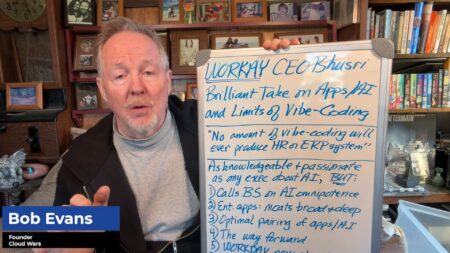
Workday’s Q4 call reframed the AI debate, emphasizing that enterprise applications remain essential even as AI accelerates innovation across HR, ERP, and beyond.

Herain Oberoi highlighted two fundamental AI-Era cybersecurity questions: Can we trust the data, and is the AI system safe and secure? These concerns underpin Microsoft’s integrated governance and security strategy.
Mustafa Suleyman predicts AI will achieve human-level performance across most professional tasks within 18 months, signaling massive disruption — and opportunity — for white-collar workers.
State-backed adversaries are leveraging AI tools like Gemini for reconnaissance, coding, and vulnerability research, enhancing phishing campaigns and accelerating attack lifecycles across global targets.
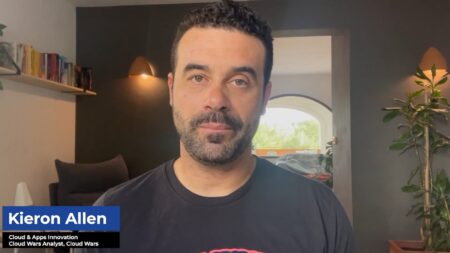
Microsoft researchers uncover AI memory poisoning attacks that embed hidden instructions in “Summarize with AI” buttons, potentially biasing enterprise AI recommendations.
Palantir delivered stunning Q4 results, with revenue up 70% and U.S. commercial growth surging 137%, as CEO Alex Karp credited differentiated AI implementation and “magical” frontline outcomes for accelerating enterprise and government adoption.
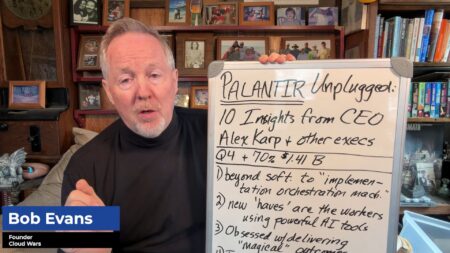
Rather than selling features, Palantir aims to operationalize AI to drive measurable business outcomes at speed.
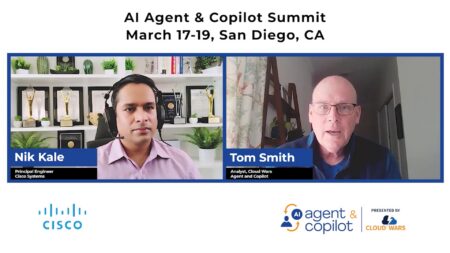
Product architect Nik Kale explains how bringing AI and human intelligence directly into a product ensures customers receive targeted remediation content and guidance.

Healthcare leader weighs in on how AI models and mulit-cloud underpin customers’ mission-critical systems, and how they should prepare for potential model changes.
Scaling AI agents in 2026 requires autonomy, orchestration, and strong governance — not just building more bots.