


As agentic AI adoption accelerates, Salesforce is strengthening its control plane with automated evaluations and intervention capabilities designed to improve reliability, governance, and cost predictability.
As agentic AI adoption accelerates, Salesforce is strengthening its control plane with automated evaluations and intervention capabilities designed to improve reliability, governance, and cost predictability.
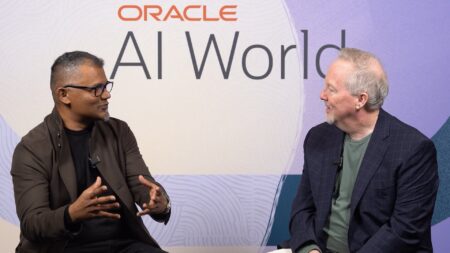
Oracle’s cloud leadership reveals how AI-powered development, security innovations, and enterprise applications are helping organizations turn ambitious ideas into measurable business value.

Hyperscalers report nearly $2.5 trillion in combined backlog, highlighting the enormous opportunity — and risks — associated with AI infrastructure investment.

Microsoft plans to raise $25 billion through a heavily oversubscribed bond offering, attracting approximately $115 billion in orders and demonstrating extraordinary investor confidence in AI infrastructure expansion.

Publicly traded AI and cloud providers are experiencing unprecedented growth, led by Google Cloud (103%), Palantir (96%), and Oracle (62%), highlighting the accelerating AI boom and intensifying competition among hyperscalers and enterprise technology leaders.

Google Cloud leads the Cloud Wars Top 10 Growth Chart with 103% growth, followed by Palantir and Oracle, as AI drives unprecedented expansion across the enterprise cloud market.

Palantir’s extraordinary Q3 performance gives CEO Alex Karp the credibility to warn business leaders that AI inaction could quickly transform competitive companies into irrelevant ones.
With more than 25 new finance skills and plugins, Microsoft is transforming Copilot from a general-purpose AI assistant into a specialized platform capable of coordinating accounting, forecasting, investment analysis, and financial reporting workflows.

Google Cloud and OpenAI demonstrate the power of collaboration in the AI economy, combining advanced models with enterprise infrastructure to deliver greater flexibility, accessibility, and commercial value.

Avanade data from 3,600 companies finds just 6% say their focus in on creating new operating models, revenue streams, or businesses.

Microsoft trails AWS, Google Cloud, and Oracle in AI and cloud growth, despite leading in revenue.

Microsoft is bringing AI-powered phishing detection to Teams, promising stronger cybersecurity through behavioral analysis while reigniting concerns about privacy, automatic activation, and lessons learned from the Recall controversy.

Microsoft is bringing rental management into Dynamics 365’s ERP core, challenging SAP and Oracle’s approaches to Asset-as-a-Service while positioning native workflows and AI agents as a competitive advantage.
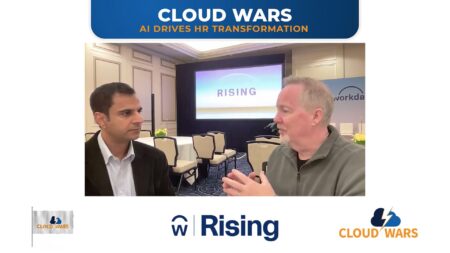
As AI transforms business operations, Concentrix is rethinking talent acquisition, workforce development, and the role of HR in driving innovation.

Oracle’s strategy combines aggressive data center expansion, contracted customer demand, and a path to positive cash flow, challenging conventional assumptions about hyperscaler growth and financial risk.

Amazon CEO Andy Jassy projects AWS to hit hypergrowth all throughout 2027 and 2028, as the company makes a remarkable comeback with its growth rates.

As organizations embrace Oracle’s AI capabilities, clean data and built-in security are proving essential to reliable predictions, regulatory compliance, and long-term enterprise adoption.

Google Cloud’s 103% revenue growth dramatically outpaces Microsoft Cloud’s 30%, signaling a potentially transformative shift in enterprise AI competition as Google’s growth continues to accelerate.

AI inference and reasoning capabilities disrupt traditional, linear flowcharts and employees must shift their approach to orchestrating the work of AI agents, Ben Beath says.
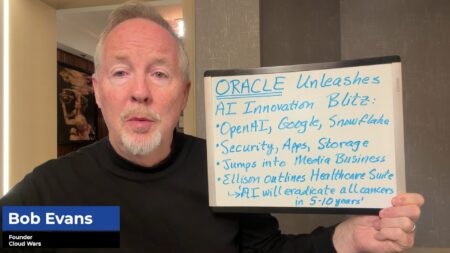
Oracle’s AI World announcements span Google’s TPU chips, Snowflake data integration, OpenAI technologies, security innovations, and an unexpected expansion into the media business.