


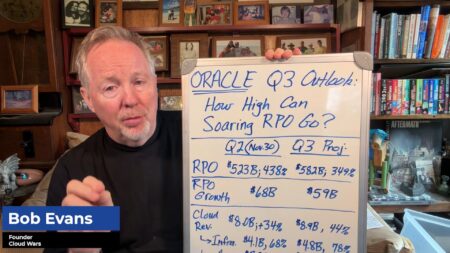
Oracle’s Q3 outlook reveals explosive growth in remaining performance obligations, suggesting the company’s AI training and infrastructure capabilities are driving enormous future demand beyond its OpenAI partnership.

“You give us three minutes and we will give you unique insights on the greatest growth market the world has ever known!“

I am your host, Bob Evans. Here you will see a full library of our daily news and commentary show from Cloud Wars that shares insights and perspective around the “re-imagination machine” that is the Cloud!
Oracle’s Q3 outlook reveals explosive growth in remaining performance obligations, suggesting the company’s AI training and infrastructure capabilities are driving enormous future demand beyond its OpenAI partnership.

With only about 15% of consumers using customer-facing AI, grocery retailers are shifting their strategy. Instead of pushing AI directly to shoppers, companies are investing in AI copilots for store associates to drive operational efficiency and better customer service.

As AI infrastructure demand surges toward a projected $4.3 trillion market, OpenAI recalibrates its spending timeline to balance investor confidence with continued aggressive investment in compute infrastructure.

Monday’s outage impacting several Claude tools was relatively brief, but it highlights the integral role of AI in modern workflows and the need for robust continuity plans.

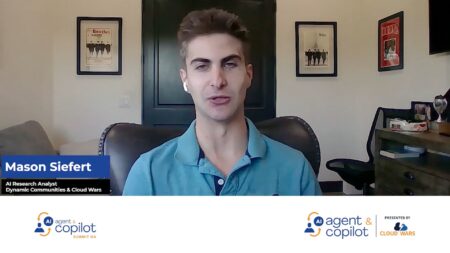
Mason Siefert explores how Microsoft is advancing enterprise security from traditional detection to AI-powered investigation and response.
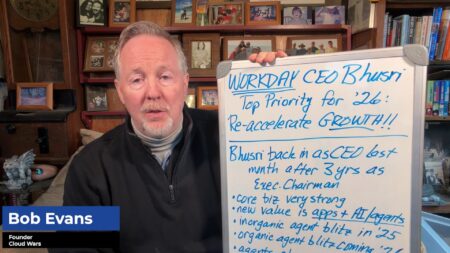
Workday is betting its future growth on blending AI agents with its existing HR and finance platforms, rejecting the notion that large language models alone can replace enterprise software.
Microsoft expands Copilot with business-process agents, tuning templates, and standalone AI assistants designed to transform workflows across sales, finance, service, and enterprise productivity.

Microsoft has introduced the first fully integrated learning agent for students, shifting AI in education from reactive tutors to proactive guidance. With Understand, Practice, and Study modes, this agent actively structures how students learn.

Salesforce posts 12% Q4 revenue growth and 14% RPO growth, signaling a confident return to high-performance execution.

Alithya’s Chad Weiner breaks down how to move from AI curiosity to real execution using Copilot Studio and Microsoft 365 agents.
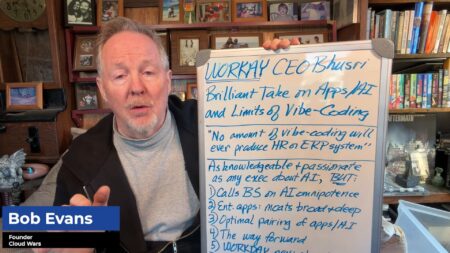
Workday’s Q4 call reframed the AI debate, emphasizing that enterprise applications remain essential even as AI accelerates innovation across HR, ERP, and beyond.

New products deliver visibility, governance, and data protection controls over agents built internally as well as those from Microsoft and third parties.
Microsoft unveils new Copilot Studio tools to help enterprises systematically evaluate, govern, and scale AI agents with confidence.

Mustafa Suleyman predicts AI will achieve human-level performance across most professional tasks within 18 months, signaling massive disruption — and opportunity — for white-collar workers.
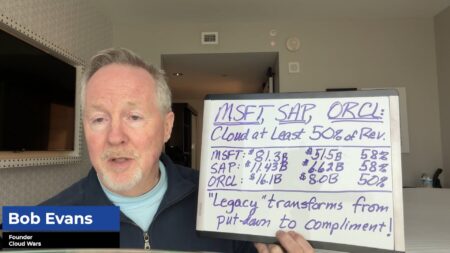
Legacy expertise in on-prem and cloud is emerging as a decisive advantage for Microsoft, SAP, and Oracle in the expanding AI economy.

Microsoft researchers uncover AI memory poisoning attacks that embed hidden instructions in “Summarize with AI” buttons, potentially biasing enterprise AI recommendations.

Security Dashboard for AI is built to rein in AI sprawl with Defender, Entra, and Purview integration as well as inventory functions that span Microsoft and widely used third-party AI software.

Rather than selling features, Palantir aims to operationalize AI to drive measurable business outcomes at speed.
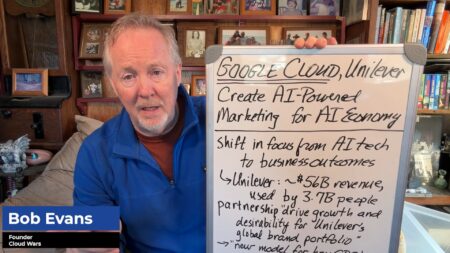
Google Cloud and Unilever signal a major shift as AI moves from technical fascination to business outcome delivery across marketing, fulfillment, and consumer engagement.

Healthcare leader weighs in on how AI models and mulit-cloud underpin customers’ mission-critical systems, and how they should prepare for potential model changes.